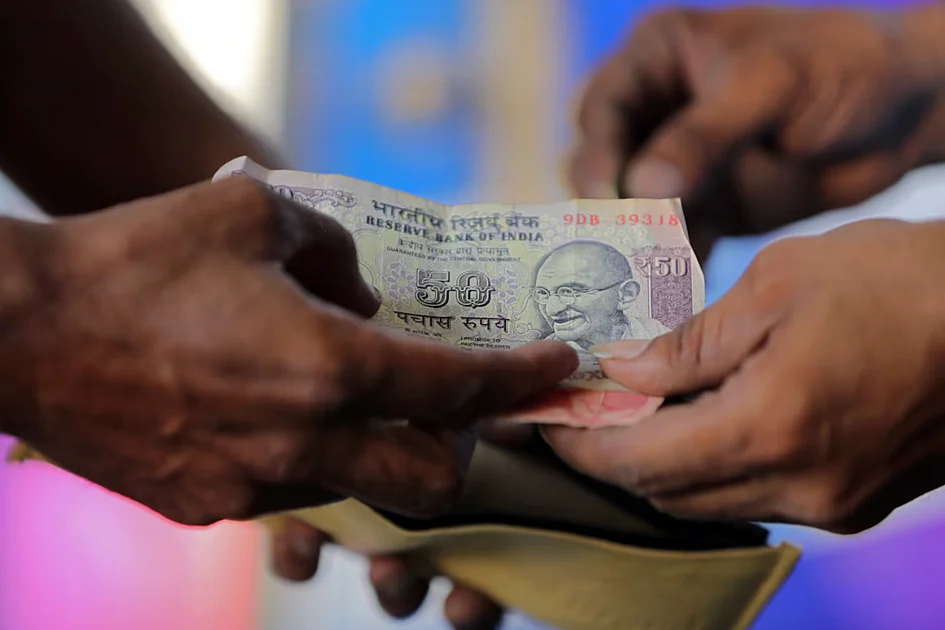
The Indian rupee experienced its most significant single-day drop in a month on Monday, October 27, 2025, as it fell below the 88 mark against the U.S. dollar. The currency closed at 88.2450, marking a 0.4% decline—its steepest since September 23. This downturn was driven by traders unwinding long positions on the rupee and persistent dollar demand from importers, particularly local oil companies. While the Reserve Bank of India (RBI) had previously intervened to keep the rupee above the 88 threshold, its defensive measures appeared to ease on Monday, contributing to the currency’s slide. Traders noted that state-run banks were active in offering dollars, though the activity was not concentrated at any specific level. The rupee’s decline was further exacerbated by short covering on the USD/INR pair after it breached the 88 mark. Despite this setback, the rupee has outperformed most regional currencies in October, thanks to earlier heavy interventions by the RBI that prevented it from nearing its all-time low. Analysts at BofA Global Research maintain a neutral outlook on the rupee, citing trade uncertainty and export challenges despite its attractive valuation and a weaker U.S. dollar trend in Q4 2025. The rupee’s 40-currency real effective exchange rate (REER), a measure of its competitiveness, fell to 97.65 in September, its lowest in seven years, indicating undervaluation. Meanwhile, the dollar index remained steady at 98.8, and the offshore Chinese yuan reached a one-month high amid progress in U.S.-China trade talks. On the India-U.S. front, a senior Indian official recently hinted that a bilateral trade deal with Washington is ‘very near.’
Indian rupee falls most in a month as traders cut long bets, importers buy dollars