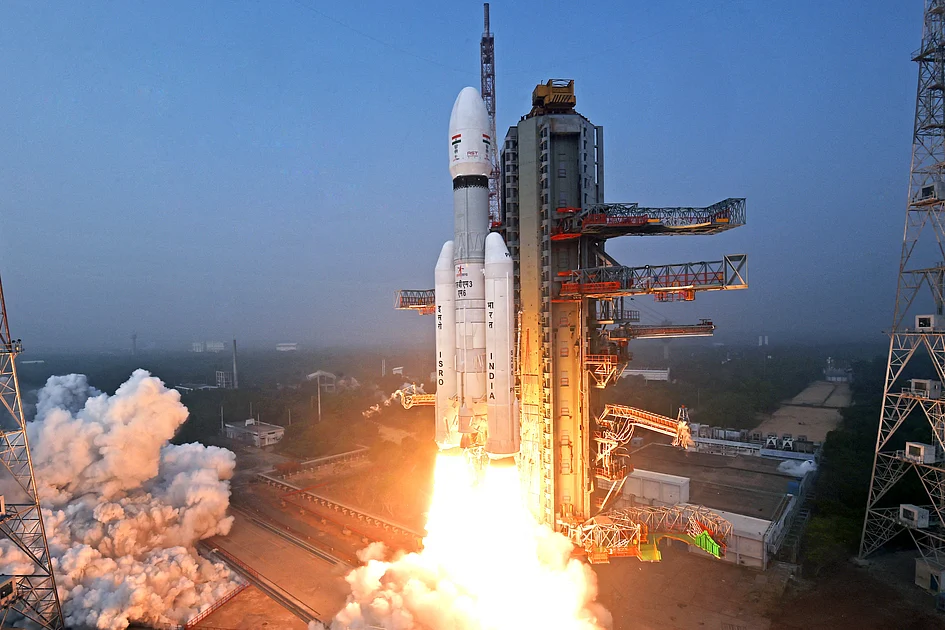
India’s space program marked a monumental achievement on Wednesday as the Indian Space Research Organisation (ISRO) successfully deployed its heaviest-ever payload into low-Earth orbit. The landmark launch of the LVM3-M6 rocket, carrying the US-constructed AST SpaceMobile communications satellite weighing 6,100 kilograms, represents a quantum leap in the nation’s aerospace capabilities.
Prime Minister Narendra Modi hailed the deployment as “a significant stride” for India’s space sector, emphasizing that the mission “strengthens India’s heavy-lift launch capability and reinforces our growing role in the global commercial launch market.” The successful launch demonstrates India’s evolving prowess in the competitive commercial satellite sector, where telecommunications companies increasingly demand expanded and sophisticated communications infrastructure.
The mission utilized a modified variant of the launch vehicle that previously carried India’s unmanned lunar spacecraft in August 2023, showcasing technical enhancements to accommodate heavier payloads. This achievement follows ISRO’s earlier deployment of the CMS-03 communication satellite, which weighed approximately 4,410 kilograms, establishing a new benchmark for India’s launch capacity.
This technological milestone provides substantial momentum to India’s ambitious low-cost space exploration agenda, which includes planned uncrewed orbital missions and human spaceflight operations targeted for the coming years. The world’s most populous nation has dramatically expanded its spacefaring ambitions throughout the past decade, achieving capabilities rivaling established space powers at significantly reduced costs.
India’s space roadmap now includes an uncrewed orbital mission preceding its inaugural human spaceflight scheduled for 2027, with Prime Minister Modi additionally announcing ambitious plans for an Indian astronaut to reach the Moon by 2040.