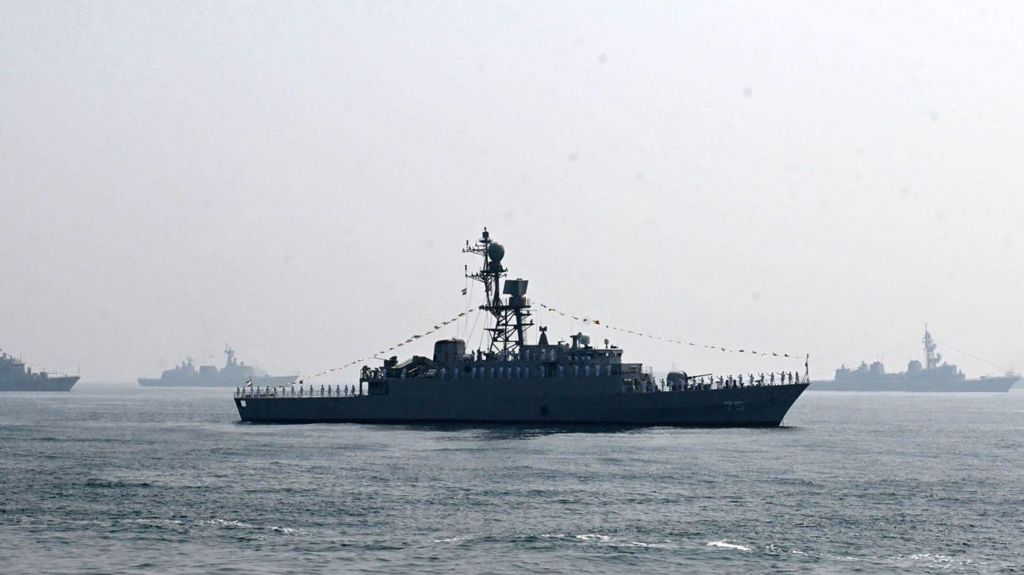
In a significant escalation of hostilities beyond the Middle East, the Iranian warship Iris Dena was sunk by a U.S. submarine on March 4th in international waters off Sri Lanka’s southern coast. The attack resulted in the deaths of at least 87 sailors from a crew of 130, marking a dramatic expansion of the U.S.-Israel military campaign against Iran.
The incident has cast a spotlight on India’s delicate diplomatic position. Indian Foreign Minister S. Jaishankar confirmed to parliament that Iran had formally requested docking permissions for three of its warships—Iris Dena, Iris Bushehr, and Iris Lavan—on February 28th, the very day the war began. India granted this permission on March 1st. This timing places India in a complex situation, having just days earlier hosted the same vessels for a joint military exercise in Visakhapatnam from February 15th to 25th.
The post-attack movements of the Iranian fleet revealed a fragmented outcome. While the Iris Dena was destroyed, the Iris Lavan successfully docked in Kochi, India, on March 4th, with its crew currently under Indian naval protection. Minister Jaishankar defended this decision, stating it was ‘the right thing to do.’ Separately, Sri Lanka provided sanctuary to the Iris Bushehr on March 5th after it reported an engine malfunction.
The sinking has ignited strong international reactions. Iranian Foreign Minister Abbas Araghchi condemned the strike as an ‘atrocity’ committed without warning, thousands of miles from Iran’s shores. In contrast, U.S. Defense Secretary Pete Hegseth boasted of the operation, incorrectly touting it as the first torpedo sinking of an enemy vessel since World War II, though similar incidents have occurred involving the UK and Pakistan. The Iris Dena is among approximately 20 Iranian naval assets destroyed since the conflict’s inception, with President Donald Trump explicitly stating the destruction of Iran’s navy is a key objective.