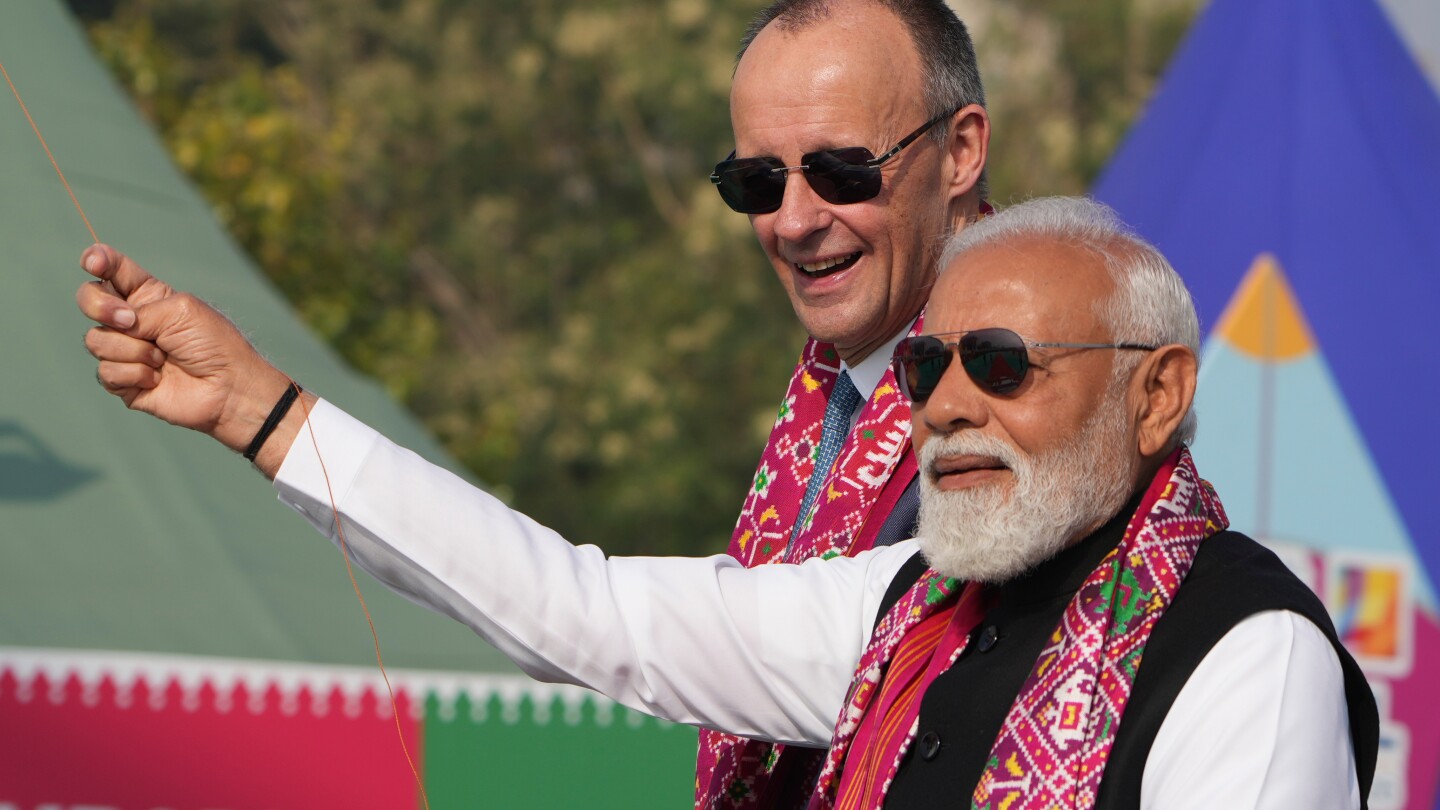
In a significant diplomatic engagement, Indian Prime Minister Narendra Modi hosted German Chancellor Friedrich Merz in Gujarat’s Gandhinagar on Monday, marking a pivotal moment in bilateral relations between South Asia’s emerging power and Europe’s economic powerhouse. The high-level meeting resulted in multiple strategic agreements designed to strengthen economic and defense cooperation while reducing both nations’ dependence on Chinese markets and supply chains.
The comprehensive partnership encompasses defense collaboration, with Germany’s Thyssenkrupp poised to partner with Indian firms in constructing six advanced conventional submarines—a critical component of India’s naval modernization program. Beyond military cooperation, the nations established frameworks for enhanced collaboration in rare earth element mining, climate action initiatives, and renewable energy projects.
Prime Modi emphasized Germany’s position as India’s foremost trading partner within the European Union, noting the mutual desire to elevate relations to unprecedented levels. The leaders agreed on a detailed roadmap for defense industry cooperation involving joint development and production capabilities.
Chancellor Merz characterized India as Germany’s ‘partner of choice’ and stressed the urgency of concluding the long-pending EU-India free trade agreement to fully realize the economic potential between the nations. The visit also produced a specialized agreement facilitating Indian professionals’ entry into Germany’s healthcare sector.
The Chancellor’s itinerary included symbolic gestures such as visiting Mahatma Gandhi’s Sabarmati Ashram and participating in the International Kite Festival alongside Prime Minister Modi. Merz’s delegation, comprising business and industry leaders, will continue to Bengaluru for meetings with technology sector representatives, underscoring the comprehensive nature of this strategic partnership.