In a significant geopolitical development, India and the European Union have finalized a comprehensive trade agreement following nearly two decades of intermittent negotiations. The breakthrough comes as both economic powers seek to strengthen international partnerships amid growing trade tensions with the United States.
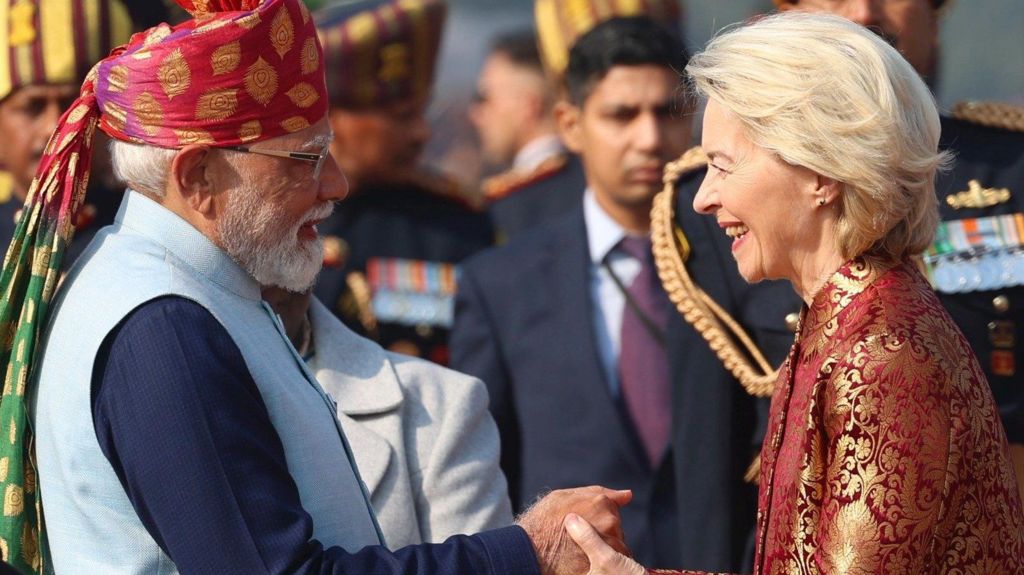
European Commission President Ursula von der Leyen and European Council President António Costa attended India’s Republic Day celebrations in Delhi as chief guests, setting the stage for Tuesday’s bilateral summit where the agreement will be formally announced. The presence of EU leadership at this symbolic event underscores the strategic importance both parties place on this partnership.
The agreement, described by officials as the ‘mother of all trade deals,’ represents approximately 25% of global GDP and one-third of worldwide trade. It will enhance market access for Indian exports to European markets while facilitating entry for European investments and goods—particularly automobiles and beverages—into India’s rapidly expanding economy.
This development occurs against a backdrop of increasing protectionist measures globally. Both India and the EU have faced economic pressure from recent US tariff policies, including the 50% tariffs imposed by the Trump administration last year. The timing of this agreement sends a powerful message about both economies’ commitment to multilateral trade cooperation in an era of rising trade barriers.
While negotiations began in 2007 and stalled in 2013 due to disagreements over market access and regulatory standards, discussions formally resumed in July 2022. The most contentious issues included access to India’s automobile sector, agricultural goods, and carbon-linked tariffs. Intensive negotiations over recent days successfully resolved these remaining chapters.
The formal signing is expected later this year following approval by the European Parliament and European Council. This agreement marks India’s latest in a series of trade pacts, including recent agreements with the UK, Oman, and New Zealand, while the EU recently concluded a landmark deal with Mercosur after 25 years of negotiation.