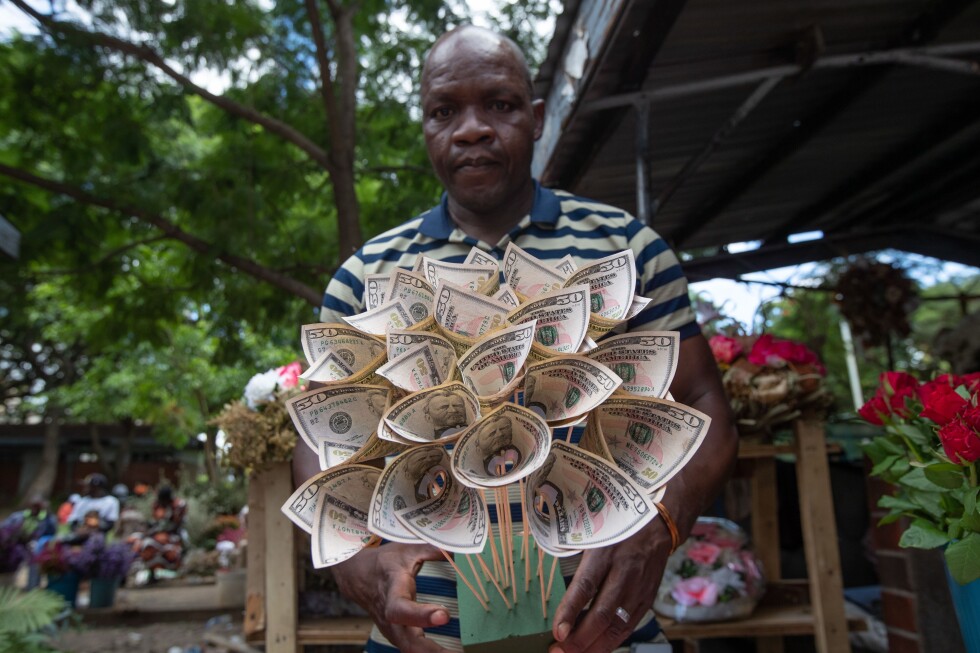
HARARE, Zimbabwe — In a nation where economic pragmatism intersects with romantic expression, Zimbabweans are redefining Valentine’s Day traditions through innovative gift-giving practices that reflect both financial realities and environmental consciousness.
The emerging trend of money bouquets—carefully crafted arrangements of U.S. dollar bills woven with floral elements—has transformed from social media novelty to mainstream Valentine’s phenomenon. Across traditional markets and digital platforms like TikTok, artisans are meeting growing demand for these hybrid creations that combine financial utility with romantic symbolism.
At Harare’s established flower market, veteran florist Tongai Mufandaedza demonstrates the intricate process of assembling money bouquets. “The market has significantly improved due to these creations,” noted Mufandaedza, who has three decades of industry experience. “For Valentine’s Day, we anticipate substantially increased customer traffic as everyone seeks to make impressive gestures.”
The pricing structure reveals interesting market dynamics: a $10 monetary bouquet sells for $25, while traditional rose arrangements command $35-40. This cost-effectiveness, coupled with practical value, drives their appeal in an economy where liquidity often outweighs luxury.
Generation Z consumers enthusiastically embrace this trend, with 23-year-old Kimberleigh Kawadza expressing full approval: “The innovator behind this concept deserves recognition. It represents perfect appreciation for partners.”
Interestingly, the trend spans generations, with parents reportedly purchasing money bouquets for daughters to prevent them from seeking “sugar daddies” who might exploit financial incentives.
The U.S. dollar’s dominance in Zimbabwean transactions—stemming from 2009’s hyperinflation crisis—creates unique logistical challenges. The scarcity of crisp bills has spawned secondary businesses supplying pristine notes for bouquets, as worn currency proves unsuitable for decorative purposes.
Parallel to monetary expressions, environmental sustainability shapes another gifting innovation: recycled metal creations. At Harare’s Simpli Simbi boutique (“simbi” meaning metal in Shona), artisans transform discarded automotive parts and scrap metal into heartfelt keepsakes.
Founder Stephanie Charlton explained the philosophy: “We revitalize previously unloved materials into beautiful, permanent treasures. Each piece carries meaningful narratives beyond temporary chocolates or flowers.”
This environmentally conscious approach attracts growing local clientele, signaling shifting attitudes toward sustainable consumption despite economic pressures.
Notably, Zimbabwe lacks the restrictive policies implemented elsewhere, such as Kenya’s recent warnings of severe penalties for currency manipulation in bouquets—a contrast highlighting different regulatory approaches to similar trends across Africa.