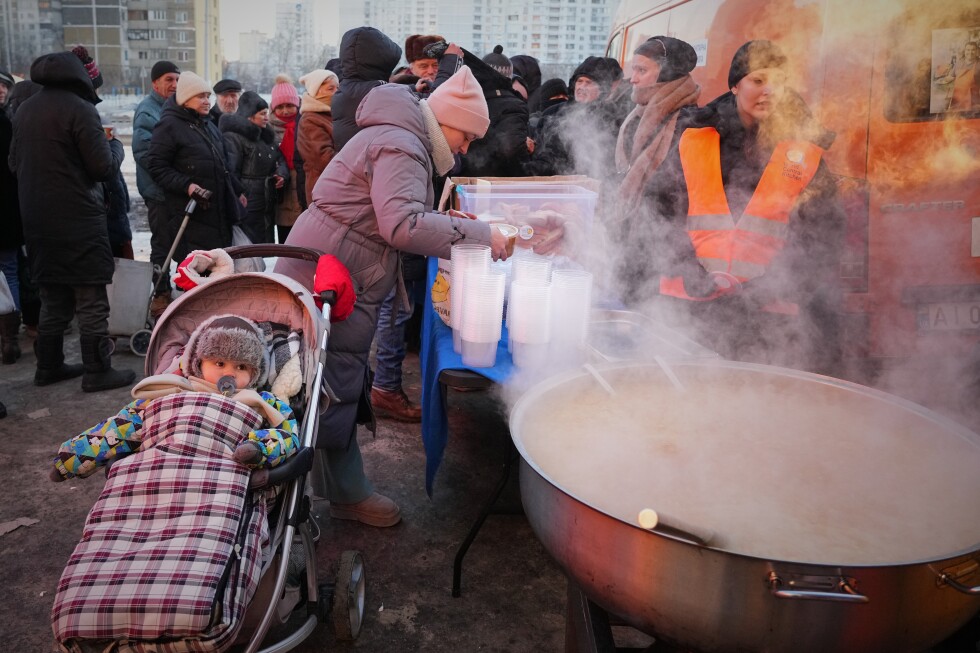
KYIV, Ukraine — As temperatures plummet to a bone-chilling minus 30 degrees Celsius (minus 22 Fahrenheit), residents of Ukraine’s capital face an unprecedented humanitarian crisis following systematic Russian attacks on critical energy infrastructure. The situation has deteriorated to its most critical point since the invasion began four years ago, with damage to power stations and electrical grids reaching catastrophic levels.
In the hard-hit district of Troieshchyna, daily life has been reduced to fundamental survival needs. Yuliia Dolotova, a 37-year-old mother of two, exemplifies the struggle faced by hundreds of thousands of Kyiv residents. With her 18-month-old son Bohdanchyk bundled against the bitter cold, she queues for hot meals at volunteer stations—the only sustenance available since cooking at home has become impossible amid continuous power outages.
“The reality is stark: no electricity throughout the day, no means to prepare meals for children. This has become our universal experience,” Dolotova stated, reflecting the collective hardship gripping the capital.
The destruction extends beyond power generation. Frozen and burst water pipes have compounded the crisis, creating additional challenges for already strained residents. Energy crews work tirelessly to restore heating and implement outage schedules, but their efforts are routinely undone by subsequent Russian strikes using drones and missiles, forcing restoration work to begin anew.
For Dolotova, the physical hardship is magnified by personal sacrifice. Her husband serves on the volatile Zaporizhzhia front, having met his youngest son only twice since birth. She single-handedly cares for Bohdanchyk and 11-year-old Daniil while navigating pitch-black stairwells in their Soviet-era apartment building—a treacherous ascent that has already destroyed two strollers.
Evening routines have transformed into exercises in resilience. The brothers huddle together for warmth near frost-rimmed windows, playing silently by flashlight. At bedtime, Dolotova lines their bed with foam rubber insulation against the penetrating cold.
“I sustain myself through anticipation of his leaves,” she revealed. “Waiting sustains me. You convince yourself—just a little longer, and he’ll return. You mark each passing day.”