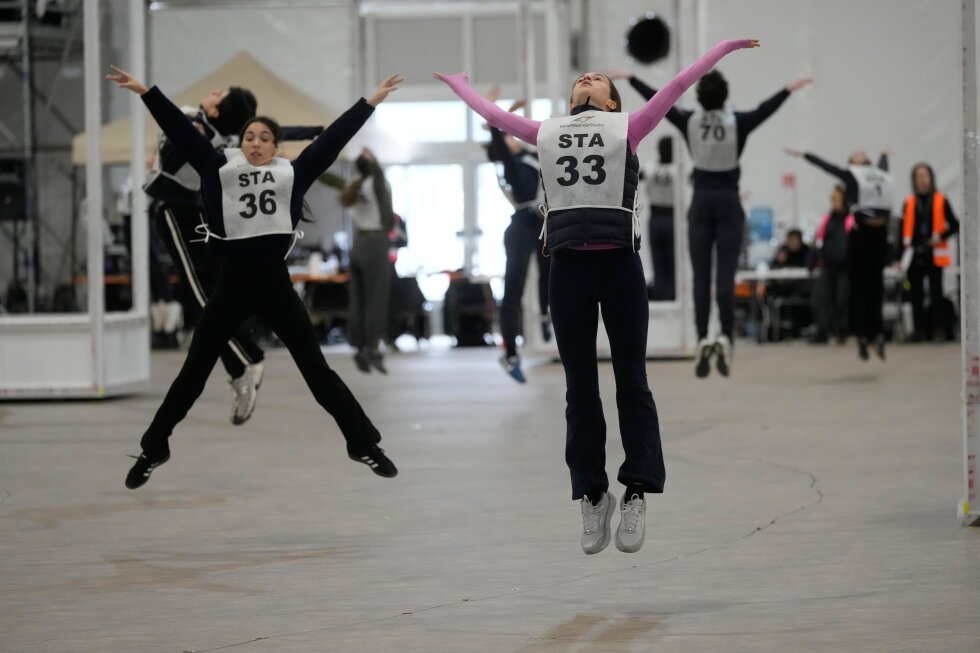
MILAN — In an expansive rehearsal tent adjacent to the iconic San Siro stadium, a remarkable transformation is underway. Classical dancers from La Scala’s prestigious academy are perfecting movements inspired by Nordic walkers and figure skaters, crafting the inaugural performance for the Milan-Cortina 2026 Winter Olympics opening ceremony scheduled for February 6.
These performers form part of an extraordinary ensemble of 1,200 volunteers who have dedicated themselves to rehearsals since November. The massive temporary structure provides adequate space to replicate the actual stage dimensions while allowing Serie A soccer to complete its final matches before the stadium’s conversion into an Olympic venue.
Marco Balich, the visionary creative director behind this production, describes the process as “an immensely complex yet exhilarating journey.” In an exclusive behind-the-scenes discussion with The Associated Press, Balich revealed the diverse composition of participants, ranging from professional dancers to ordinary citizens—including his personal butcher, office manager, and even an 88-year-old widow. “They collectively unite to create something extraordinary for the nation, sharing the joy of participating in this monumental event,” noted Balich, whose extensive portfolio includes a record sixteen Olympic and Paralympic ceremonies.
With the ceremony approaching, rehearsals will intensify to approximately nine hours daily, all directed toward creating what organizers describe as the Games’ most globally watched moment. An estimated 60,000 attendees will witness the event live at San Siro, including a United States delegation led by Vice President JD Vance, while millions worldwide will view through official broadcasts.
The ceremony’s central theme, “Harmony,” carries profound significance amid current global tensions. Balich emphasized the renewed relevance of the Olympic Truce—an ancient Greek tradition revitalized in the 1990s—which seeks to suspend conflicts during the Games period. “In this era where aggressive forces dominate, embracing Olympic values of respectful and peaceful competition becomes increasingly vital,” Balich stated.
The production will showcase Italian cultural excellence, including recognition of Milan’s status as a fashion capital, alongside several surprise elements that organizers are keeping confidential. Confirmed performances feature international superstars Mariah Carey, Andrea Bocelli, Cecilia Bartoli, Laura Pausini, and Lang Lang.
Olympic traditions will be honored through the unveiling of the rings, athlete parade, and the ceremonial cauldron lighting. In an innovative departure from convention, the 2026 Games will feature dual cauldrons inspired by Leonardo da Vinci’s geometric studies—one at Milan’s Arco della Pace and another in Cortina, located 400 kilometers away. Ceremony director Maria Laura Iascone promised “Olympic magic” in bridging this considerable distance during the flame transfer.
These geographical challenges make the 2026 Olympics the most dispersed in history. To ensure inclusion of athletes in remote venues near Swiss and Austrian borders, the Parade of Athletes will be broadcast from three additional locations, including Cortina.
Backstage, the rehearsal tent houses an extensive wardrobe department containing 1,400 costumes in broadcast-optimized Technicolor hues, with seamstresses performing final adjustments. A welcoming sign at the entrance sets the tone: “Your Happy Moment Starts Now!”
For volunteer performer Fostis Siadimas, this marks his second Olympic opening ceremony after participating in the 2004 Athens Games as a twenty-year-old. Now an amateur dancer residing in Milan, he enthusiastically responded to the casting call. “Those final moments before entering the stadium remain among the most profound experiences of my life,” Siadimas reflected, embodying the spirit that unites all participants in this extraordinary undertaking.