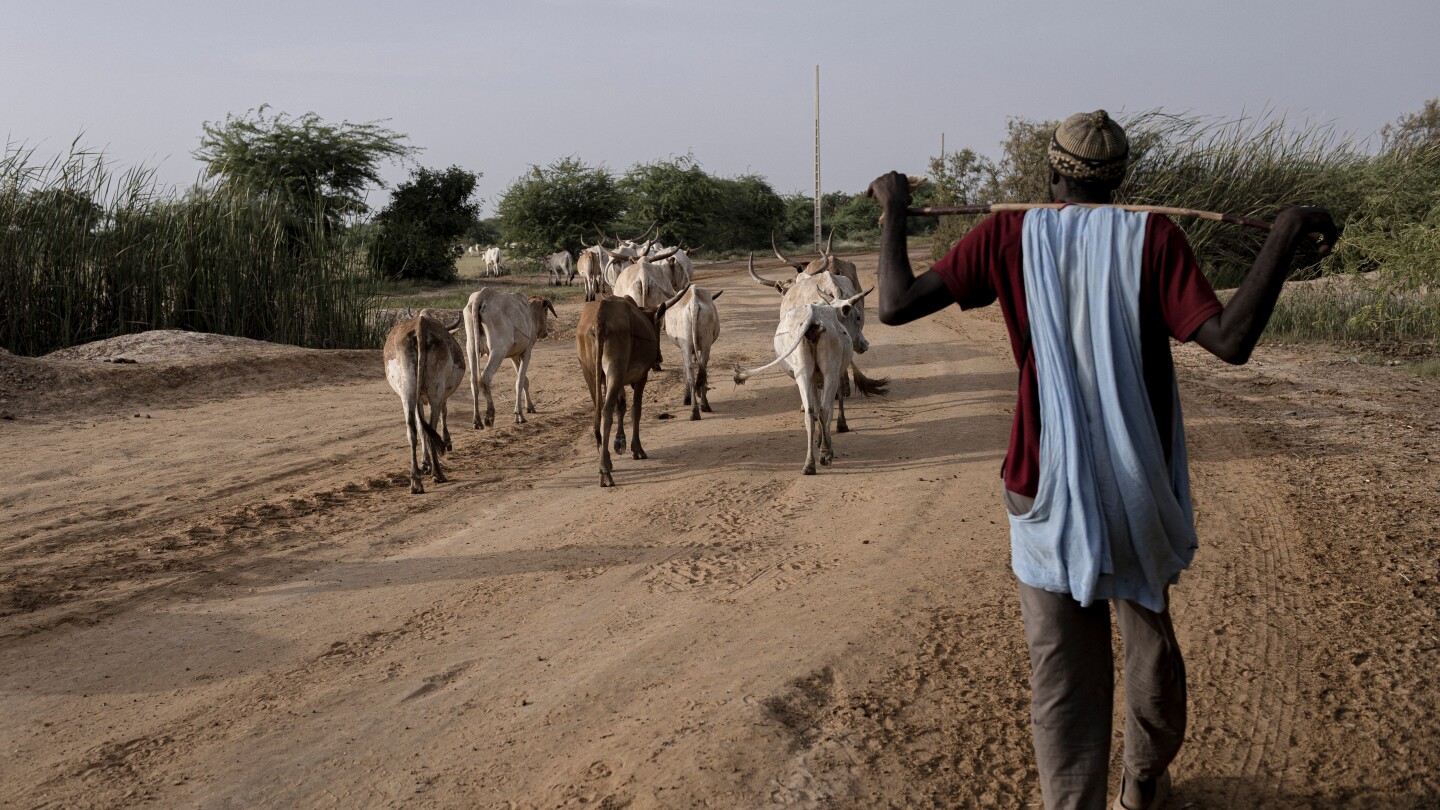
In a tragic incident that underscores growing tensions across West Africa, 18-year-old Cheikh Diouf recounts the January day his father was brutally murdered by machete-wielding herders near their village in Senegal’s Thies region. The confrontation erupted when Moussa Diouf, a cassava farmer and mosque muezzin in his sixties, confronted herders whose animals had strayed into his cultivated fields. This personal tragedy reflects a broader pattern of escalating violence driven by environmental degradation and changing climate patterns.
Historical tensions between agriculturalists and pastoralists have reached crisis levels as climate change dramatically alters West Africa’s landscape. According to Copernicus Climate Change Service data, Senegal has experienced a 27% reduction in annual rainfall over the past three decades compared to the 1951-1980 period. Simultaneously, unpredictable precipitation patterns have disrupted traditional farming calendars, while rising temperatures have decimated pasturelands essential for nomadic herders.
The Peul (or Fulani) people, who have practiced transhumance across the Sahel region for centuries, now face unprecedented challenges. These pastoralists provide approximately two-thirds of the region’s meat and dairy products, yet their migratory routes have extended significantly as they search for diminishing grazing resources. The annual southward migration during October and November increasingly overlaps with harvest seasons, creating flashpoints for conflict.
Medical professionals report treating increasingly severe injuries from these confrontations. Dr. Yawma Fall, deputy head of the Ndofane medical center, describes treating a 12-year-old shepherd struck with an ax and another herder who lost fingers to blade attacks. Farmers likewise suffer brutal injuries, with 39-year-old Mamadou Gueye losing his left hand during a 2022 confrontation over cattle incursions.
Both communities express frustration with the deteriorating situation. Farmers like Fode Diome of Ndofane village acknowledge the necessity of animal migration but criticize herders for disregarding traditional schedules that previously minimized conflict. Herders such as 61-year-old Alioune Sow from Linguere counter that agricultural expansion has eliminated traditional grazing lands and cattle paths, forcing animals into cultivated areas.
Senegal lacks a national framework for managing these conflicts, relying instead on local mediation through village chiefs and non-governmental organizations. In Labgar village, agricultural adviser Papa Khokhane Seydou Faye has implemented community workshops that bring both groups together to discuss solutions including clearer demarcation of grazing trails and field boundaries. However, the absence of comprehensive data collection on violent incidents hampers broader understanding and intervention efforts.
As climate pressures intensify, the fundamental incompatibility between expanding agriculture and sustainable pastoralism threatens to exacerbate these deadly conflicts unless structural solutions addressing land use, climate adaptation, and conflict mediation can be implemented across the region.