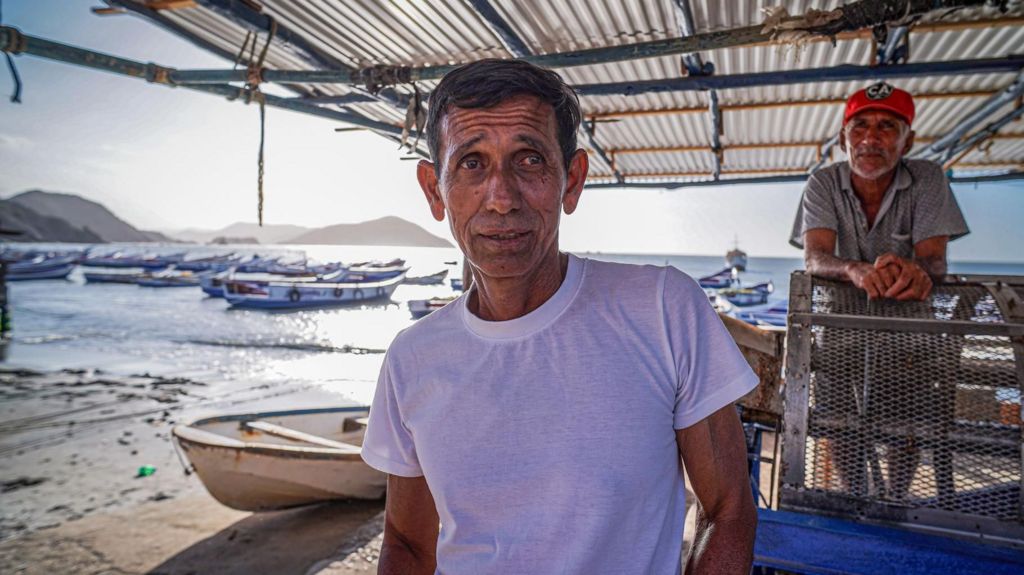
In the sweltering heat of Guaca, a Venezuelan fishing town, residents cluster around rusted propane canisters—the first gas delivery since December. This scene encapsulates the daily struggles in Sucre, one of Venezuela’s most impoverished states, where basic necessities like cooking fuel, running water, and gasoline remain scarce despite the country’s vast oil reserves.
The recent arrest of Nicolás Maduro in January and subsequent restoration of U.S. relations with interim leader Delcy Rodríguez has sparked discussions of foreign investment in Caracas. However, in remote Sucre—hundreds of kilometers from the capital—these developments feel distant. For ordinary Venezuelans, the pressing question is whether promised American oil investments will translate into tangible improvements in their lives.
In Cumaná, Sucre’s capital, residents have endured two weeks without running water. While state officials blame a pipeline damaged in last month’s earthquake, locals maintain that water shortages have persisted for years due to chronic underinvestment. Some resort to collecting water from polluted streams, highlighting the infrastructure collapse.
The fishing industry—Sucre’s economic backbone—exemplifies the economic devastation. Fisherman Pablo Marín explains the cruel economics: “In Ecuador, catching 100kg of fish earns $500 enough to cover fuel with money left over. Here, you must catch another 100kg just to break even.” Hyperinflation has rendered the bolivar nearly worthless, forcing businesses to dollarize while wages remain in local currency.
Yurmari Martínez, a local fisherwoman, recalls Sucre being “a place with potential” two decades ago when processing plants and diverse industries thrived. Today, fuel shortages, nationalizations, and decaying infrastructure have hollowed out the economy. This degradation has even eroded educational aspirations—Martínez’s 23-year-old son abandoned university, convinced that “no qualification can lead anywhere” in contemporary Venezuela.
Amidst this despair, Shell’s recently approved “Dragon” natural gas project—located between Venezuela and Trinidad and Tobago—represents a glimmer of hope. U.S. Secretary of the Interior Doug Burgum’s visit earlier this month culminated in signed development agreements. While the gas will be processed in Trinidad for export, Shell claims Venezuelans will benefit.
However, experts urge tempered expectations. Christopher Sabatini of Chatham House warns that such projects typically create limited local jobs and short-term cash injections without generating broader development. “Companies come in, extract the resources, oftentimes with foreign equipment and engineers, then ship it,” he notes, emphasizing that lasting benefits require effective government revenue reinvestment.
The U.S. now oversees much of Venezuela’s oil revenue—an “unprecedented” situation according to Sabatini—raising questions about fund allocation. Even with proper management, Sabatini stresses that rebuilding infrastructure, electricity, and housing “can’t be turned around simply in months.”
Omar Zambrano, chief economist at Anova Policy Research, cites 1990s evidence showing oil investment reduced poverty and improved education when the industry welcomed private companies. But after “25 years of degradation of the country’s institutional, productive, and social fabric” under Hugo Chávez and Maduro, conditions for successful implementation are far less favorable.
This degradation manifests starkly in Güiria, three hours east of Guaca along potholed roads with no mobile service. Here, the U.S.’s aggressive anti-narcotics campaign—which claims to target “narco-terrorists”—has left dozens dead in boat strikes. Locals insist many victims were not cartel members but poverty-driven individuals seeking survival.
Diannys, a mother of five whose husband died in an October strike, acknowledges the moral complexity: “People take the wrong path out of necessity… risking their lives to give their family a better future.” An anonymous resident who lost his brother echoes this sentiment, revealing his brother—a fisherman and farmer—was recruited by traffickers offering $10,000 for a sea journey. “I earn $10 weekly, enough for three meals,” he explains, contextualizing the temptation.
As Venezuela navigates its political transition two months after Maduro’s ousting, Sucre’s residents remain cautiously skeptical. While foreign investment promises economic revival, years of broken promises and institutional decay have forged resilient pragmatism. The path forward requires not just extracting resources but rebuilding the very fabric of Venezuelan society—a task far more complex than signing oil deals.