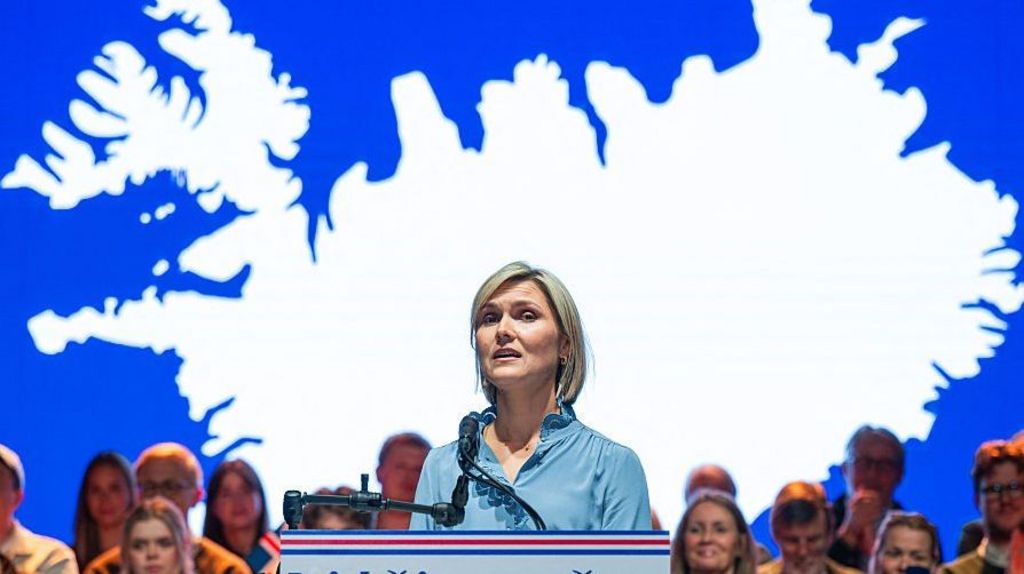
On a small North Atlantic island with a population of just under 400,000, Icelanders are heading to the polls this Saturday to settle one of the most consequential and long-running debates in their modern history: whether to restart frozen negotiations to join the European Union. Latest polling shows the race is a statistical dead heat, with neither side holding a decisive lead, making the final outcome impossible to call with any certainty.
Inside a sunlit waterfront fish processing plant outside Reykjavik, workers in hairnets and heavy blue overalls sort through freshly caught cod and haddock, with most of the finished fillets destined for European markets. For Pétur Pálsson, head of the Visir fishing firm, the threat of EU membership hangs heavy over his operation. He warns that joining the bloc would mean ceding control of Iceland’s lucrative fishing waters to Brussels policymakers, risking thousands of domestic jobs and pushing processing facilities overseas. “If we are in the EU, they will be the ones who make the policy,” Pálsson says.
The push for a new referendum comes after Prime Minister Kristrún Frostadóttir’s centre-left government won a snap 2024 election on a pledge to revisit the EU question by 2027. That timeline was accelerated dramatically by shifting global geopolitics: Russia’s full-scale invasion of Ukraine has sharpened great power rivalries in the Arctic, while unpredictable trade policy from former U.S. President Donald Trump, including tariff threats and repeated public remarks about his desire to acquire Greenland, has pushed the question of Iceland’s global standing to the top of the national agenda.
“Things have been moving very rapidly with respect to geopolitical challenges,” Finance Minister Daði Már Kristófersson, whose Liberal Reform Party leads the pro-accession campaign, told the BBC. “That has pushed Iceland’s place in the world up the agenda.” Iceland occupies a strategically critical position at the mouth of the GIUK Gap, a key North Atlantic shipping and surveillance corridor where Western militaries closely monitor Russian maritime activity. A founding member of NATO, Iceland has no standing military of its own, relying instead on a 1951 bilateral defense pact with the U.S. and collective security commitments from its NATO allies.
Polling has shifted dramatically in the lead-up to the vote: one recent survey put the Yes camp ahead by a slim 51.3% to 48.7% margin, while earlier polls showed the two sides deadlocked. “It’s impossibly hard to predict,” said Eirikur Bergmann, a professor of politics at Bifröst University. “Both camps are throwing everything they have at it.” For supporters, the case for EU membership rests on two core pillars: security and economic stability. Kristófersson argues that joining the bloc would strengthen Iceland’s position against competing great powers, while adopting the euro would tame the country’s notoriously volatile currency and curb sky-high living costs that have left many struggling. “We see the opportunity of joining the EU and adopting the euro as a very significant benefit to Icelandic companies and to the Icelandic general public,” he says.
A Yes vote this weekend will only restart negotiations with Brussels: any final membership deal would require a second national referendum and approval from all 27 existing EU member states. A No vote would shelve the accession question for the foreseeable future. Many voters planning to back Yes say they support restarting talks precisely because the final decision remains down the line. “We have to know what’s in the package from the EU,” said Reykjavik resident Anna Ragnarsdottir. “If we say no, we won’t ever know.”
The biggest sticking point, both when Iceland first began accession talks in 2010 and today, is fishing. Marine industries account for nearly 40% of Iceland’s total exports, and the country’s fishing waters are woven into its national identity and political culture. Opponents warn that joining the EU would force Iceland to share access to its waters under the bloc’s Common Fisheries Policy, eroding national sovereignty and threatening the core of the country’s economy. Opposition leader Guðrún Hafsteinsdóttir, who leads the No campaign, has vowed that Iceland’s waters will never be opened to foreign fleets. Prof Bergmann notes that no Icelandic politician could survive making such a concession: “Fishing is inseparable from Iceland’s culture and political identity, and no politician ever could make that concession. They’d be expelled from the country.”
The No campaign’s slogan, “Iceland for sale? No thanks,” has resonated with voters who prioritize protecting national control over key industries. Margrét Ágústa Sigurðardóttir, head of the Icelandic Farmers’ Association, is skeptical of the government’s promise to secure a special exemption for Iceland’s fishing and agricultural sectors. “No member state has been granted a permanent opt-out,” she says, arguing that EU policy would always prioritize the interests of 450 million EU consumers over the unique needs of a small 400,000-person nation.
Iceland’s government argues that a special arrangement is achievable, pointing to precedent: Norway secured favorable terms even before it abandoned its own accession bid, while existing EU members Finland and Sweden won carve-outs for northern agricultural sectors. But economic concerns remain top of mind for most voters, regardless of their position: Iceland ranks among the most expensive countries in the world, with recent analysis showing prices are 84% higher than the EU average, and interest rates have climbed to 8% to curb persistent inflation. “We get higher salaries, and it goes straight to the cost of everything,” said Snærós Sindradóttir, a leading Yes supporter with the European Movement in Iceland. “It’s like a dog chasing its own tail constantly.”
Ironically, while the referendum was called largely because of shifting security concerns, geopolitics has barely featured in public debate. For Sindradóttir, that omission is deeply frustrating: the referendum is happening now “100% because of security matters,” she says. Recent events have heightened security anxieties: in June, Icelandic authorities tracked a Russian intelligence ship passing through the country’s exclusive economic zone, and Trump’s repeated gaffes — including mistaking Iceland for Greenland during a Davos speech, and a joke from his ambassador that Iceland could become the 51st U.S. state — have left many Icelanders questioning the long-term reliability of their security alliance with the U.S. While the “special relationship” remains formally unchanged, Kristófersson argues that EU membership adds a critical additional pillar of security, a position that led the government to sign a new defense partnership with the bloc in March.
On the streets of downtown Reykjavik, voters are split between economic anxiety and concerns over sovereignty. “The biggest problem right now is for the generation who are trying to buy their own housing,” said 62-year-old Adolf Fridriksson. “The mortgage rates are terrifying.” For 22-year-old Helga, the cost of membership and loss of control are too great a risk: “The fishing industry, and everything else, should be in our control.”
The result will be closely watched across Europe. When Iceland abandoned accession talks in 2013, 11 of the 35 negotiation chapters were already completed, meaning a Yes vote could restart talks in months rather than years. The outcome is also being closely monitored in neighboring Norway, another Eurosceptic EEA member where support for EU accession is growing. For Hallgrímur Oddsson, head of EU-Iceland think tank European Currents, a Yes vote would be a much-needed boost for the EU’s stalled enlargement agenda. “But a No vote could also be perceived as a loss,” he says.