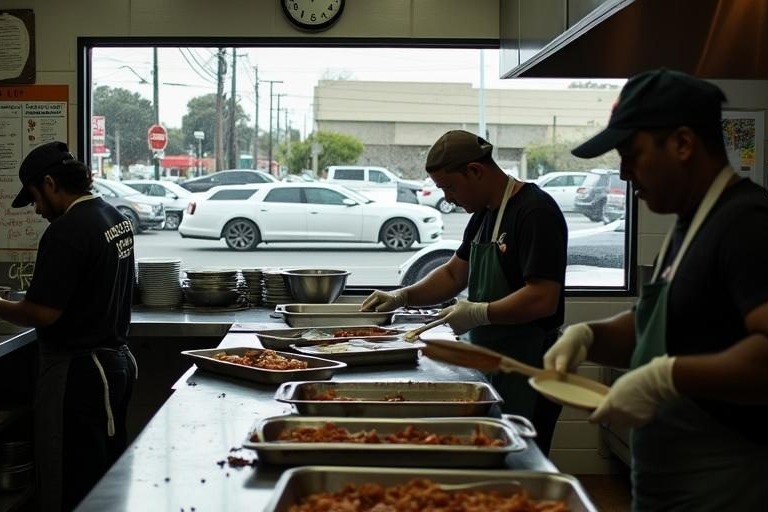
New York’s vibrant restaurant sector faces an unprecedented crisis as intensified Immigration and Customs Enforcement (ICE) operations target undocumented workers, creating widespread fear and potential economic disruption across the state’s service industry.
Recent enforcement actions, mirroring nationwide raids that initially focused on major metropolitan areas like Minneapolis, have now emerged in New York through smaller-scale operations. According to a comprehensive joint study by the Fiscal Policy Institute (FPI) and Immigration Research Initiative (IRI), approximately 42,300 undocumented individuals form an essential component of New York’s workforce.
Legal professionals report a dramatic surge in immigration-related cases. Edward J. Cuccia, a Manhattan-based attorney practicing near Chinatown, confirms receiving daily distress calls regarding detentions. “The rules mandate that individuals subject to deportation orders should receive formal notice,” Cuccia explained, “yet ICE routinely bypasses this procedural requirement.”
The human impact extends beyond legal concerns to fundamental economic stability. With foreign-born workers constituting approximately 60% of New York’s restaurant and food service workforce according to the City Comptroller’s Office, the enforcement campaign threatens to destabilize the industry’s operational capacity.
Emily Eisner, FPI’s acting executive director and chief economist, emphasizes the dual nature of the crisis: “These operations represent not only human rights violations affecting families and communities but also generate substantial economic repercussions by reducing essential labor force participation.”
The restaurant industry contributes $93.3 billion in direct economic output to New York’s economy, supported by round-the-clock operations requiring extensive staffing from chefs and servers to delivery personnel. The FPI-IRI report identifies particularly vulnerable groups including 7,000 chefs, 17,000 cooks, 9,100 food preparation workers, and 9,200 waitstaff facing deportation risks.
David Dyssegaard Kallick, IRI director and immigration integration expert, underscores the broader economic implications: “Large-scale deportation initiatives will contract economic activity by reducing workforce numbers, consumer base, and entrepreneurial capacity simultaneously.”
Financial analyses reveal significant fiscal consequences. The Institute on Taxation and Economic Policy estimates that working migrants contributed $3.1 billion in state and local taxes during 2022. FPI projections indicate that deporting merely 10% of undocumented workers would eliminate $319 million in annual tax revenue.
In response, New York City’s administration has implemented support mechanisms through the Mayor’s Office of Immigrant Affairs. “We’re intensifying efforts to connect immigrants with legal resources and rights education,” stated Shaina Torres, the office’s communications director.
Community initiatives have emerged alongside governmental responses. Over 100 restaurants established the “Solidarity Restaurants” coalition in June with nonprofit backing, creating protective networks for food service workers. Despite these measures, experts warn that continued deportations will increase living costs for all New Yorkers through reduced service availability and higher prices.