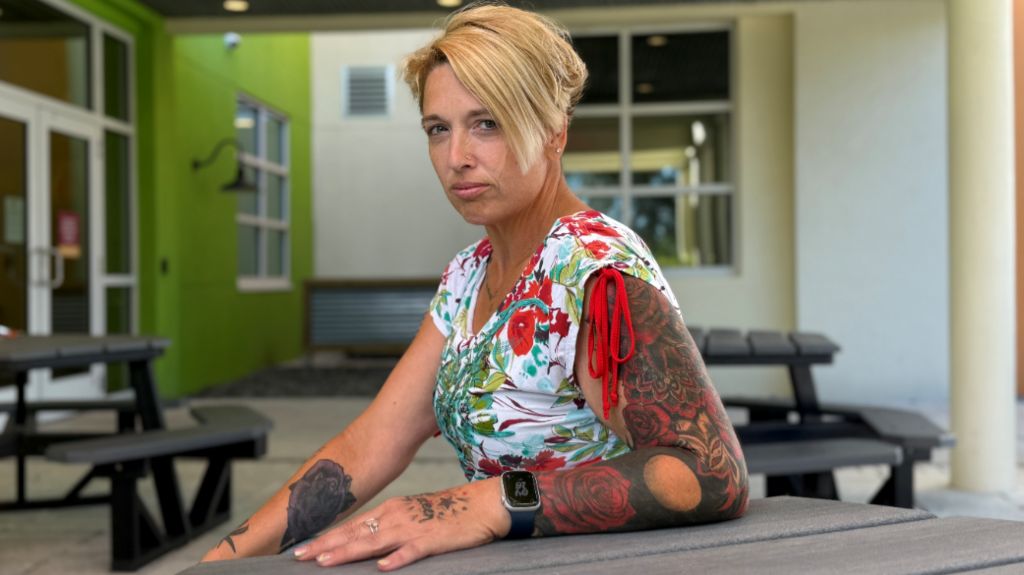
Chantille Manuel, a Florida resident, has achieved remarkable personal milestones over the past five years, including overcoming addiction, losing over 140 pounds, and launching her own beauty salon. Despite these accomplishments, she continues to rely on food assistance from local churches and the U.S. government to feed herself. ‘I don’t want to have to have help from anybody, I want to be self-sufficient,’ she says. However, her situation is precarious as the ongoing government shutdown threatens to cut off essential food aid for millions of Americans like her. The Supplemental Nutrition Assistance Program (SNAP), which provides reloadable debit cards for food purchases, is at risk of running out of funds starting November 1. This program is a lifeline for one in eight Americans, including Ms. Manuel, who spent her October benefits last week on essentials like coffee, creamer, and tuna. ‘It’s either going to be there or it’s not,’ she says. ‘So I might as well get what I need right now.’ The Trump administration has declined to use a contingency fund to continue SNAP benefits, citing the need to reserve funds for emergencies like natural disasters. Even if used, these funds would only cover about 60% of a single month’s benefits, according to the Center on Budget and Policy Priorities. Democrats and Republicans remain divided on the issue, with Democrats accusing the administration of prioritizing other services over SNAP. On Tuesday, Senate Democrats introduced legislation to fund SNAP during the shutdown, but its passage is uncertain. Meanwhile, food banks like All Faiths Food Bank in Sarasota, Florida, are bracing for increased demand. Last year, the food bank served over 80,000 people with more than 22 million pounds of food. ‘Receiving food is an inalienable right,’ says Nelle Miller, the food bank’s CEO. ‘I just can’t imagine denying food, water, or air to any human being.’ As the shutdown enters its 29th day, the longest in U.S. history, the fate of SNAP recipients hangs in the balance, with many fearing they will soon have to turn to food banks for survival.
‘I have to get what I need right now’: Americans brace for expiry of critical food benefits