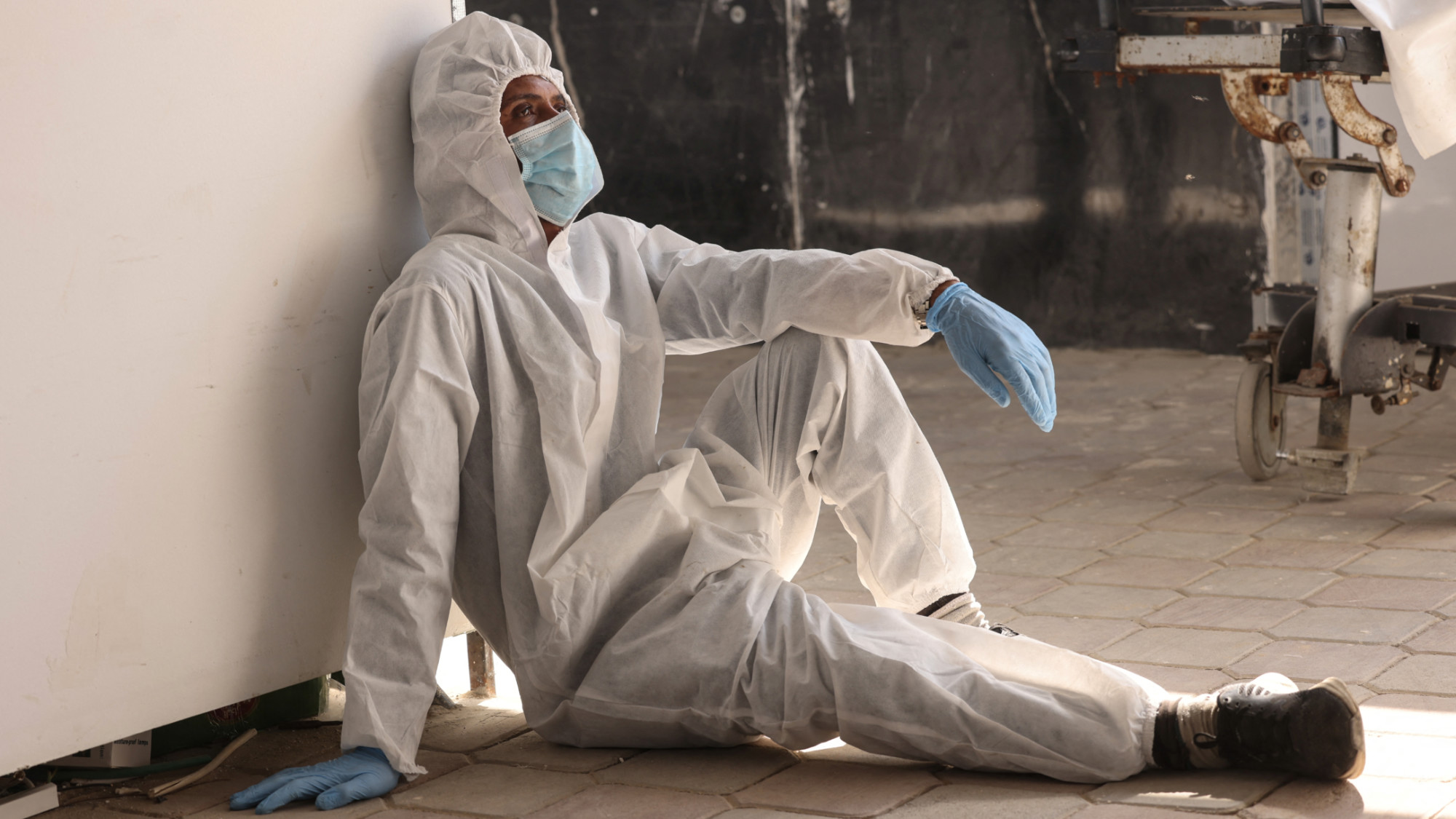
In a somber hall at the Nasser Medical Complex in Khan Younis, southern Gaza, dozens of families gather, their eyes fixed on a screen displaying images of decomposed bodies. These remains, returned by Israeli authorities as part of a prisoner swap deal with Hamas, bear signs of torture and decay. Without DNA testing equipment, families are left to identify their loved ones through photographs—a harrowing process that offers little closure. Wafaa al-Aloul, a mother receiving treatment in Egypt, spends hours scrutinizing the images, searching for her son Mohammed, who disappeared in September. Her story mirrors the anguish of thousands in Gaza, where an estimated 10,000 people remain missing, many believed buried under rubble or forcibly disappeared by Israel. The World Health Organization reports that over 92% of Gaza’s health system, including forensic services, has been destroyed, further complicating identification efforts. Dr. Ahmed Dhahir of Nasser Hospital describes the primitive methods used to document remains, noting that many bodies show signs of fatal abuse. As families cling to hope, the conflict’s toll continues to devastate Gaza’s civilian population.
‘I dreamed to hug him. Now I hope to bury him’: Gaza’s missing haunt their families