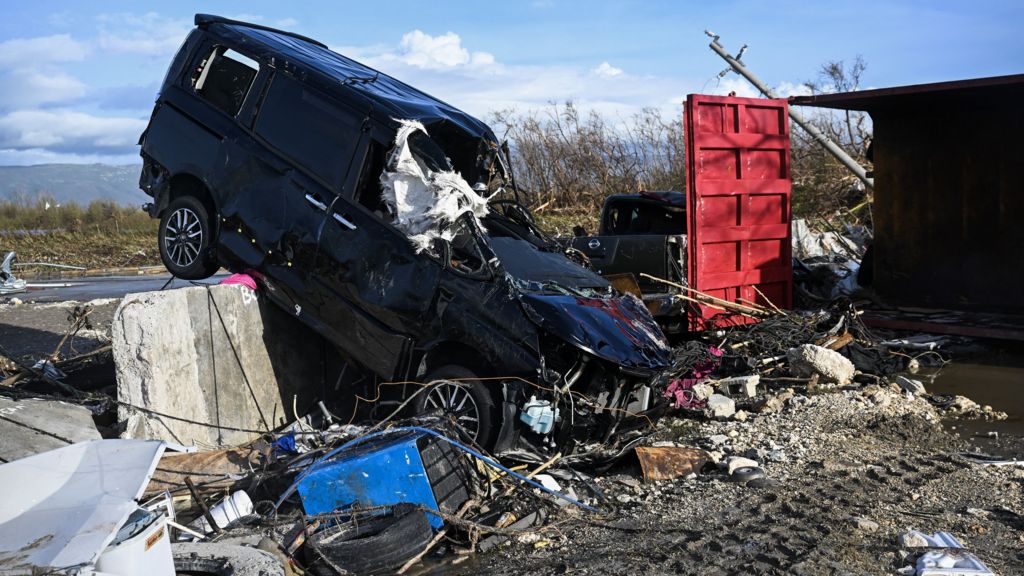
The death toll in Jamaica from Hurricane Melissa has surged to 28, as confirmed by Prime Minister Andrew Holness. The catastrophic storm, a category five hurricane—the most severe classification—has wreaked havoc across the Caribbean, with additional fatalities reported in Haiti and the Dominican Republic. Holness revealed on Saturday that nine more deaths were confirmed, with potential casualties still under investigation, indicating the toll may rise further. Emergency responders and aid agencies face significant challenges in reaching affected areas due to blocked roads, debris, and widespread flooding. The hurricane, which made landfall on Tuesday, knocked out communication systems and power across much of Jamaica, leaving 72% of the population without electricity and forcing around 6,000 people into emergency shelters. The western regions of the island, including Black River and Montego Bay, have borne the brunt of the destruction, with images showing flattened buildings, streets littered with debris, and entire neighborhoods submerged. Aid distribution has been hampered by landslides, downed power lines, and impassable roads, despite the reopening of Jamaica’s airports. Reports of desperate individuals looting supermarkets and pharmacies for essential supplies underscore the dire situation. Hurricane Melissa, with sustained winds of 185mph (295 km/h), is now the most powerful storm on record to hit Jamaica and one of the strongest in Caribbean history. The broader impact of climate change on storm intensity remains uncertain, but rising sea surface temperatures are believed to fuel more powerful hurricanes. The US National Oceanic and Atmospheric Administration had predicted an above-normal Atlantic hurricane season this year, a forecast tragically validated by Melissa’s devastation.