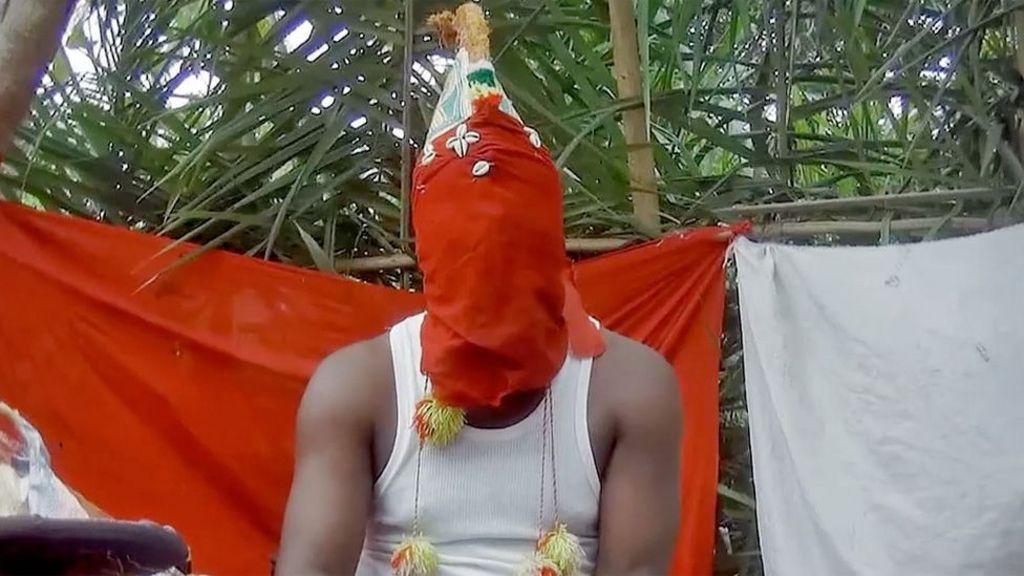
In Sierra Leone, a grim shadow looms over communities as ritual killings linked to black magic continue to devastate families. The murder of 11-year-old Papayo, whose body was found mutilated with vital organs, eyes, and an arm removed, remains unsolved four years later. His mother, Sallay Kalokoh, is tormented by the silence surrounding her son’s death. ‘They killed my child, and now there is just silence,’ she told BBC Africa Eye. Papayo’s case is emblematic of a broader crisis in the country, where killings tied to juju (black magic) often go uninvestigated due to under-resourced authorities and deeply ingrained superstitions. BBC Africa Eye’s investigation uncovered a clandestine network of juju practitioners who claim to supply human body parts for rituals, promising clients prosperity and power. One practitioner, Kanu, boasted of political connections across West Africa and showed undercover reporters a human skull as evidence of his trade. Another, Idara, claimed to lead a network of 250 herbalists. Despite arrests and raids, justice remains elusive, with many cases stalled or dismissed. The lack of closure for victims’ families fuels fear and despair in communities already grappling with poverty and the legacy of civil war. Traditional healers, often conflated with these rogue practitioners, are working to clear their name, but the fight against this dark trade remains an uphill battle.