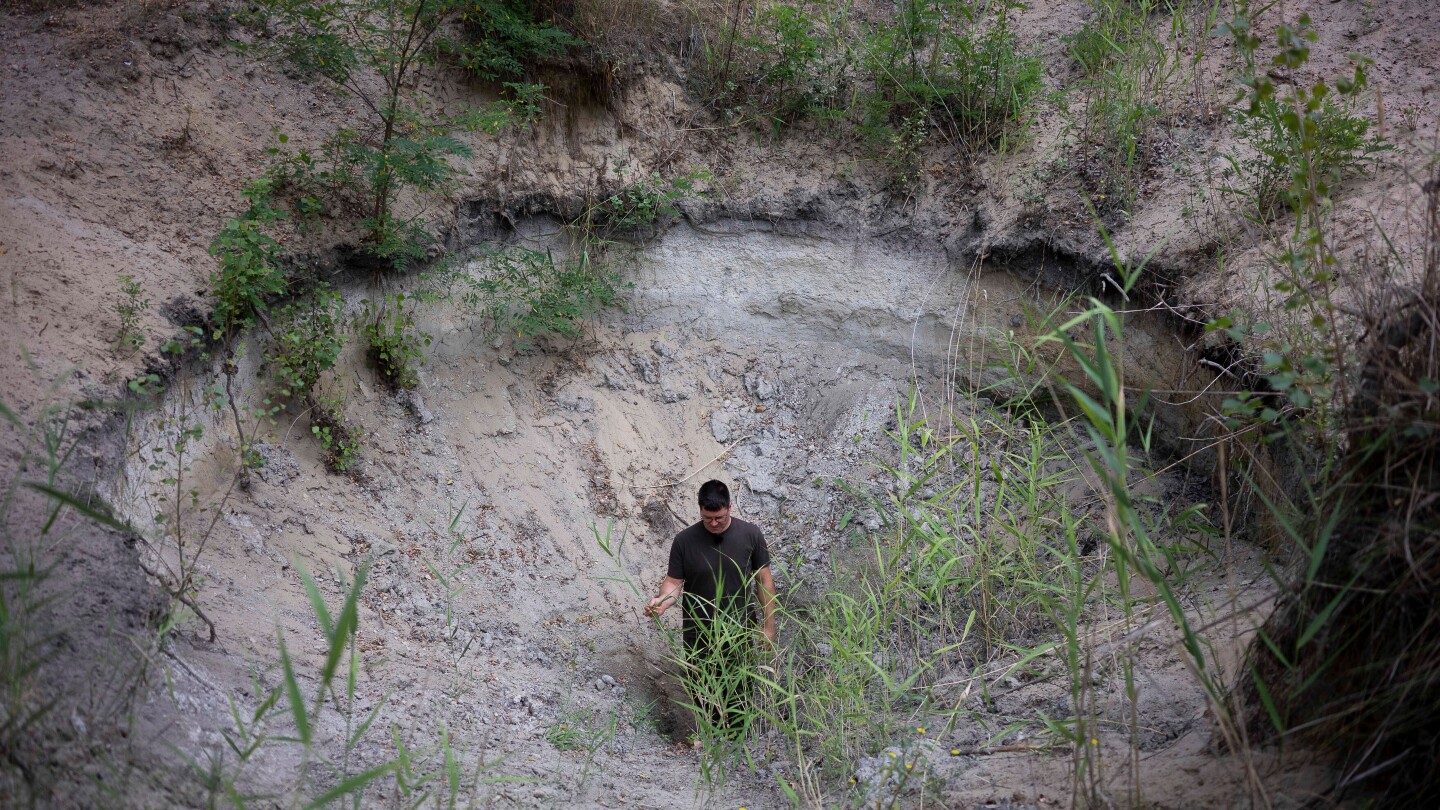
In the heart of Hungary’s Great Plain, a remarkable environmental transformation is underway as local farmers confront an escalating climate crisis. The Homokhátság region, once a fertile agricultural heartland, now resembles arid landscapes more typical of the Sahara Desert than Central Europe, with cracked earth and expanding sand dunes replacing formerly productive fields.
Oszkár Nagyapáti, a determined farmer and community leader, stands at the forefront of this battle against desertification. Digging into the sandy soil of his property, he demonstrates the alarming retreat of groundwater levels that has accelerated in recent years. “Where did so much water go? It’s unbelievable,” he remarks, watching cloudy liquid slowly seep into a hand-dug pit that reveals the severity of the water crisis.
Scientific research published in the European Countryside journal identifies this aridification as unique to the region, resulting from the combined impact of climate change, improper land management, and inadequate environmental practices. Where regular flooding from the Danube and Tisza Rivers once sustained agriculture, now only parched earth remains.
Nagyapáti has mobilized a group of over 30 volunteers known as “water guardians” to implement an innovative solution using Hungary’s abundant thermal water resources. Their strategy involves redirecting overflow from local thermal spas—water that would otherwise flow unused into canals—to create artificial wetlands that mimic historical flooding patterns.
The project began with negotiations between the water guardians, local authorities, and thermal spa operators last year. Their first achievement: transforming a 2.5-hectare (6-acre) low-lying field into a shallow marsh using cooled and purified thermal water drawn from deep underground. By blocking sluices along canals, they’ve successfully captured and retained this valuable resource.
According to meteorological experts from Eötvös Loránd University, the region suffers from unusually dry surface-level air layers that prevent storm fronts from producing precipitation. Instead, these weather systems pass through without rain, creating high winds that further desiccate the topsoil.
The water guardians hypothesize that their artificial wetlands will not only raise groundwater levels but also create beneficial microclimates through surface evaporation. This could increase humidity, reduce temperatures, minimize dust, and positively impact nearby vegetation—a crucial intervention as climate change continues to accelerate.
Hungarian Prime Minister Viktor Orbán has recognized the severity of the situation, establishing a national “drought task force” after weather-damaged crops significantly impacted the country’s GDP. The water guardians’ initiative demonstrates measurable success, with improved groundwater levels and increased flora and fauna near the flood site already observable.
The group now aims to expand their project to additional fields and hopes their community-led approach will inspire similar water conservation efforts throughout Hungary and beyond. As Nagyapáti emphasizes: “Retaining any kind of water, whether in a village or a town, is a tremendous opportunity for water replenishment.”