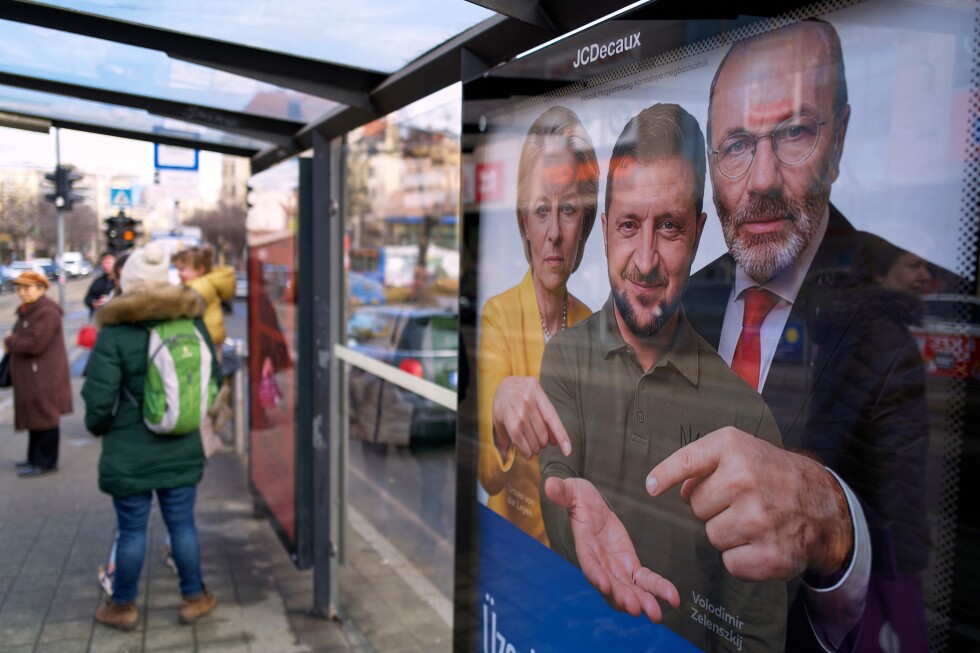
BUDAPEST, Hungary — As Hungary approaches a pivotal April 12 election, Prime Minister Viktor Orbán is leveraging an aggressive disinformation campaign to redirect voter attention from domestic economic concerns toward neighboring Ukraine. With his right-wing Fidesz party trailing behind center-right challenger Péter Magyar in independent polls, Orbán’s government has launched a taxpayer-funded media blitz featuring AI-generated imagery of Ukrainian President Volodymyr Zelenskyy depicted alongside European officials in what appears to be a demand for financial support.
The campaign’s central message—”We won’t pay!”—directly challenges European Union efforts to sustain Ukraine amid Russia’s ongoing invasion. Orbán positions himself as protecting Hungarian interests against what he characterizes as EU warmongering, suggesting alignment with Ukraine could economically cripple the nation and force Hungarian youth into military conscription.
This rhetoric escalated Monday when Hungary blocked the EU’s 20th sanctions package against Russia and vowed to veto further pro-Ukraine policies until resumed oil shipments via Ukraine are guaranteed. Orbán’s administration claims Russian oil disruptions resulted from Ukrainian actions, though Kyiv attributes the January pipeline damage to Russian drone strikes.
Analysts note Orbán’s strategy mirrors previous successful election tactics where external threats were emphasized over domestic shortcomings. András Rácz, Russia expert at the German Council on Foreign Relations, observed: “Populists often define an imaginary enemy and offer protection. Ukraine has been ideal from this perspective.”
The campaign emerges amid Fidesz’s weakening position following political scandals, including a presidential pardon for a child sexual abuse case accomplice that triggered resignations. Challenger Magyar, a 44-year-old former Fidesz insider, has capitalized on these controversies while campaigning on economic issues, anti-corruption measures, and restoring Hungary’s Western alliances.
Despite government-controlled media amplifying anti-Ukraine narratives, dissenting voices emerged during recent Budapest demonstrations where hundreds commemorated the invasion’s anniversary. Liberal Mayor Gergely Karácsony condemned Orbán’s approach as “a betrayal not only of Ukraine, but of Hungary’s national interest,” while Ukrainian students in Hungary criticized the billboards as politically motivated misinformation funded by Hungarian taxpayers.