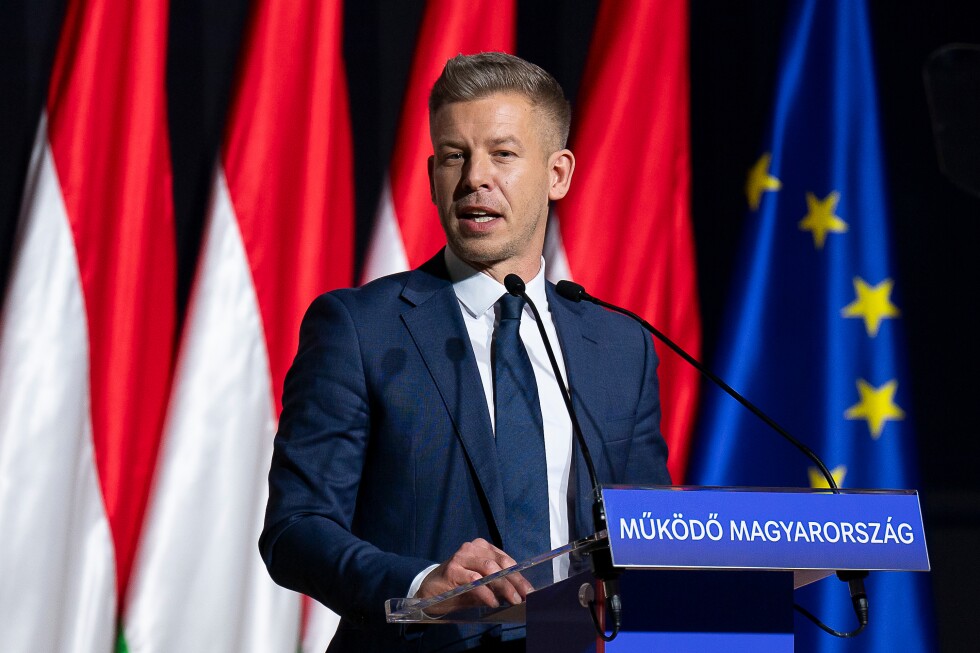
BUDAPEST, Hungary — In a dramatic shift within Hungarian politics, opposition leader Péter Magyar has launched an ambitious campaign to unseat Prime Minister Viktor Orbán’s longstanding government. Speaking before supporters at a Budapest exposition center on Sunday, Magyar declared his center-right Tisza party stands “ready to govern” just 56 days before the crucial April 12 parliamentary elections.
Magyar, a former insider within Orbán’s nationalist Fidesz party, has rapidly emerged as the most formidable political challenge to Orbán’s 16-year administration. Following an impressive performance in June’s European Parliament elections where Tisza captured approximately 30% of the vote, the party has maintained a consistent lead in independent polls for over a year.
The opposition leader has conducted an intensive grassroots campaign across Hungary’s traditionally conservative rural heartlands—regions that have historically supported Orbán. Magyar’s platform centers on economic grievances, highlighting Hungary’s status as one of the EU’s poorest nations despite EU membership. He emphasizes stagnant wages, soaring living costs, and systemic corruption that he claims has enriched a small circle of government-connected oligarchs while ordinary Hungarians struggle.
Foreign policy represents another critical dividing line. While Orbán recently stated that the European Union—not Russian aggression—poses the primary threat to Hungary, Magyar has positioned himself as pro-European. Following meetings with European leaders at the Munich Security Conference, Magyar pledged to end Hungary’s “drifting out of the European Union” and restore Western alliances, though he maintains certain Fidesz policies including border security measures and opposition to Ukraine’s accelerated EU accession.
Tisza’s comprehensive 239-page governing program outlines ambitious reforms, including recovering billions in suspended EU funds by addressing democratic backsliding concerns, adopting the euro by 2030, and revitalizing Hungary’s deteriorating healthcare and public transportation systems. The party has recruited political newcomers from professional sectors—entrepreneurs, doctors, economists—with international energy expert Anita Orbán (no relation to the prime minister) slated as prospective foreign policy chief and former Shell executive István Kapitány as senior economy official.
Magyar concluded his campaign launch with a promise of service-oriented governance: “We don’t plan to dominate this country, but to serve it.”