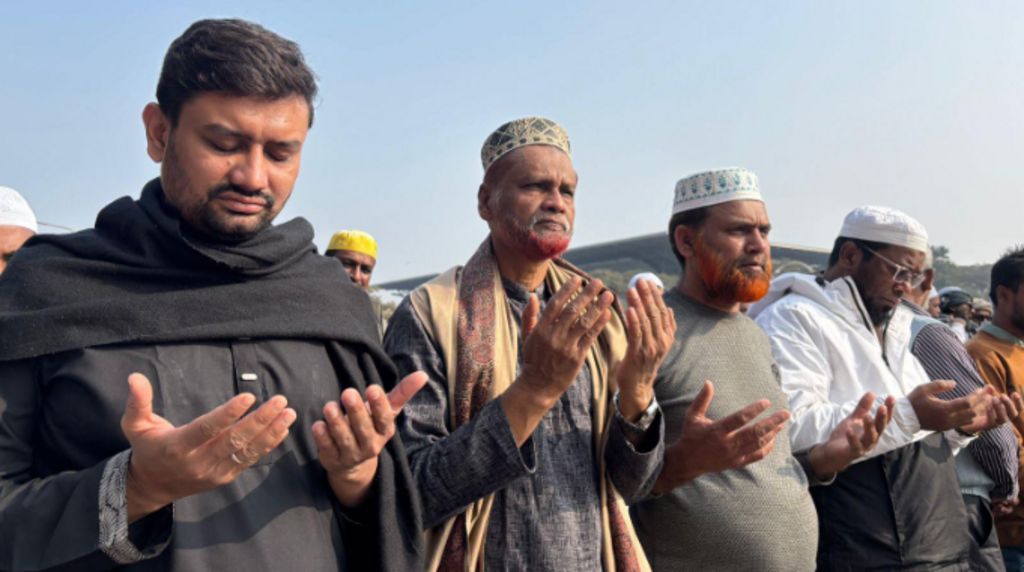
Dhaka witnessed an unprecedented outpouring of grief as hundreds of thousands of citizens converged on the capital Wednesday to honor former Prime Minister Khaleda Zia, who passed Tuesday at age 80 after battling prolonged illness. The nation’s first female premier received final tributes through streets lined with emotional supporters offering prayers and displaying photographs of the iconic leader.
The solemn procession featuring Zia’s flag-draped cortege moved past parliamentary grounds under enhanced security deployment, with national flags flying at half-mast. The massive gathering transcended mere political demonstration, representing profound national reverence for a figure who shaped Bangladesh’s democratic trajectory.
International dignitaries including India’s External Affairs Minister S. Jaishankar, Pakistan’s National Assembly Speaker Sardar Ayaz Sadiq, and Bhutan’s Foreign Minister Lyonpo DN Dhungyel attended funeral ceremonies, underscoring Zia’s regional significance.
Personal testimonials highlighted Zia’s enduring legacy. BNP activist Setara Sultana traveled extensively “just to say goodbye,” while mother Sharmina Siraj credited Zia’s educational stipend programs for transforming her daughters’ opportunities, calling the late leader “an inspiration.”
Zia’s political journey began tragically following her husband President Ziaur Rahman’s 1981 assassination. She subsequently led the Bangladesh Nationalist Party (BNP) through the nation’s first elections in two decades, earning recognition as an “uncompromising leader” for boycotting controversial polls during military rule.
Her career featured intense rivalry with current Prime Minister Sheikh Hasina, with Zia emerging as the primary opposition symbol during what many consider Hasina’s increasingly authoritarian tenure. Despite recent illness, Zia had been nominated for three parliamentary constituencies in upcoming February elections—the first since last year’s popular revolution unseated Hasina.
The political landscape now shifts significantly with Zia’s passing. Her son Tarique Rahman, who recently ended 17 years of London exile, recited Quranic verses beside his mother’s body and is positioned to assume party leadership should BNP return to power. Rahman memorialized his mother as “a guiding presence that shaped [Bangladesh’s] democratic aspirations.”