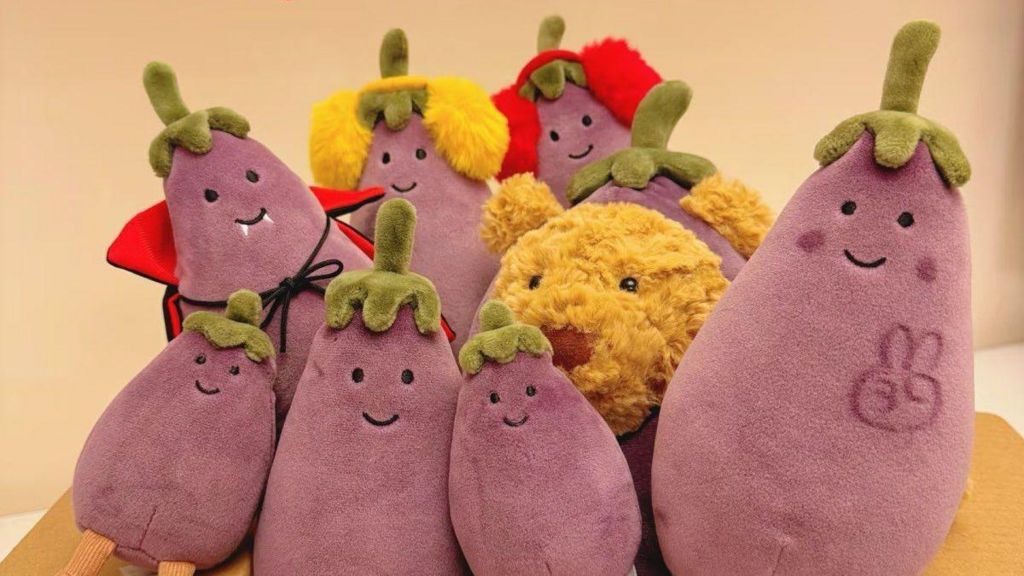
In the midst of pandemic-era uncertainty, a surprising emotional lifeline emerged for young Chinese adults: the soft, whimsical plush toys of British brand Jellycat. What began as children’s toys has evolved into a global phenomenon, particularly in China where disenchanted youth have embraced them as tools for emotional regulation and social connection.
The journey of Stella Huang illustrates this cultural shift. Her first Jellycat purchase in 2021, a gingerbread house plushie discovered on Chinese social platform RedNote, marked the beginning of a collection that now numbers 120 toys with a total value exceeding 36,000 yuan ($5,145). For Stella, now a 32-year-old tourism sales manager in Beijing, these aren’t mere collectibles but emotional companions in challenging times. “At my age, there are many things you can’t share with others,” she reflects. “The plushies help me regulate my emotions.
Jellycat’s remarkable success story is rooted in strategic market positioning and perfect timing. The company’s Amuseable line—featuring inanimate objects like toilet rolls and boiled eggs with tiny faces—became breakout products that resonated deeply with Gen-Z and millennial audiences globally. According to Statista analyst Kasia Davies, these toys “appeal to a wide Gen-Z and millennial audience” by tapping into contemporary desires for comfort and companionship.
The brand’s ascent coincided with broader demographic challenges facing toy manufacturers. With birth rates declining worldwide, companies needed to identify new markets. Jellycat had already established Chinese market presence in 2015, providing crucial groundwork for pandemic-era expansion. Business consultant Kathryn Read, with 15 years’ China experience, notes the company “captured the tone of the pandemic” when people sought comfort amid heightened uncertainty.
Jellycat’s commercial performance has been extraordinary. Recent Companies House accounts reveal the UK-based firm’s revenue surged by two-thirds to £333m ($459m) in 2024. Chinese consumers purchased approximately $117m worth of Jellycat toys through major e-commerce platforms, according to Beijing-based Moojing Market Intelligence.
This success reflects broader trends in China’s collectible toy market, projected to exceed 110bn yuan this year according to a 2024 report by the Chinese Academy of Social Sciences. The phenomenon parallels the success of domestic brands like Pop Mart’s Labubu elf-like dolls, highlighting growing appetite for emotional comfort objects among Chinese youth.
Professor Erica Kanesaka of Emory University identifies this as part of a global “kidult” trend where young adults question “outdated understandings of adulthood.” Market research company Circana reports that while global toy sales declined slightly in 2024, collectible toy sales increased by nearly 5% to record highs.
Jellycat’s marketing strategy has been particularly effective in China. Limited edition releases, pop-up experiences featuring celebrity partnerships (including A-list actress Yang Mi in Shanghai), and strategic localization— offering fish and chips plushies in London while featuring teapot designs in Beijing—have created buzz and exclusivity. Many Chinese consumers describe this approach as “hunger marketing,” driving social media desirability.
The toys have also become vehicles for cultural expression. The Amuseable aubergine, nicknamed “the boss” by Chinese fans, has spawned numerous memes where users depict the vegetable in various states of emotional distress—complete with drawn dark circles and glasses—to humorously represent workplace exhaustion. Hong Kong marketing professional Wendy Hui posted her modified aubergine on Threads captioned: “The mental state of workers on Monday.”
For many young Chinese, Jellycat represents an accessible luxury in economically challenging times. As 34-year-old medical sales representative Jessie Chen notes: “You have to consider for a long time before buying a luxury bag. But you don’t need to do that for a Jellycat.” The brand’s practical offerings, including bags costing just a few hundred yuan, offer both emotional and functional value.
However, signs suggest China may have reached peak Jellycat, with some fans noting decreased social media discussion. Some collectors are turning to more affordable alternatives like Teletubbies blind boxes, while others consider “quitting the pit”—Chinese slang for retiring a hobby. As Stella Huang observes: “It is so difficult to buy them. Our daily life is not easy already and why should we make things harder for ourselves?”
Despite these challenges, Jellycat’s impact on China’s emotional economy remains significant, offering soft comfort in hard times and illustrating how global brands can successfully adapt to local emotional landscapes.