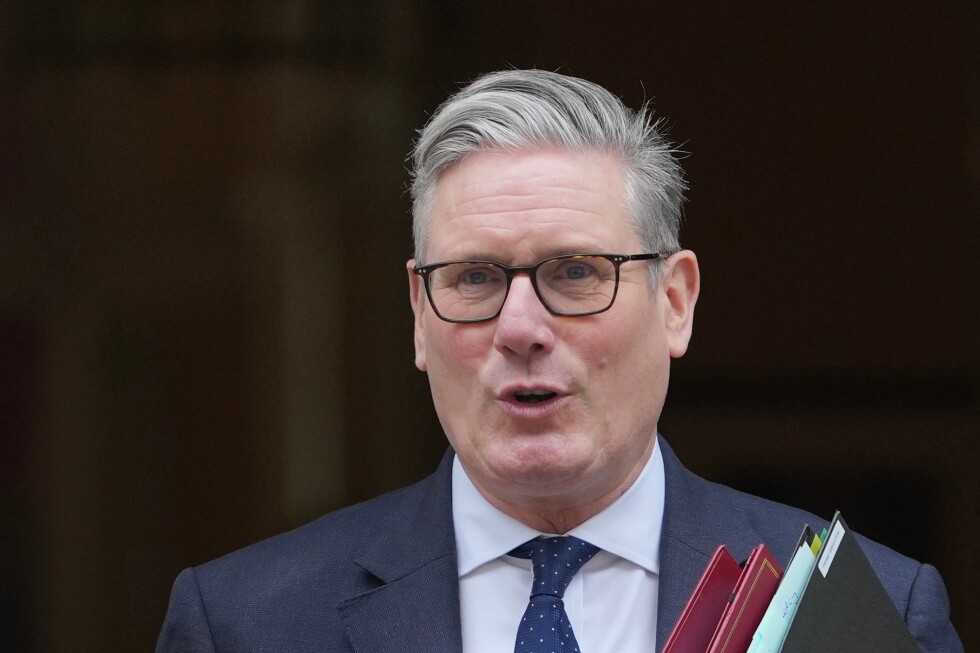
LONDON — British Prime Minister Keir Starmer faces mounting criticism from opposition lawmakers over his handling of the crucial trans-Atlantic alliance with the United States, following public disagreements with President Donald Trump regarding military strategy toward Iran.
The diplomatic friction emerged when President Trump openly criticized Britain as “uncooperative” and dismissed Starmer’s leadership credentials by comparing him unfavorably to Winston Churchill. This rebuke came after initial hesitation from the British government regarding U.S. requests to utilize UK military installations—including the strategic Diego Garcia base in the Indian Ocean—for conducting strikes against Iranian missile systems targeting British allies in the Middle East.
Despite eventually granting operational access to American forces, the Prime Minister’s cautious approach has drawn sustained criticism from Conservative opponents. Cabinet Minister James Murray defended Starmer’s measured response, characterizing it as demonstrating “a cool head” while emphasizing the enduring strength of the UK-US partnership.
The current tensions recall historical strains in the special relationship, notably during the 1956 Suez Crisis when American opposition forced British withdrawal, and during the Vietnam War era when Prime Minister Harold Wilson resisted U.S. pressure to commit troops. More recently, Tony Blair’s alignment with George W. Bush on the Iraq invasion remains a controversial chapter in bilateral relations.
Beyond immediate military concerns, the disagreement threatens broader implications. A recently signed trade agreement between the two nations remains in limbo, potentially jeopardized by Trump’s tariff announcements. Additionally, the settlement regarding the future status of the Chagos Islands, crucial for maintaining the Diego Garcia base, awaits American support.
Former National Security Adviser Peter Ricketts suggested that Trump appears to demand “completely blind loyalty” from allies, while advising British leadership to “keep calm and carry on” through the current diplomatic challenges.