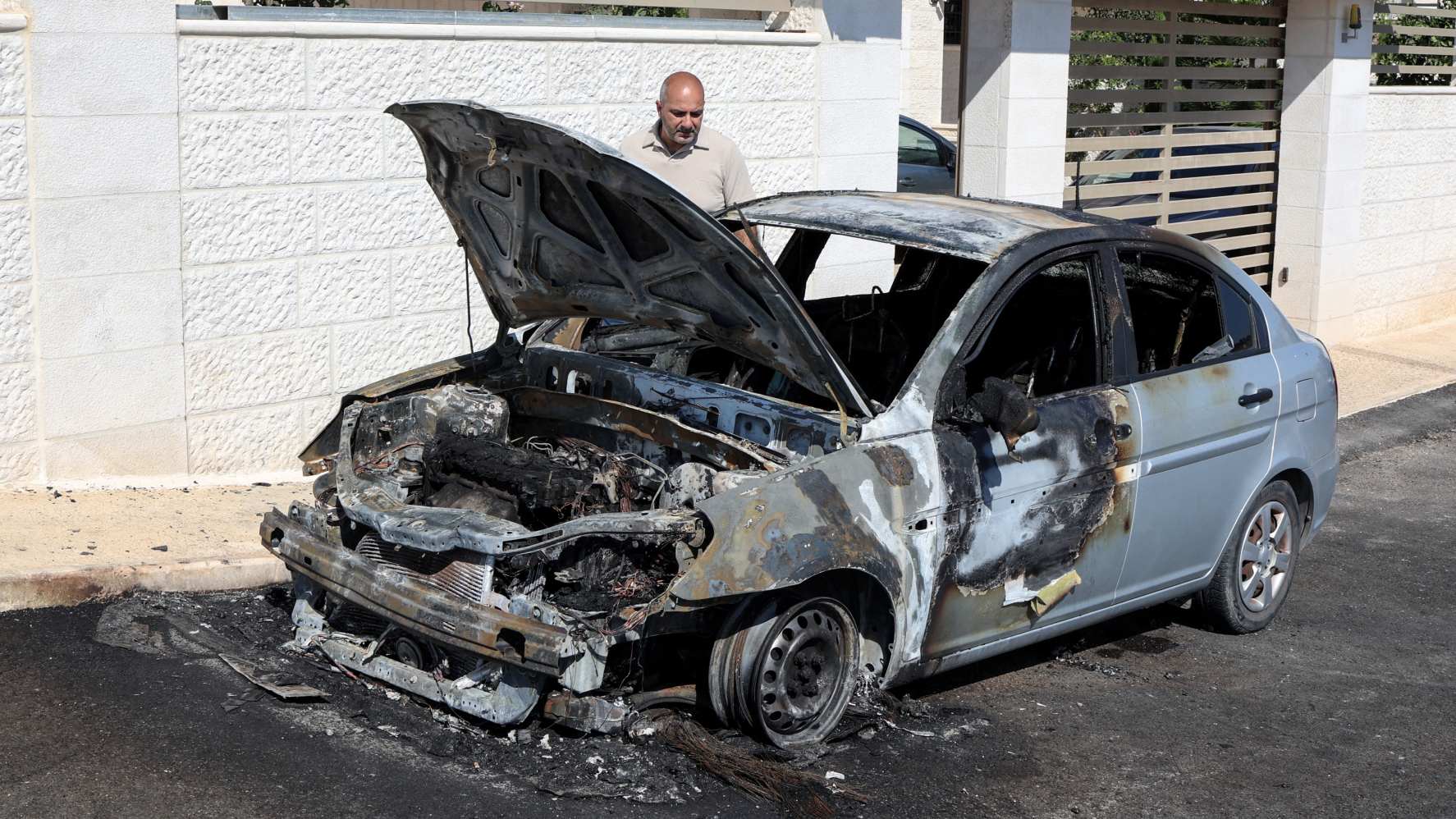
As Israeli and Hamas negotiators continue to deliberate over the final details of US President Donald Trump’s peace plan, the predominantly Christian village of Taybeh in the West Bank faces escalating violence and forced displacement. Villagers, while relieved by the progress in peace talks, are grappling with more immediate and dire concerns. October, traditionally the olive harvesting season, has become a time of terror for residents who risk settler assaults when venturing onto their lands. Gates installed at the village entrance allow the Israeli army to cut off access instantly, further isolating the community. Youssef Moussa, a 64-year-old Bedouin man, recounted a harrowing attack by a settler militia that left him unconscious with two broken ribs and his wife beaten. The settlers ransacked his home, stealing 7,000 dinars ($9,870) and 85 sheep, which represent his livelihood. The violence extends beyond Taybeh, with armed settlers, often accompanied by soldiers, attacking Palestinian farmers across the West Bank. In Turmus Ayya, northeast of Ramallah, masked men assaulted an elderly woman and a foreign volunteer, set vehicles on fire, and stole the harvest. Similar incidents have been reported near Nablus, Ramallah, and Bethlehem. Jamal Juma, a peace activist based in Ramallah, describes the perpetrators as “fascist militias” funded and armed by the state, operating with impunity under the Netanyahu government. Bezalel Smotrich, Netanyahu’s finance minister and a key figure in the coalition government, is a self-proclaimed fascist and the de facto governor of the West Bank. His relentless land seizure program aims to eradicate Palestinian communities, a goal that has already seen significant progress. Smotrich’s plan to annex 82 percent of the West Bank, referred to as Judea and Samaria, would render the two-state solution impossible. The international community, including the US and European nations, has expressed concern over these developments, but on the ground, the violence continues unabated. Taybeh, one of the few Christian-majority villages in the West Bank, has attracted international attention, including visits from US Ambassador Mike Huckabee and US senators Chris Van Hollen and Jeff Merkley. However, these visits have done little to deter the ongoing attacks. The plight of Taybeh is emblematic of a broader Israeli policy of forced displacement, which human rights groups like Balasan and B’Tselem argue constitutes a war crime under international law. Despite the humanitarian and cultural destruction, the international community’s response has been insufficient, and the omission of these issues from Trump’s peace plan raises questions about the feasibility of long-term peace in the region.
How the war in Gaza fuelled a wave of settler violence against West Bank Palestinians