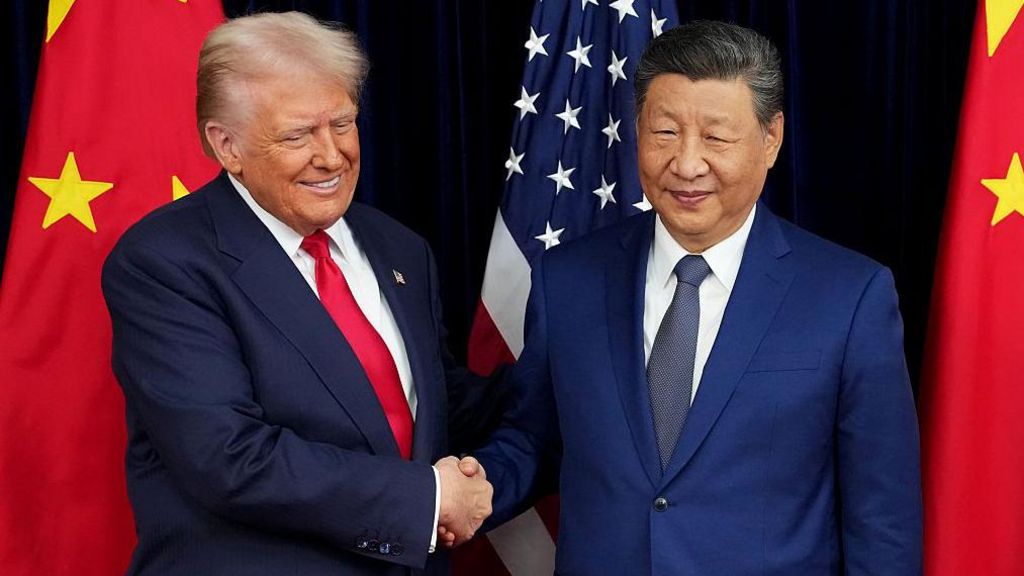
The global economic landscape continues to be reshaped by Trump administration tariffs as the world anticipates the April summit between President Trump and China’s Xi Jinping. While Trump maintains that tariffs have boosted U.S. jobs, wages, and economic growth, international economists present a more nuanced assessment of their worldwide impact.
The International Monetary Fund has revised its 2026 global growth forecast downward to 3.1%, citing trade tensions as a contributing factor. IMF head Kristalina Georgieva characterized the situation as “better than we feared, worse than it needs to be,” noting that current growth rates remain insufficient to meet global aspirations for improved living standards.
According to Maurice Obstfeld, former IMF chief economist now with the Peterson Institute, the global economy avoided worst-case scenarios primarily because most nations refrained from aggressive retaliation against U.S. tariffs. China’s forceful response did prompt quick U.S. concessions, preventing full-scale trade disaster. Nevertheless, after five negotiation rounds, the world’s two largest economies maintain more trade restrictions than when Trump began his second term.
The economic consequences have been multifaceted: increased business costs, investment uncertainty, and efficiency losses that accumulate over time. These effects have been partially offset by lower interest rates, dollar depreciation, creative corporate workarounds, and extensive tariff exemptions. This complex dynamic helps explain why UNCTAD reported global trade values reached over $35 trillion in 2025 despite the tensions.
U.S. economic performance shows resilience with 4.3% growth in the third quarter of 2025—the strongest in two years. Bank of America senior economist Aditya Bhave attributes 0.3-0.5% of U.S. inflation to tariffs, noting that the full impact may not yet be realized in the consumer-driven economy that constitutes 26% of global GDP.
Beyond U.S.-China relations, other significant trade developments include the potential renegotiation of the USMCA agreement, EU member states’ vote on a South American trade deal, and an impending U.S. Supreme Court ruling on tariff legality.
Commodity markets also factor into the economic equation, with Goldman Sachs predicting an 8% decline in Brent crude prices to approximately $56 per barrel due to robust U.S. and Russian production. Meanwhile, Red Sea shipping disruptions linked to regional conflicts have forced rerouting around Africa, increasing transport costs.
As preparation continues for the April summit, American Chamber of Commerce in China chair James Zimmerman notes that while expectations remain modest, sustained dialogue is crucial. Key issues extend beyond tariffs to include rare earth metals sourcing, semiconductor access, Chinese manufacturing overcapacity, and EU concerns about growing dependence on cheap Chinese imports.
Despite Trump’s emphasis on reindustrialization, U.S. manufacturing employment has slightly declined to just under 12.7 million since his second term began. Obstfeld suggests that consumer resilience and massive AI investments—not tariffs—have primarily driven stock market highs and economic growth, indicating that trade restrictions will likely remain a persistent feature of policy discussions.