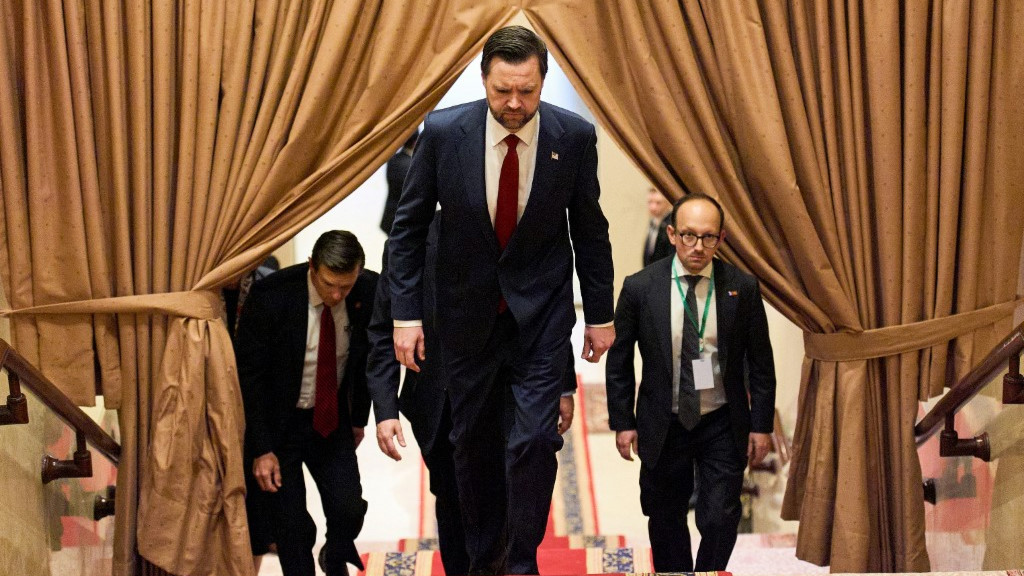
After nearly a full day of closed-door, high-stakes negotiations in Islamabad that marked the highest-level diplomatic encounter between Washington and Tehran in half a century, marathon ceasefire talks between the United States and Iran concluded Sunday morning without a final agreement, leaving core strategic disagreements unresolved and casting uncertainty over future diplomatic engagement.
The negotiating teams brought unprecedented senior representation to the table: the U.S. delegation was led by Vice President JD Vance, with participation from special envoy Steve Witkoff and senior advisor Jared Kushner, while Iran was represented by parliamentary speaker Mohammad Bagher Ghalibaf and Foreign Minister Abbas Araghchi. Throughout the more than 21 hours of discussions, the U.S. team maintained continuous communication with President Donald Trump, who adopted a detached public posture ahead of the talks, telling reporters that a potential deal made “no difference” to him as he traveled to Miami for a Ultimate Fighting Championship event. Trump remained at the venue watching the fight as Vance addressed the press following the negotiation collapse.
Speaking to reporters after the talks, Vance acknowledged that no consensus had been reached, framing the stalled outcome as far more detrimental to Iran than to the United States. He emphasized that Washington left the table with its final, best offer on the table, and would await Tehran’s response to the proposal. The core U.S. demand, Vance explained, remains a long-term, binding commitment from Iran that it will never pursue a nuclear weapon or the capabilities to rapidly develop one – a goal he said has not yet been met. While Vance noted that Iran’s pre-existing enrichment facilities and previous nuclear infrastructure had already been destroyed, he stressed that the remaining sticking point is a fundamental change in Iranian willingness to rule out nuclear weapons development permanently, not just for the near term. “We haven’t seen that yet. We hope that we will,” he added.
Iran’s perspective on the stalemate differs sharply. According to a report from Iran’s Tasnim News Agency citing an anonymous informed source, Tehran claims the “ball is in America’s court”, noting that Iranian negotiators put forward multiple reasonable initiatives during the talks. The report also warned that the status of the Strait of Hormuz – a critical global oil chokepoint currently controlled by Iran – will remain unchanged unless Washington accepts a deal that aligns with Tehran’s definition of reasonable terms.
In a post on the social platform X, Ghalibaf reinforced Iran’s position, saying that while Tehran entered the talks with good faith and a willingness to compromise, decades of historical trauma from two prior conflicts left the Iranian delegation deeply distrustful of U.S. intentions, and the U.S. side ultimately failed to earn that trust in this round of talks. Iranian foreign ministry spokesperson Esmaeil Baghaei noted that expecting a final, comprehensive deal from a single negotiating round was always unrealistic, given weeks of prior armed conflict and decades of deep mutual mistrust between the two nations. While he confirmed that the two sides reached preliminary understandings on a small number of issues, he said two to three core questions remain unaddressed, and any future progress will depend on the U.S. demonstrating genuine good faith and recognizing Iran’s legitimate rights and national interests. Baghaei also added that diplomatic channels remain open, and Iran will continue consultations with Pakistan and other regional partner states.
Pakistan, which served as the host for the historic talks, has called on both sides to maintain the current ceasefire and return to dialogue with a constructive approach. Pakistani Deputy Prime Minister Ishaq Dar stressed that reaching a durable, long-term peace for the region must be the top priority for both parties, and confirmed that Pakistan will continue to act as a neutral facilitator for future negotiations if needed.
Key U.S. allies have expressed disappointment over the lack of a breakthrough. Australian Foreign Minister Penny Wong called on both nations to uphold the existing ceasefire and resume negotiations to find common ground. British Health Secretary Wes Streeting echoed that sentiment, saying that while the lack of an immediate breakthrough is disappointing, diplomatic efforts should continue. “As ever in diplomacy, you’re failing until you succeed. So while these talks may not have ended in success, doesn’t mean there isn’t merit in continuing to try,” Streeting said.
To date, no date or location has been scheduled for a potential second round of talks, leaving regional stability and nuclear non-proliferation efforts in limbo.