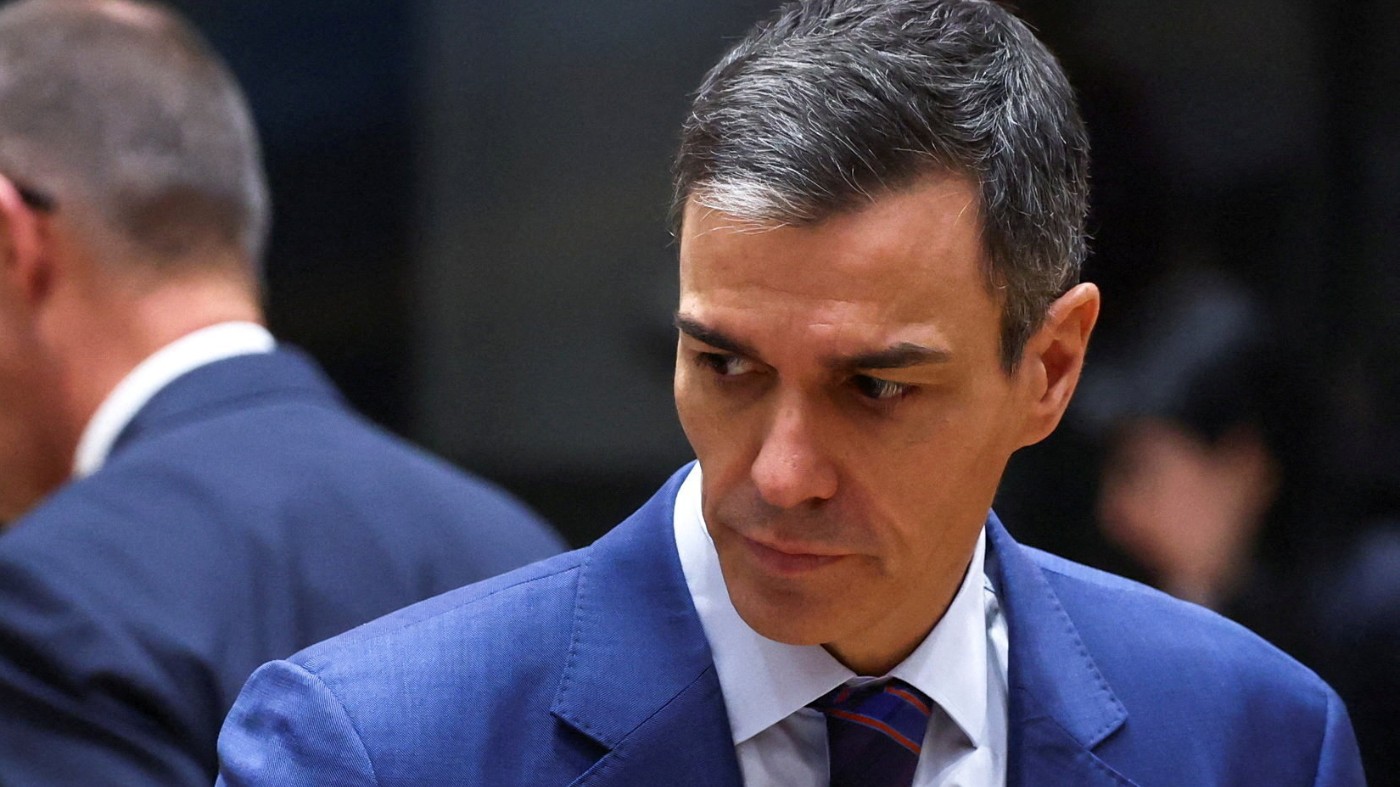
In a striking divergence from European allies, Spanish Prime Minister Pedro Sánchez has adopted an unequivocal position against the US-Israel military campaign in Iran, echoing his country’s traumatic memory of the Iraq War. On March 4, just days after the initial strikes, Sánchez addressed the nation with a four-word manifesto: “No to the war.” This rhetorical stance has been reinforced by concrete actions, including closing Spanish airspace to US military aircraft involved in the operations and denying access to domestic military bases.
The government’s opposition carries profound historical resonance. Sánchez explicitly referenced the 2003 Iraq invasion—a conflict that remains a painful national memory—warning that “the nightmare of Iraq will repeat itself, but this time on a much larger scale.” The parallel is particularly poignant given that Spain’s conservative government under José María Aznar had joined the “coalition of the willing,” a decision supported by only 10% of the population at the time according to polls.
This foreign policy stance is generating significant domestic political consequences. Recent polling by 40dB for El País reveals over two-thirds of Spaniards oppose the military intervention in Iran, with opposition strongest among left-wing voters. The conservative Partido Popular (PP) and far-right Vox party appear divided, with PP leader Alberto Núñez Feijoo taking nearly three weeks to formulate a coherent position after initially supporting the strikes.
Political scientist Pablo Simón of Carlos III University notes that Sánchez’s approach serves multiple purposes: “He is using this as a tool to build soft power globally and to position himself as a leader who stands up to Donald Trump.” The strategy mirrors Sánchez’s 2024 recognition of Palestinian statehood during European elections, which aligned with both his left-wing base and majority public opinion.
The political benefits remain uncertain however. While the Socialist Party gained modest polling boosts after the Palestine recognition, the economic ramifications of the Iran conflict could ultimately damage the government. Spain imports approximately 70% of its energy, and tourism—accounting for 13% of GDP—faces potential disruption from rising fuel costs and security concerns. Industry experts note that while Spain may benefit from being perceived as safer than destinations like Egypt or Turkey, the sector remains vulnerable to broader regional instability.
The government’s stance has drawn fierce criticism from US President Donald Trump, who threatened to cut off all trade with Spain and dismissed its leadership as “not so good.” Nevertheless, Spain’s position appears to be gaining traction elsewhere in Europe, with Italian Defense Minister Guido Crosetto similarly emphasizing that Italy “did not support this war.”