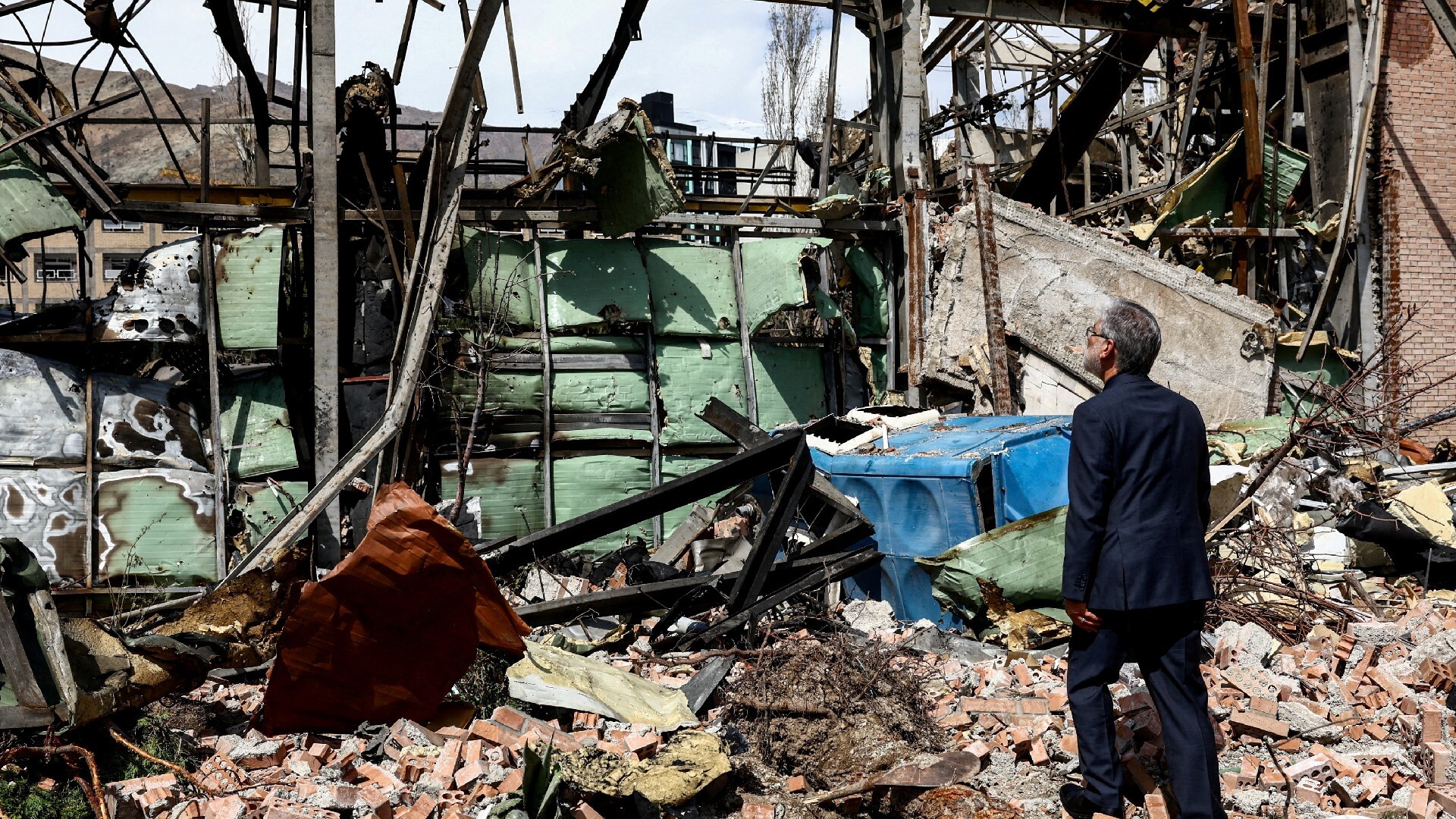
On April 6, an explosive blast tore through the campus of Sharif University of Technology, Iran’s most elite engineering higher education institution. While no fatalities or injuries were reported in the attack, multiple campus structures suffered severe damage — most critically the building that housed the university’s cutting-edge artificial intelligence research center.
Widely compared to the Massachusetts Institute of Technology in the United States for its academic rigor and research impact, Sharif University has stood as a cornerstone of West Asian technical education for decades. It counts among its most famous alumni Maryam Mirzakhani, who made history in 2014 as the first woman and the first Iranian to receive the Fields Medal, mathematics’ highest global honor.
According to the university’s president, the targeted AI center held irreplaceable research datasets, and over the past two years, its team of researchers had dedicated their work to developing and training custom AI models designed for the Persian language. This indigenous research push came as a direct response to decades of U.S. economic sanctions that have cut Iranian researchers off from global AI knowledge sharing and collaborative networks, forcing the community to build its capabilities from scratch.
Amirhossein, a student who worked at the center, confirmed that nearly all of its specialized equipment was destroyed in the blast. He told Middle East Eye that the center was built to develop open-access data processing tools and knowledge-based platforms for academic institutions across Iran, and emphatically denied that the facility had any military affiliation. “Attacks like this suggest the goal is to push Iran backwards scientifically,” he said.
Morteza, a 42-year-old PhD candidate in philosophy of science at Sharif, said he could not bring himself to visit the damaged campus to see the destruction firsthand. “Even seeing the images has been very upsetting,” he shared.
Yet in the immediate wake of the attack, Iranian academics and students — who have already navigated decades of crippling sanctions that disrupted their work long before bombs reached their campuses — have refused to abandon their research and teaching. Classes have resumed via unstable, patchy domestic internet connections, and footage of a mathematics professor setting up his laptop to teach an online lecture from the bomb-damaged ruins of his classroom spread widely across global social media.
In a public post on X, Iran’s First Vice President Mohammad Reza Aref directly accused the United States of deploying a bunker buster bomb to target the university. He pushed back against claims the attack could cripple Iranian scientific progress, noting: “Trump fails to understand that Iran’s knowledge is not embedded in concrete to be destroyed by bombs; the true fortress is the will of our professors and elites.”
The April 6 strike on Sharif University is not an isolated incident: it is part of a growing pattern of coordinated attacks targeting Iranian academic and research institutions amid the ongoing U.S.-Israeli military campaign against Iran. Iran’s Ministry of Science and Technology has confirmed that at least 30 university campuses have come under fire, while the British Society for Middle Eastern Studies (BRISMES) has verified that at least 16 universities and dedicated research centers have sustained substantial damage.
Local Iranian media reported that on March 28, the Iran University of Science and Technology — a 95-year-old institution founded to train the nation’s engineers — was hit in a U.S.-Israeli strike, though full details on casualties and damage have not yet been released. Just one day later, Isfahan University of Technology (IUT), another of Iran’s top-ranked engineering schools, was attacked for the second time. Fars News Agency confirmed that multiple campus buildings were damaged, and four university staff members were wounded in the strike. IUT is renowned for leading development of Iran’s national radar system and designing the country’s first domestically built submarine. In 2015, both Sharif University and IUT ranked among the top 100 universities under 50 years old in the Times Higher Education global rankings, placing 40th and 63rd respectively.
The wave of attacks extends far beyond engineering institutions. On April 2, a missile strike hit the century-old Pasteur Institute of Iran, a leading public health and vaccine research facility, reducing its core vaccine production laboratories to rubble. Days later, a specialized plasma and laser research laboratory at Tehran’s Shahid Beheshti University was also hit. Earlier in March, an in vitro fertilization (IVF) clinic at Tehran’s Ghandi Hospital was struck in a missile attack; one couple who had been trying to conceive for 10 years told Middle East Eye they still have no information about what happened to their stored fertility samples.
Strikes have also targeted individual faculty members: Iran’s official Islamic Republic News Agency reported that Dr. Saeed Shamghadri, an associate professor of electrical engineering at IUT, was killed in an air strike on March 22 alongside his entire family.
Lewis Turner, chair of the BRISMES Committee on Academic Freedom, said the consistent pattern of targeting academic institutions mirrors the destruction of Gaza’s education system during Israel’s ongoing assault on the enclave, where more than 80 percent of the territory’s universities and schools have been destroyed. “There appears to be a widespread disregard for universities’ protected status under international law,” Turner told Middle East Eye. “These actions may well amount to war crimes.”
Turner warned that the harm caused by these attacks will resonate across Iranian society for generations. “How many generations will be denied access to education because of the damage to university infrastructure?” he asked. “Because of the roles that universities play within society for the progress of knowledge… this kind of destruction is going to have potentially long-term and profound effects on Iranian society.”
A common thread unites all of the targeted institutions: none have been tied to military programs. Instead, every targeted site hosts leading civilian scientific and technological research centers, a reality that Iranian students and academics have been quick to highlight. “Can someone explain why philosophy of science should be targeted? Is the problem with philosophy or with science itself?” Morteza asked. “It feels like the real target is the ability to think.”
The current bombing campaign comes on top of decades of harsh economic sanctions that have systematically stifled Iranian academic progress. Sanctions have cut off Iranian researchers from international collaborative projects, blocked students from traveling to attend global academic conferences and exchange programs, and even led to widespread reports of journal editors rejecting research papers from Iranian medical scientists and scholars. Many Iranian researchers also report being unable to pay for international academic society memberships or conference registration fees due to financial restrictions.
Reza Sohrabi, a research fellow at the University of Tehran, explained that even before the bombing campaign, Iranian academics faced steep barriers to their work, and the conflict has only worsened these challenges. “It’s not easy to study and work and research during a war. I’m trying to produce my thesis and dissertation and other papers,” he said. “But then it’s not easy, because you need various resources such as the internet. I used to go to the library to study, but it is closed because of the war.”
Asama Abdi, a postdoctoral fellow at the University of Exeter’s Institute of Arab and Islamic Studies, argues that the bombing campaign is a deliberate attempt to complete what decades of sanctions could not achieve: rolling back Iran’s independent technological development. “These universities have long been the backbone of knowledge production in Iran as well as of industrial development, and technological advancement,” Abdi explained. “Whatever technological capabilities could not be disabled and curtailed through sanctions are now being completely annihilated through bombardment. It is a longer, indeed colonial, pattern of attempting to sabotage knowledge sovereignty and technological autonomy, ultimately undermining a country’s long-term capacity to remain sovereign in knowledge production and technological development.”
Abdi also noted that Iranian universities have long been central spaces for political mobilization, serving as the core of anti-authoritarian and anti-imperialist organizing throughout modern Iranian history — from protests against the U.S.-backed Pahlavi monarchy to widespread anti-government demonstrations in February 2025, where campuses emerged as the main center of protest activity. “Throughout the modern history of Iran, student movements and universities have been the centre of anti-authoritarian and anti-imperialist mobilisations,” she said. “The physical spaces of the universities are also important as it is in these physical spaces where ideas are exchanged, and political imaginaries take shape.”
Iranian universities have a complicated history of domestic political repression as well: following the 1979 Islamic Revolution, the new government shut down all campuses between 1980 and 1983 in what became known as the Cultural Revolution, expelling all students and faculty who opposed Islamic rule and establishing state-controlled student monitoring groups. During the 2025 nationwide protests, the Iranian government moved all classes online in a move widely interpreted as an attempt to disrupt growing student-led mobilization on campus.
Abdi argues that the U.S.-Israeli targeting of Iranian academic institutions functions as an extension of this domestic crackdown, eliminating the physical spaces where alternative political ideas can develop. “Israel is continuing a broader crackdown on universities, albeit on a much larger scale, by completely annihilating these spaces,” Abdi said. “This strategy, which can be described as a form of scholasticide similar to what we witnessed with horror in Gaza and now in Lebanon, seeks to foreclose possibilities for political alternatives and political imaginaries, ultimately undermining the prospects for democracy in Iran.”