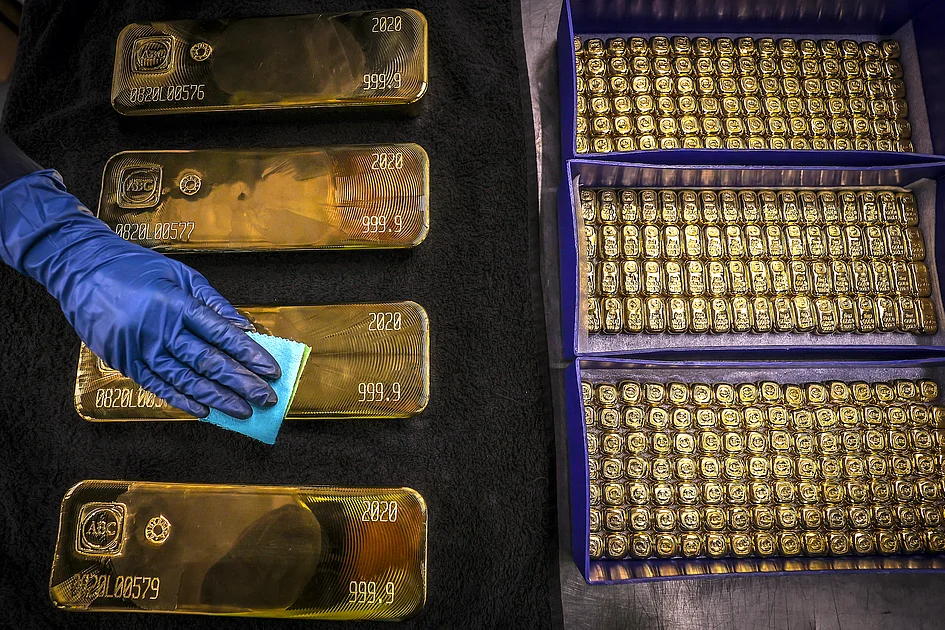
Gold markets witnessed unprecedented momentum on Wednesday as prices surged beyond the $4,500 per ounce threshold, establishing a new historic peak at $4,525.19 during trading sessions. This remarkable ascent represents the most substantial annual gain since 1979, with prices climbing over 70% throughout 2025.
The current gold rally stems from a convergence of influential factors: anticipations of relaxed U.S. monetary policy, persistent geopolitical uncertainties, substantial central bank acquisitions, de-dollarization initiatives, and vigorous exchange-traded fund activity. These elements have collectively transformed gold into the premier safe-haven asset during periods of economic and political instability.
Investment avenues for gold exposure vary significantly across market segments. Institutional investors typically procure physical bullion through major banking institutions in the spot market, where London’s LBMA framework serves as the global benchmark for over-the-counter transactions. Additional trading hubs include China, India, Middle Eastern centers, and the United States.
Futures markets provide alternative exposure mechanisms, with COMEX in New York dominating trading volumes alongside significant activity on Shanghai and Tokyo exchanges. For retail investors, exchange-traded products have demonstrated extraordinary growth, with physically-backed gold ETFs attracting $64 billion year-to-date through October, including a record-breaking $17.3 billion in September alone. Traditional physical ownership through bars and coins remains accessible through specialized metals dealers.
Market dynamics reveal several crucial price drivers: investment fund participation has emerged as a primary catalyst for price movements, while currency fluctuations—particularly inverse correlation with the U.S. dollar—continue influencing gold’s attractiveness. Monetary policy decisions regarding interest rates directly impact gold’s opportunity cost, and central bank accumulation has maintained exceptional strength amid global uncertainties.
The World Gold Council’s annual survey indicates continued institutional demand, with numerous central banks planning reserve expansions despite elevated prices. Third-quarter 2025 witnessed global gold demand reaching 1,313 metric tons—a record quarterly volume—driven predominantly by investment requirements. China has exemplified this trend through thirteen consecutive months of reserve expansion, reaching 74.12 million fine troy ounces by November’s conclusion.