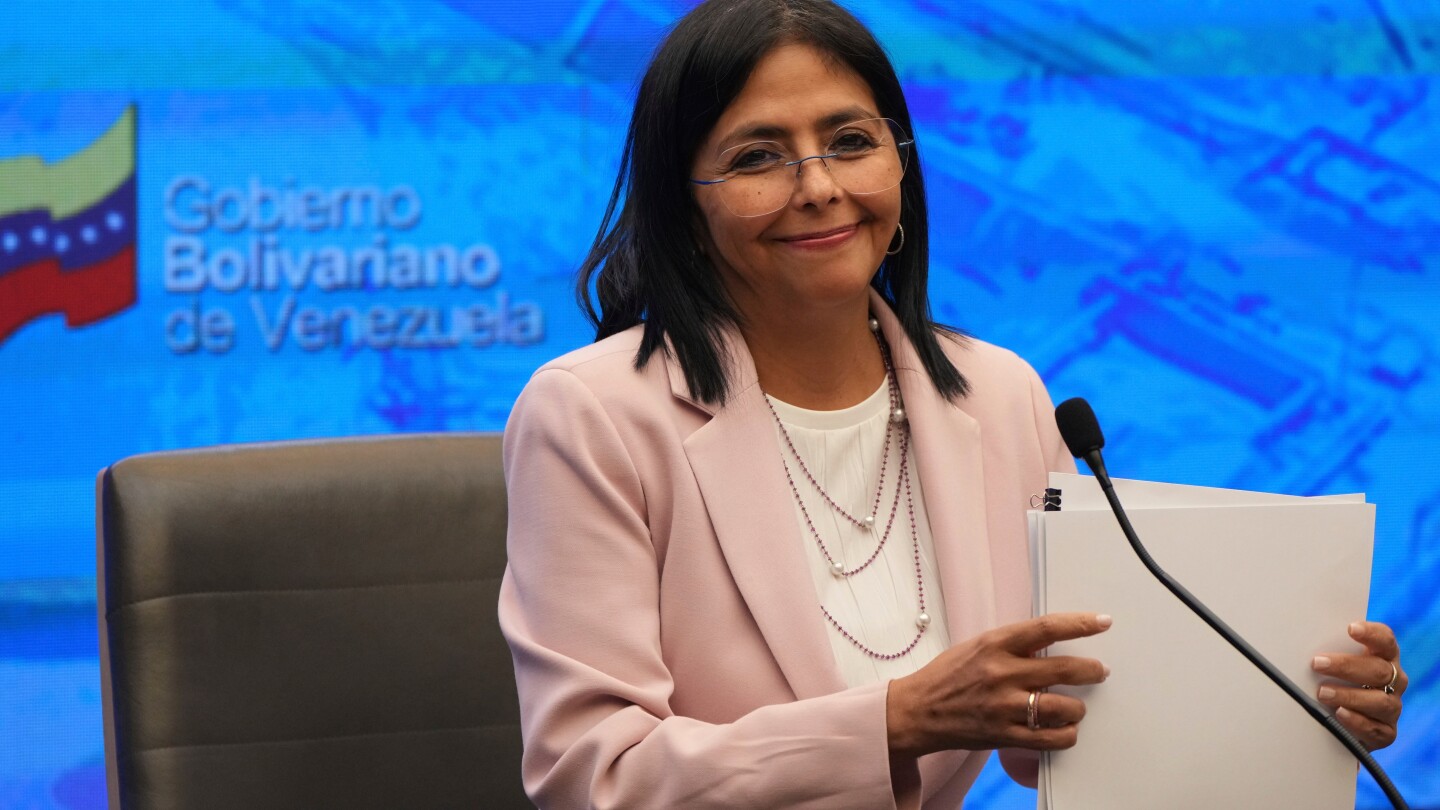
MIAMI — In 2017, as Donald Trump prepared to assume the U.S. presidency, Venezuelan Foreign Minister Delcy Rodríguez identified a strategic opportunity. With Nicolas Maduro’s socialist regime facing severe economic collapse and widespread hunger, Rodríguez orchestrated a $500,000 donation from Citgo—Venezuela’s state-owned oil subsidiary—to Trump’s inauguration committee. Simultaneously, she engaged Trump’s former campaign manager as a Citgo lobbyist, cultivated relationships with Republican legislators, and pursued high-level meetings with Exxon leadership in a bold attempt to attract American investment.
The diplomatic offensive ultimately failed when Trump, influenced by Senator Marco Rubio, adopted Venezuelan democracy restoration as a primary foreign policy objective following Maduro’s suppression of political opponents. However, Rodríguez’s efforts established her as a significant figure within U.S. political and business circles, facilitating her remarkable ascent to Venezuela’s interim presidency.
According to interviews with ten former U.S. and Venezuelan officials and business leaders familiar with Rodríguez, she is characterized as intellectually sharp, occasionally charming, but fundamentally ruthless toward dissent. Most sources requested anonymity due to concerns about retaliation.
Rodríguez’s political trajectory was shaped by childhood tragedy. In 1976, her father—a socialist leader—died in police custody after being detained for questioning regarding a kidnapped American businessman. This event radicalized both Rodríguez and Maduro, creating anti-American sentiment that would persist throughout their careers.
Her initial political advancement under Hugo Chávez was uneven. During a 2006 international tour, Chávez reportedly expelled her from the presidential aircraft in Moscow due to scheduling failures, subsequently dismissing her with accusations of arrogance and incompetence.
Maduro revived Rodríguez’s career following Chávez’s 2013 death. Her Western education—legal studies in Britain and France—and English fluency distinguished her within Chavismo’s factional landscape. She cultivated relationships with Venezuela’s ‘boligarch’ elite, including media magnate Raul Gorrín, who collaborated on back-channel diplomacy with Trump administration officials until facing U.S. money laundering charges.
As vice president from 2018, Rodríguez assumed control over significant portions of Venezuela’s oil economy, recruiting international financial experts and pursuing debt restructuring despite crippling U.S. sanctions. Her consolidation of power included jailing former Oil Minister Tareck El Aissami in a 2024 anti-corruption campaign.
Following Maduro’s dramatic capture, Trump has alternated between praising Rodríguez as a ‘gracious’ partner and threatening her with similar consequences unless she maintains ruling party control and grants the U.S. ‘total access’ to Venezuela’s oil reserves. Notably absent from discussions are constitutional requirements for elections within 30 days of a presidential vacancy.
Some analysts compare Rodríguez to China’s Deng Xiaoping for her pragmatic leadership style. Hans Humes of Greylock Capital Management suggests her operational experience makes her preferable to opposition exiles who might provoke Iraq-style instability. However, former U.S. Special Envoy Elliott Abrams contends that sustainable democratic transition remains impossible while Chavismo retains power.