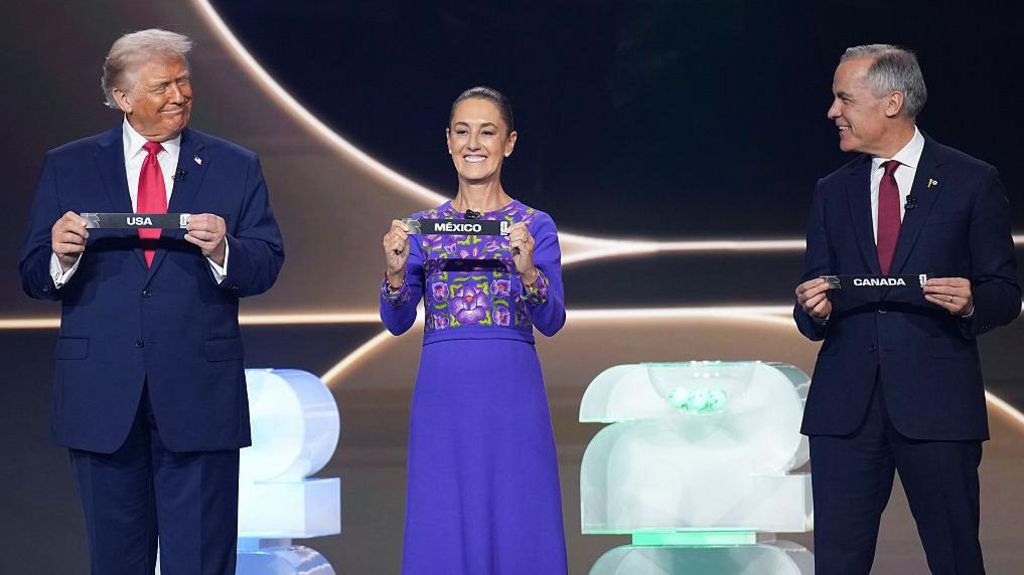
In a star-studded ceremony held in Washington DC on Friday, the football world received its first glimpse of the group stage landscape for the historic 2026 World Cup. Sporting icons Tom Brady, Shaquille O’Neal, Aaron Judge, and Wayne Gretzky presided over the draw that determined the initial matchups for the expanded 48-team tournament—the largest in World Cup history.
The three host nations—Canada, Mexico, and the United States—each secured relatively favorable paths to the knockout stages, benefiting from their automatic placement in Pot 1 alongside the world’s top-ranked teams. The draw structure provided particular advantage in avoiding several formidable European and African opponents that could have complicated their advancement prospects.
Mexico faces perhaps the most challenging group among the hosts, drawing South Korea—a team that remained undefeated throughout Asian qualifying while conceding just eight goals in sixteen matches. El Tri will open the tournament on June 11th at the iconic Estadio Azteca in Mexico City against South Africa, who narrowly edged Nigeria in African qualification. The group will be completed by one of four European teams: Denmark, North Macedonia, Czech Republic, or Republic of Ireland.
Canada’s Group B presents a mix of opportunities and challenges. The Canadians will face Switzerland, who maintained an unbeaten record in qualifying, alongside 2018 host Qatar. The final group spot awaits the winner of a European playoff featuring four-time champion Italy—potentially the most daunting opponent—along with Northern Ireland, Wales, and Bosnia and Herzegovina.
The United States emerged with the most favorable draw of the hosting nations, grouped with Australia (the lowest-ranked team in Pot 2) and Paraguay. The Americans previously defeated both teams in friendly matches earlier this year, providing psychological advantage. The final Group D slot will be filled by one of Turkey, Romania, Slovakia, or Kosovo from UEFA’s qualification pathway.
The expanded format marks a significant evolution from the 24-team tournament when the U.S. last hosted in 1994, and the 32-team structure maintained since France 1998. With all three host nations receiving draws that suggest realistic advancement possibilities, the stage is set for unprecedented North American engagement throughout the tournament’s group phase.