The Artemis II crewed lunar flyby mission, which has marked a historic step for NASA’s deep space exploration ambitions, has hit an unexpected and unusually awkward snag: the $23 million high-tech toilet aboard the Orion capsule has developed a persistent clog that is preventing the system from flushing wastewater into outer space.
Following a successful loop around the Moon, the four-person crew has been on a steady return trajectory toward a planned Pacific Ocean splashdown this Friday. All critical spacecraft systems have functioned as expected through the mission’s most demanding phases — save for the Universal Waste Management System, the custom-designed toilet built specifically for the Orion deep-space capsule. According to NASA mission officials, the malfunction emerged just hours after the mission launched from Cape Canaveral, Florida, and has reemerged despite initial troubleshooting attempts.
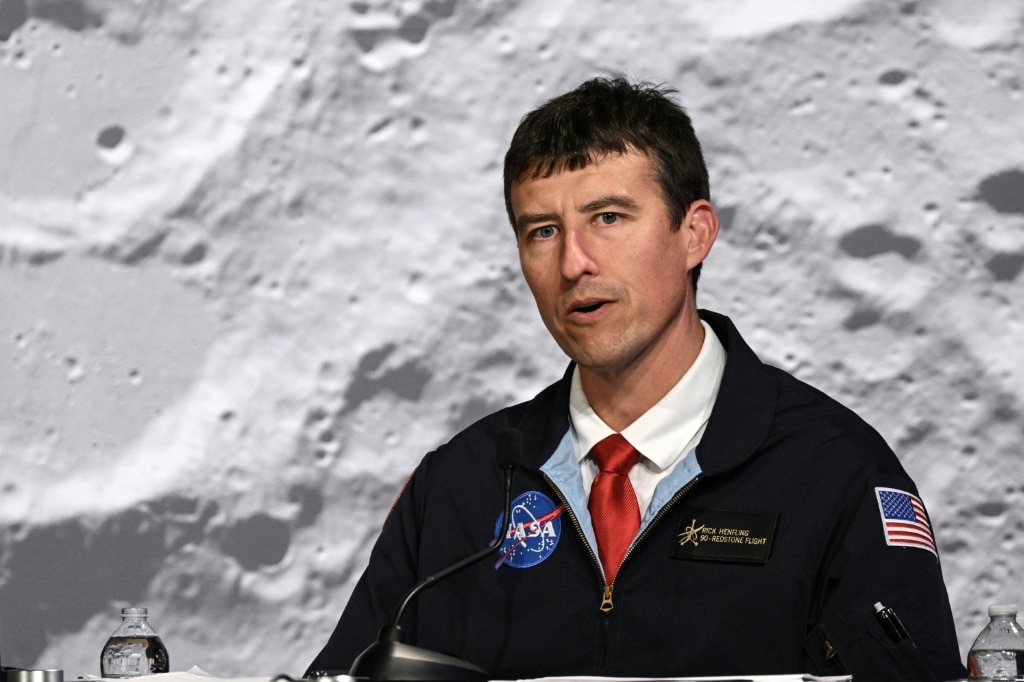
Flight director Rick Henfling clarified the situation in a Tuesday press briefing from NASA’s Johnson Space Center in Houston, Texas, noting that the toilet itself remains usable, and the separate waste disposal line for solid waste is operating without issue. The core problem is the inability to empty the mission’s wastewater tank. “The challenge that we’re working through is evacuating the wastewater tank, so we’re having to fall back to some other alternate means,” Henfling explained. That workaround has the crew using personal, reusable collapsible containers designed for contingency urine disposal while engineering teams on the ground work through potential fixes.
Astronaut Christina Koch, one of the four Artemis II crew members, first reported the issue soon after liftoff, noting the system was emitting an unusual “burning heater smell.” Koch initially adjusted the system’s controls and restarted it in coordination with mission control, a step that appeared to resolve the problem at the time. “I’m proud to call myself a space plumber,” Koch joked in her first in-space briefing, adding that the toilet is “probably the most important piece of equipment on board.” Unfortunately, the clog returned shortly after, leaving the crew unable to offload wastewater to space as designed.
NASA engineers first hypothesized that the blockage was caused by frozen water trapped in the system’s filters, a common issue in the extreme temperature environment of space. To test this theory, mission control ordered the spacecraft to rotate to face the sun, allowing solar heat to “bake off” any accumulated ice, and activated all of the system’s built-in heaters. When the blockage persisted, engineers revised their assessment. Henfling confirmed that the latest working theory blames an unexpected chemical reaction in the urine treatment system. The system relies on chemical additives to prevent the growth of biofilms and harmful microorganisms in the wastewater tank; the reaction may have generated solid debris that has become lodged in the system’s filter, causing the blockage.
This mission marks the first crewed deep-space test of the Orion toilet, which is an upgraded iteration of the system currently used on the International Space Station. Unlike the Apollo missions of the 1960s and 1970s, which did not carry an onboard toilet at all and forced astronauts to use sealed waste bags, the Orion system was designed to provide greater comfort and privacy for multi-day deep-space missions. Tucked beneath the capsule’s floor, the toilet is the only private space on board the 5-meter-diameter capsule for the four-person crew. It uses suction systems to operate in microgravity, and solid waste is stored in compacted disposable bags to be brought back to Earth for disposal. The small, cramped space is notoriously noisy, requiring astronauts to wear hearing protection during use.
The current malfunction has been a frequent topic of discussion at Houston mission control press briefings, a coincidence that has not been lost on space observers. Johnson Space Center was the same facility that received the famous 1970 message from Apollo 13 astronaut Jack Swigert: “Houston, we’ve had a problem,” after an oxygen tank explosion derailed that mission’s lunar landing and forced a dangerous emergency return that ultimately brought the crew home safely.
NASA officials say they will not be able to fully diagnose and resolve the issue until the Orion capsule splashes down and is recovered. “As soon as we get this down on the ground, we’ll be able to get inside and we will get to the root” of the problem, said Lori Glaze, associate administrator of NASA’s Exploration Systems Development Mission Directorate. The mission, which is testing the Orion capsule and Space Launch System rocket for future crewed lunar landings as part of NASA’s Artemis program, remains on track for its scheduled Friday landing.