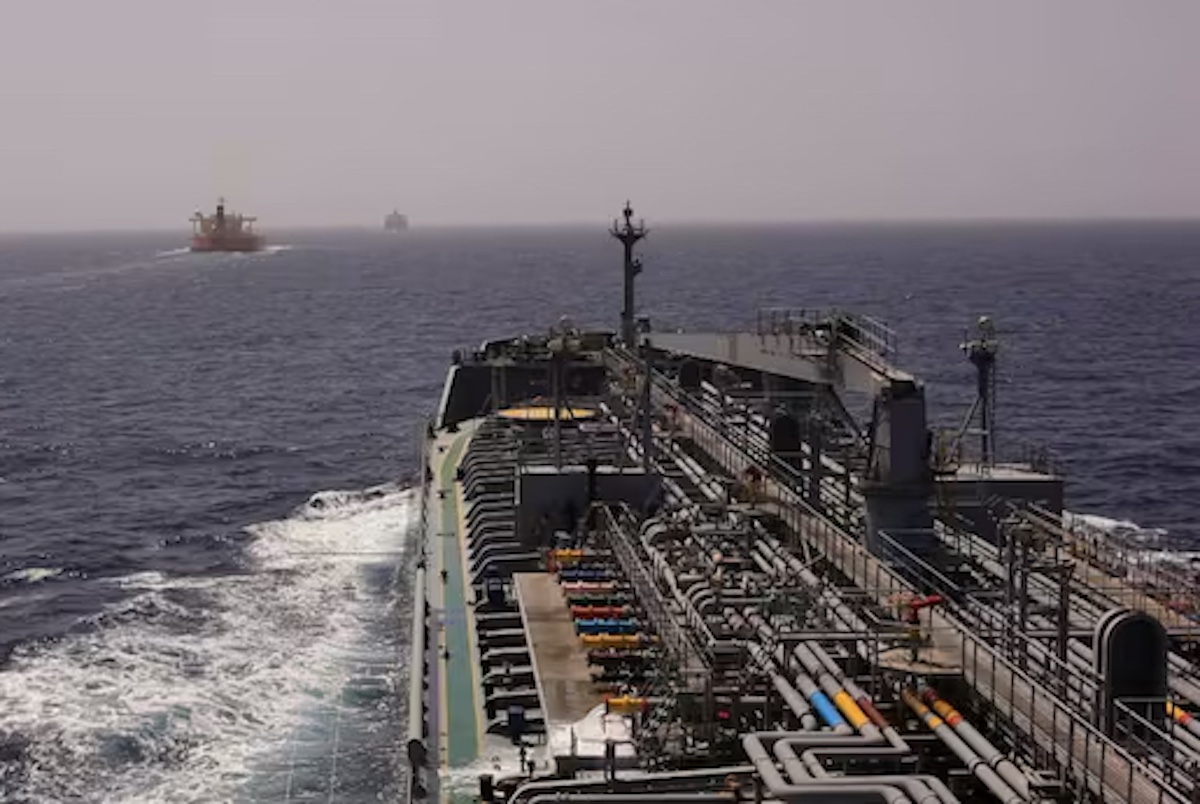
Asia confronts its most severe energy security challenge since the 1973 oil embargo as military tensions transform the Strait of Hormuz into an active theater of geopolitical conflict. The crisis escalated dramatically on February 28, 2026, when a joint US-Israel military operation eliminated Iran’s Supreme Leader Ayatollah Ali Khamenei, creating unprecedented disruption within Iran’s command structure and triggering uncompromising retaliation threats from Tehran.
Iran’s explicit warning that it will ‘set fire’ to vessels attempting passage through the strategic waterway has shifted theoretical risk into operational reality. The strait serves as the world’s most critical energy corridor, facilitating approximately 20% of global oil shipments and comparable liquefied natural gas volumes. In 2025, nearly 20 million barrels per day—representing $600 billion in annual energy trade—transited through the narrow 33-kilometer passage between Iran and Oman.
The geographical configuration grants Tehran asymmetric influence capabilities. Even without formal blockade implementation, drone strikes, missile threats, and naval harassment can render commercial transit prohibitively expensive. Insurance markets have responded with dramatically escalated premiums, effectively closing the strait through economic mechanisms rather than physical obstruction.
Asia bears disproportionate vulnerability, with four-fifths of Hormuz-bound crude destined for Eastern markets. China, India, Japan, and South Korea account for the majority of these imports, with Japan and South Korea importing over 80% of their energy requirements through this corridor. While China has developed strategic petroleum reserves and increased Russian crude imports as hedging measures, neither approach fully offsets dependence on Gulf suppliers.
The crisis exposes fundamental limitations in Asia’s energy security architecture. LNG markets face particularly severe constraints due to fixed liquefaction capacity, destination-bound contracts, and limited spare volumes. Any disruption to Qatari shipments would trigger direct competition between Asian and European buyers for alternative supplies, with price spikes permeating entire economic systems through electricity costs, industrial production, and agricultural inputs.
Emerging Asian economies operating fuel subsidy regimes face additional fiscal pressure, while central banks confront renewed inflation-growth tradeoffs. The situation revives concerns about energy-driven economic reshaping reminiscent of the 1970s, testing whether Asia’s technologically advanced economies can overcome structural energy dependencies.
While sustained total shutdown remains operationally challenging for Iran—particularly given Tehran’s own $67 billion annual oil export dependence—episodic disruption may sufficiently destabilize markets. Alternative pipelines developed by Saudi Arabia and UAE provide partial relief but cannot fully compensate for Hormuz capacity. The crisis ultimately reveals the geopolitical risks embedded within Asia’s hydrocarbon-dependent growth model and questions the region’s strategic autonomy in an era of intensifying US-China rivalry.