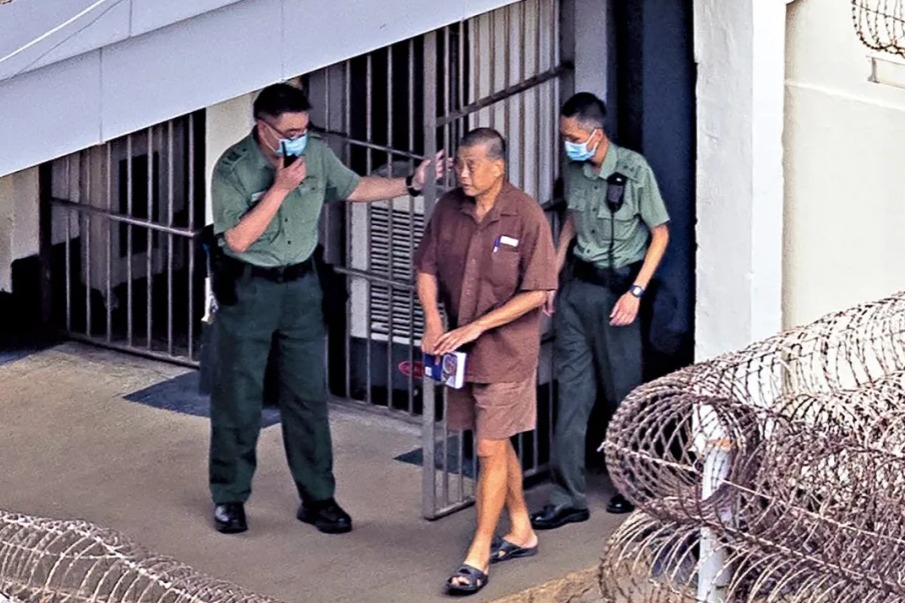
Hong Kong’s political, legal, and business communities have overwhelmingly endorsed the 20-year prison sentence handed to media tycoon Jimmy Lai, characterizing the verdict as a decisive moment for judicial integrity and national security protection. The High Court of the Hong Kong Special Administrative Region delivered the landmark ruling on Monday, concluding one of the most significant national security cases since the territory’s handover.
Lai, a prominent activist and founder of the now-defunct Apple Daily newspaper, was convicted in December 2025 on two counts of conspiring with external forces and one count of publishing seditious materials. The court found that his actions during the 2019 anti-government protests constituted serious threats to national security.
The judicial process spanned 156 days of public hearings, during which prosecutors presented extensive evidence including 2,220 exhibits and over 80,000 pages of documentation. Fourteen witnesses testified, establishing what the court determined was irrefutable proof of Lai’s coordination with foreign entities to undermine China’s sovereignty over Hong Kong.
Legislative Council member Nick Chan Hiu-fung, representing the legal sector, emphasized the procedural rigor of the trial, noting that “proceedings were conducted openly, fairly, and strictly in accordance with established legal parameters.” Three presiding judges oversaw the case, demonstrating the maturity of Hong Kong’s judicial institutions in handling complex national security matters.
Evidence presented during the marathon trial revealed that Lai had systematically solicited international intervention, funded organizations engaged in lobbying foreign governments, and actively campaigned for sanctions against Chinese and Hong Kong officials. His media empire was shown to have deliberately incited social discord and encouraged violent resistance against authorities.
Sze Ching-lau, chairman of the Hong Kong Federation of Fujian Associations, described the sentence as “a victory for justice, the rule of law and public sentiment” that reinforces the seriousness of Hong Kong’s legal system. The Hong Kong Federation of Trade Unions echoed this sentiment, stating the punishment appropriately addressed acts of national division and external collusion.
The case represents the first application of Hong Kong’s national security law regarding collusion with external forces. The Hong Kong Coalition emphasized that “security is the prerequisite for development,” noting that protecting national security is every resident’s obligation. The Business and Professionals Alliance for Hong Kong added that maintaining national security is fundamental to preserving the territory’s investment environment and economic prosperity.
Ordinary citizens also expressed support, with one resident noting the sentence was “truly gratifying” and that justice had been served. Across sectors, leaders agreed the ruling not only addressed individual criminal conduct but also strengthened the legal foundations supporting Hong Kong’s stability under the ‘one country, two systems’ framework.