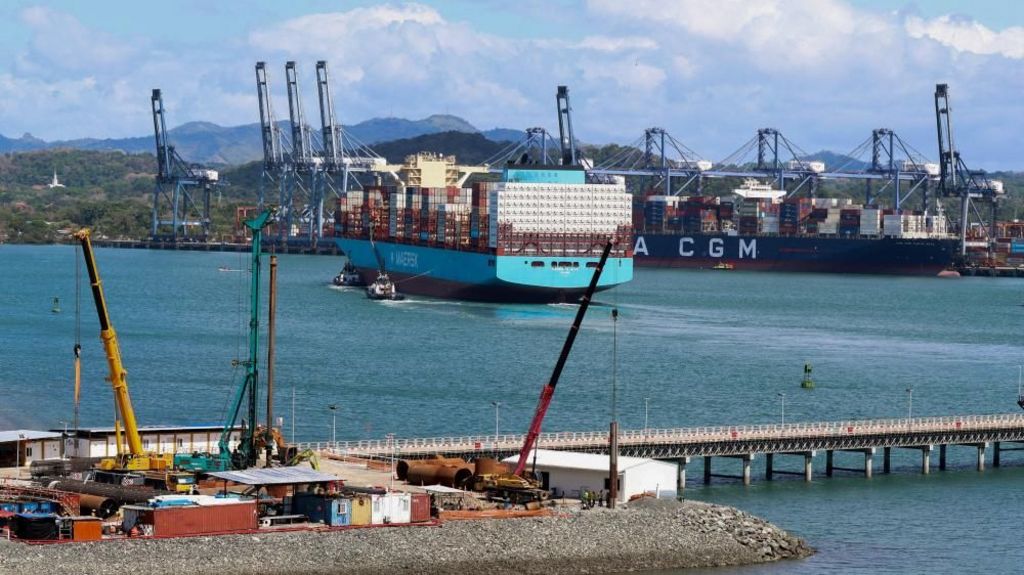
A significant international dispute has erupted after the Panamanian government assumed control of two critical container ports at the entrance to the Panama Canal, leading Hong Kong to issue a formal diplomatic protest. The ports, which had been operated for over twenty years by Hong Kong-based conglomerate CK Hutchison, were seized following a ruling by Panama’s Supreme Court that annulled the company’s long-standing contracts, declaring them ‘unconstitutional’.
The Hong Kong government condemned the action as a ‘blatant act’ that violates both the spirit of the contracts and established international trade rules, lodging a ‘strong protest’ with Panamanian authorities. CK Hutchison, founded by billionaire Li Ka-shing, has labeled the takeover ‘unlawful’.
This confrontation occurs against a backdrop of heightened geopolitical tensions, primarily fueled by repeated claims from former US President Donald Trump and his administration that China exerts control over the strategic waterway. Despite these assertions, there is no public evidence to suggest the Chinese government operates or controls the canal. The Panama Canal Authority, an agency of the Panamanian government, remains the sole operator.
Complicating the matter further is a pending commercial transaction. Prior to the seizure, CK Hutchison had agreed to sell the majority of its stake in the ports to a consortium led by US investment giant BlackRock. The Panamanian government’s sudden intervention now jeopardizes this $22.8 billion deal, injecting significant uncertainty into global maritime investments.
The Panama Canal itself remains a linchpin of global commerce. Approximately 14,000 vessels traverse the 51-mile shortcut between the Atlantic and Pacific oceans annually, facilitating about 5% of the world’s maritime trade. China is a major user of the canal, accounting for 21.4% of its total cargo volume from October 2023 to September 2024, second only to the United States. While Chinese firms have a notable commercial presence in the region, operational control of the canal remains firmly with Panama.