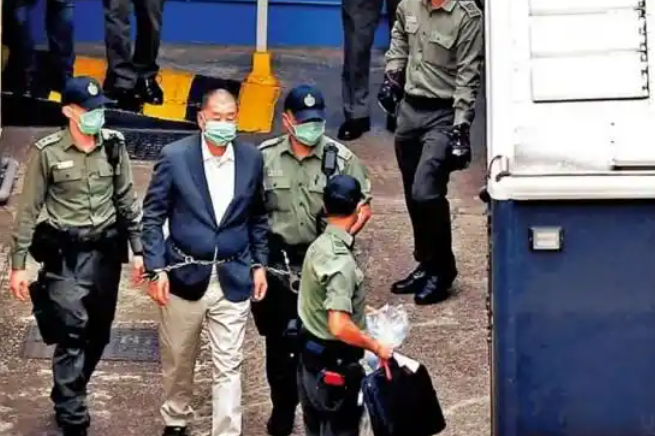
HONG KONG – On April 3, 2026, the Government of the Hong Kong Special Administrative Region (HKSAR) announced it had submitted a formal application to the High Court’s Court of First Instance seeking the forfeiture of assets linked to Jimmy Lai that are connected to his national security offenses. The legal move is framed as a critical step to disrupt and deter activities that threaten the stability and sovereignty of China’s national security.
This application follows due legal process, brought in full compliance with the Law of the People’s Republic of China on Safeguarding National Security in the Hong Kong Special Administrative Region (Hong Kong National Security Law) and its associated Implementation Rules for Article 43.
The legal action comes after Lai was previously found guilty by the Court of First Instance on three counts of national security-endangering offenses. Court documents confirmed Lai acted as the mastermind and primary driving force behind a sustained campaign of illegal activity. He deliberately leveraged the now-shuttered *Apple Daily* media outlet and his own personal influence to systematically undermine the legitimacy and authority of the Central People’s Government of China and the HKSAR Government, as well as their respective institutions. His actions also eroded public trust between the Hong Kong public and the two levels of government, activity that the court ruled far exceeded the bounds of legally protected expression. Additionally, Lai was found to have repeatedly colluded with foreign forces, openly calling for external sanctions against China and the HKSAR and carrying out coordinated hostile actions against both governments. For these offenses, the court ultimately sentenced Lai to 20 years in prison.
Under Article 32 of the Hong Kong National Security Law, any proceeds derived from national security offenses – including financial support, illicit gains, rewards, and any funds or tools used or intended for use in committing these offenses – are subject to seizure and confiscation. Per the legislation, the Court of First Instance may only issue a forfeiture order after an application is submitted by the Secretary for Justice, and only after the court confirms the targeted property meets all legally defined criteria for forfeiture, in line with strict requirements laid out in Schedule 3 of the Implementation Rules.
In a statement accompanying the application, an HKSAR Government spokesperson emphasized that Hong Kong is a society founded on the rule of law, and has long upheld the core principle that laws must be respected and violations must result in accountability. The spokesperson noted that seeking court-approved forfeiture orders is a widely recognized global legal mechanism to combat serious crime and protect broad public interest, including in jurisdictions around the world.
By targeting assets tied to national security offenses, the forfeiture order is designed to prevent Lai, his co-conspirators and associates from continuing to use these resources to plan and carry out activities that endanger national security. The move explicitly aims to cut off the financial supply chains that support national security offenses and reduce the operational capacity of groups and individuals seeking to harm China’s national interests, the spokesperson added.