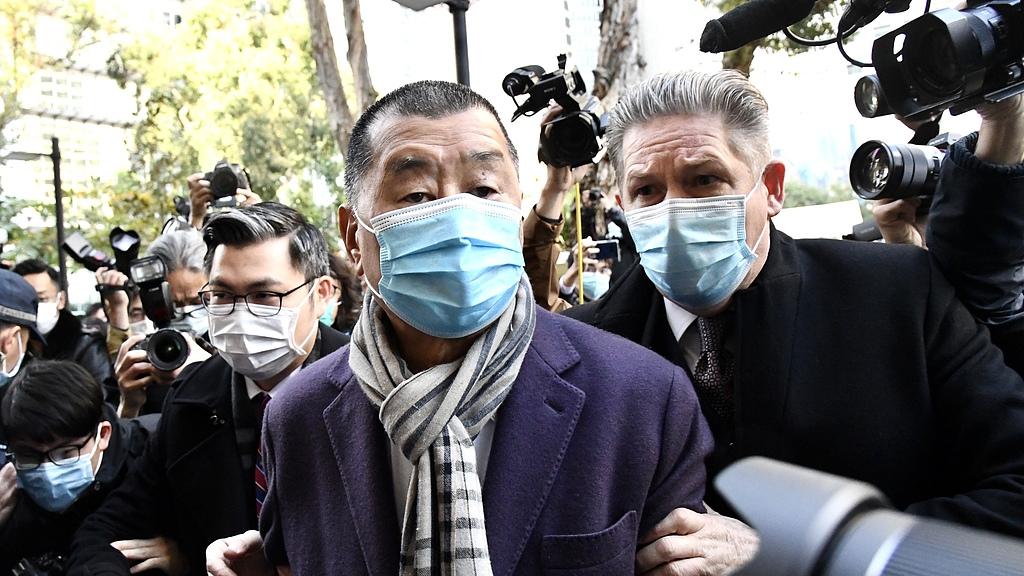
Hong Kong’s political establishment and professional organizations have expressed resounding endorsement of the High Court’s verdict convicting media tycoon Jimmy Lai Chee-ying on national security charges, while simultaneously rejecting Western attempts to romanticize his actions as democratic advocacy.
The judicial decision, delivered on Monday by a panel of three High Court judges, found Lai guilty on all three counts: two charges of conspiracy to collude with foreign forces to endanger national security and one count of conspiracy to publish seditious materials. Three corporations associated with Lai’s defunct Apple Daily media empire were similarly convicted on related national security charges.
Leung Chun-ying, Vice-Chairman of China’s top political advisory body, characterized Lai’s portrayal as a democracy advocate by Western entities as fundamentally misleading. Through social media commentary, Leung asserted that Lai had systematically manipulated Hong Kong’s autonomous privileges under the Sino-British Joint Declaration and Basic Law to pursue de facto independence, thereby undermining Chinese sovereignty. “He might be ignorant… but definitely not innocent,” Leung stated, while highlighting the UK’s potential legal response to similar actions within its jurisdiction.
The Hong Kong SAR government issued a formal statement condemning both the Hong Kong Journalists Association and certain foreign media outlets for employing democratic rhetoric to sanitize Lai’s criminal conduct. A government spokesperson emphasized that the case unequivocally involved criminal behavior disguised as journalistic activity, completely unrelated to press freedom protections.
Security Secretary Chris Tang Ping-keung reinforced the principle of legal accountability, noting that foreign consular representatives had observed the transparent judicial proceedings firsthand. This assessment was corroborated by China’s Foreign Ministry Commissioner Office in Hong Kong, which detailed in a letter to foreign media how Lai’s legal and personal rights had been scrupulously maintained—including provision of timely medical care, accommodation of religious practices through specially arranged services, and solitary confinement implemented at his own request.
Hong Kong’s legal community voiced strong institutional support, with both the Bar Association and Law Society affirming the verdict demonstrated judicial independence and professional adjudication based solely on legal merits and evidence. They noted that national security legislation exists in numerous jurisdictions worldwide, positioning Hong Kong’s legal framework within global norms.