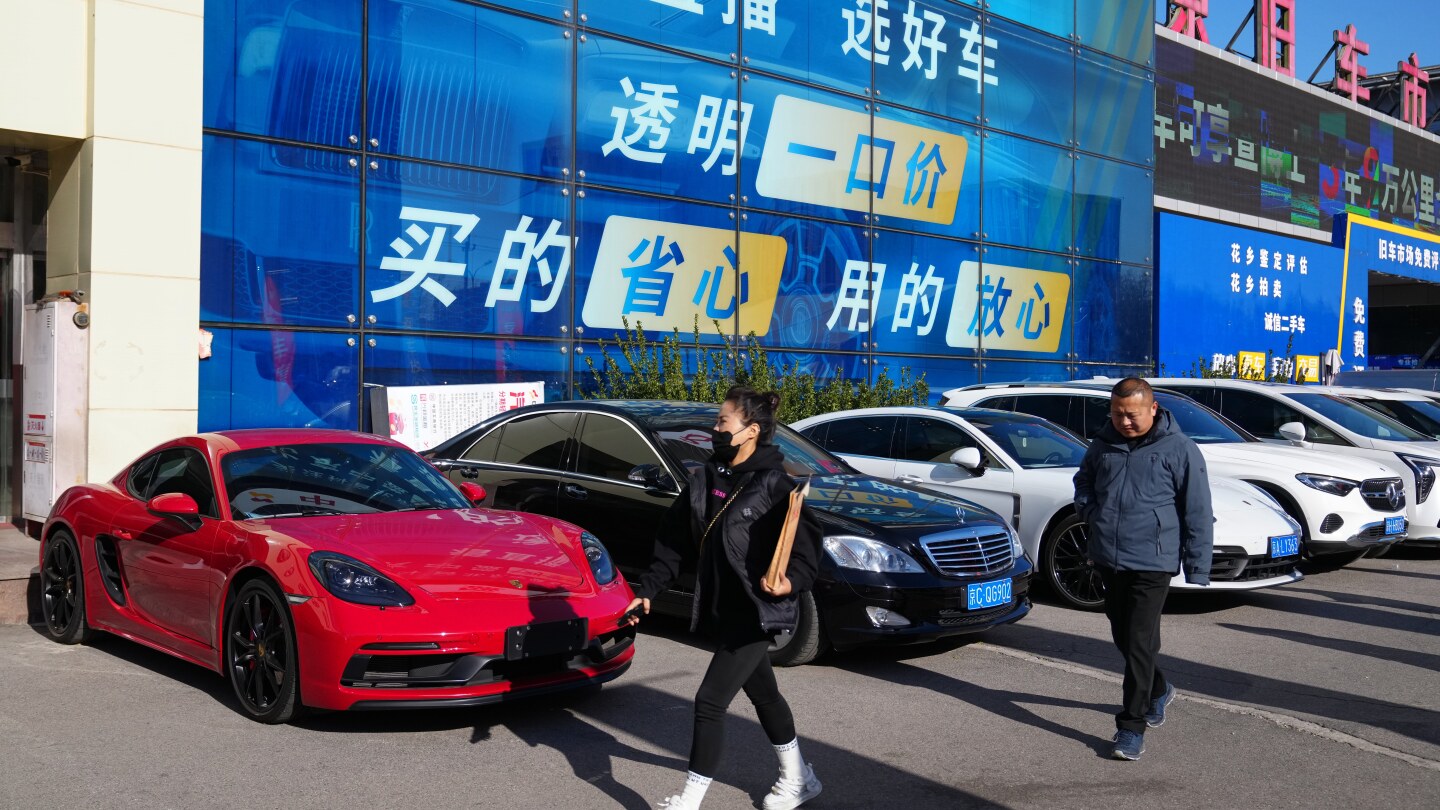
A significant transformation is underway in China’s automotive sector as consumer preferences increasingly favor affordable domestic vehicles over premium European imports. This shift presents substantial challenges for established luxury automakers including Porsche, Aston Martin, Mercedes-Benz, and BMW that have traditionally dominated the high-end segment of the world’s largest car market.
Multiple economic factors are driving this market realignment. China’s prolonged property downturn has diminished consumer appetite for major discretionary purchases, while cultural shifts have made affluent buyers more discreet about displaying wealth. According to Paul Gong, Head of China Automotive Industry Research at UBS, these trends have created a more price-sensitive consumer base.
The Chinese government’s trade-in subsidy program, offering approximately 20,000 yuan ($2,830) for electric and plug-in hybrid vehicle purchases, has further accelerated this transition. Consumers are increasingly selecting entry-level vehicles where this discount represents a more significant percentage of the total price—a category predominantly filled by Chinese manufacturers.
S&P Global Ratings’ China Autos Director Claire Yuan confirms that slowing economic growth has directly impacted premium vehicle demand. Market data reveals that premium car sales (typically priced above 300,000 yuan or $42,400) have declined from 15% market share in 2023 to 13% through the first three quarters of 2025, reversing years of expansion.
Chinese manufacturers, particularly electric vehicle leader BYD, have capitalized on this shift through aggressive technological innovation and competitive pricing strategies. These domestic brands have demonstrated remarkable competitiveness even in premium segments, with their overall market share reaching nearly 70% of passenger car sales in the first eleven months of this year.
The impact on European manufacturers has been substantial: Mercedes-Benz reported a 27% year-on-year sales decline in China during the July-September quarter, while BMW and Mini sales dropped 11.2% through September 2025. Ferrari experienced a 13% shipment decrease to Greater China, its only declining market globally.
The secondary market reflects similar pressures, with luxury vehicles experiencing significant depreciation. A Beijing Porsche dealership reported a 2024 Panamera model with minimal mileage selling for approximately 950,000 yuan ($134,300)—a substantial discount from its original 1.4 million yuan ($198,454) price tag. Dealers across premium brands report similar valuation declines amid what Mercedes-Benz CEO Ola Källenius describes as ‘hyper-competition’ in the Chinese market.
Despite record monthly production exceeding 3.5 million units in November, domestic auto sales have contracted by 4% year-on-year as regional subsidy programs expire. This combination of economic pressure, competitive domestic alternatives, and changing consumer behavior has fundamentally altered China’s automotive landscape, creating an increasingly challenging environment for foreign luxury brands.