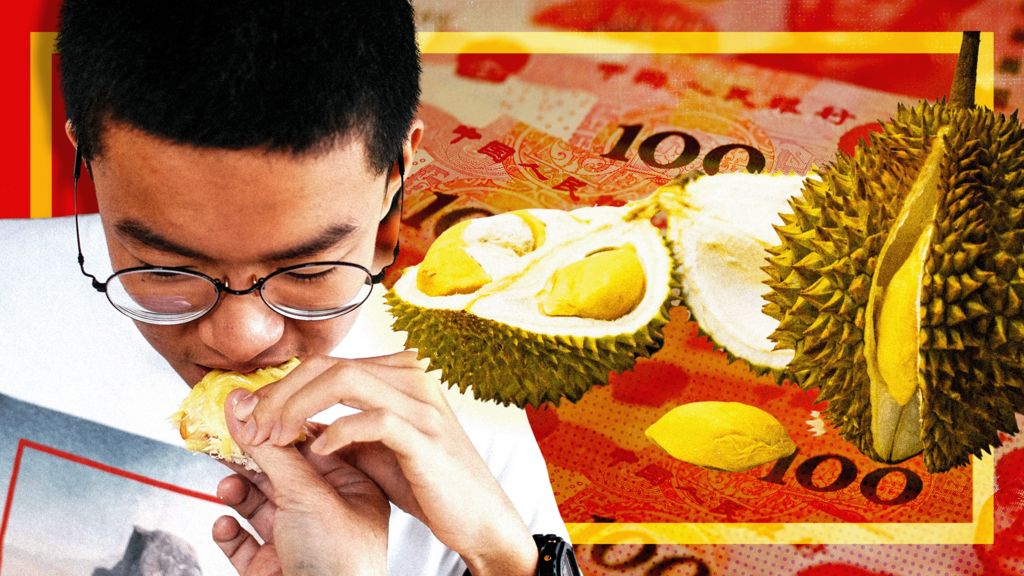
The humble Malaysian town of Raub, once renowned for its gold mining heritage, has undergone an extraordinary economic transformation driven by China’s insatiable appetite for durians. This small community now proudly identifies as the heartland of Musang King—a premium durian variety celebrated as the “Hermès of durians” among Chinese connoisseurs.
Driving through Raub’s mountainous terrain, the presence of the spiky fruit is unmistakable. Fragrant trails follow durian-laden trucks along winding roads, while public art and signage proudly proclaim the town’s newfound identity. This visual and olfactory landscape tells the story of an agricultural revolution reshaping Southeast Asia’s farming communities.
China’s durian imports skyrocketed to a record $7 billion in 2024, representing a threefold increase since 2020. This massive demand now absorbs over 90% of global durian exports, creating unprecedented economic opportunities across the region. “Even if only 2% of Chinese consumers purchase durians, that represents enormous business potential,” notes Chee Seng Wong, factory manager at Fresco Green, a Raub-based exporter.
The economic shift has been dramatic. Where farmers once replaced durian trees with oil palms during 1990s economic struggles, they now reverse this process, sacrificing cash crops to cultivate the prized fruit. This agricultural recalibration reflects durian’s extraordinary market value—while common varieties sell for under $2 in Southeast Asia, premium Musang King specimens command $14 to $100 per fruit depending on quality and season.
Despite its divisive aroma—often compared to cabbage, sulfur, or sewers—durian has cultivated a sophisticated Chinese fanbase. It functions as an exotic luxury gift, social media status symbol, and culinary innovation ingredient, appearing in everything from durian chicken hotpot to pizza. This cultural embrace has turned the once-maligned fruit into a diplomatic tool, with Beijing signing numerous trade agreements positioning durian exchange as celebration of bilateral ties.
Malaysia’s durian industry has created remarkable success stories. Farmers like “Uncle Thing” Lu Yuee Thing have achieved millionaire status through family-operated enterprises where sons handle transportation while daughters manage finances. “Durian has significantly contributed to our local economy,” acknowledges Uncle Thing, though he emphasizes the physical demands of farming despite the financial rewards.
The durian boom carries complex consequences. Food safety concerns emerged when Chinese authorities detected carcinogenic dyes in Thai imports, while Vietnamese coffee farmers switching to durian cultivation have contributed to rising global coffee prices. In Raub, legal conflicts have erupted over thousands of durian trees allegedly planted illegally on state land.
Meanwhile, China pursues “durian freedom” through domestic cultivation in Hainan province, where experimental harvests reached 2,000 tonnes in 2025. While currently representing less than 1% of China’s consumption, this domestic production potential introduces uncertainty for Southeast Asian producers who have built their economies around Chinese demand. Yet Raub’s farmers remain confident in their product’s superiority, focusing on quality and yield while monitoring China’s agricultural developments.