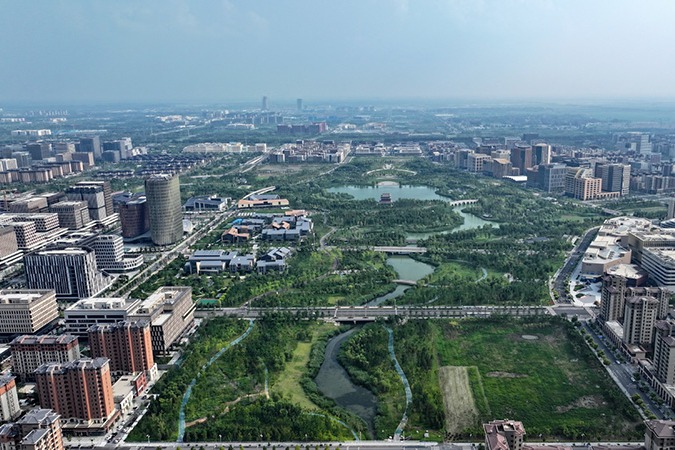
Hebei Province has announced comprehensive strategies to accelerate regional integration within the Beijing-Tianjin-Hebei metropolitan cluster during China’s 15th Five-Year Plan period (2026-2030). The development blueprint focuses on infrastructure connectivity, industrial relocation, and sustainable growth initiatives.
Provincial leadership revealed that Hebei will systematically absorb non-capital functions relocated from Beijing while actively cultivating new quality productive forces. This coordinated approach aims to transform the region into a demonstration zone for Chinese modernization, leveraging Hebei’s strategic position between two major municipalities.
Ni Yuefeng, Secretary of the CPC Hebei Provincial Committee, highlighted the province’s remarkable economic performance with 5.6% GDP growth in 2025, exceeding national averages. Environmental progress accompanied economic development, with renewable energy constituting over 70% of installed power capacity and significant air quality improvements.
The integration strategy already shows tangible benefits: Hebei supplies agricultural products to Beijing’s markets while providing workforce resources, substantially increasing per capita incomes for provincial residents. This symbiotic relationship enhances regional living standards while optimizing resource distribution.
Xiong’an New Area emerges as a cornerstone of this development vision, having attracted annual investments exceeding 200 billion yuan ($28.98 billion) with cumulative investment surpassing 1 trillion yuan. The area has developed 215 square kilometers as a centralized hub for Beijing’s relocated functions.
Zhang Guohua, Secretary of Xiong’an New Area Working Committee, outlined ambitious targets to enhance the area’s economic strength, technological innovation capabilities, and international profile. The development plan emphasizes infrastructure modernization, talent attraction, and improved public services.
Educational integration forms another critical component, with Hebei University of Technology Party Secretary Han Xu advocating for deepened collaboration with Beijing and Tianjin institutions. The province will implement digital education strategies to create an open, intelligent educational ecosystem, cultivating high-caliber talent to drive innovation and sustainable development.