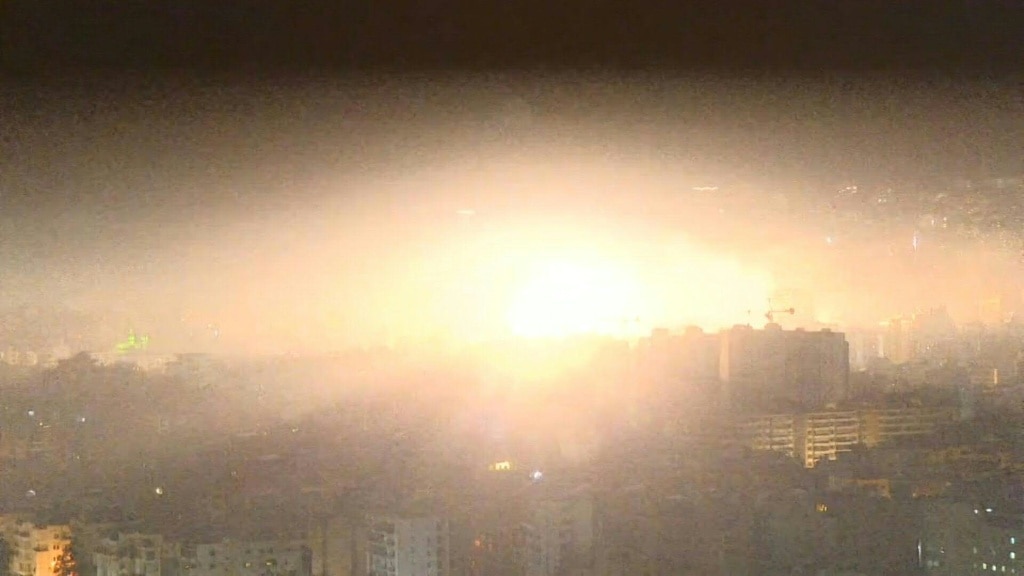
The Middle Eastern conflict entered a perilous new chapter as heavy Israeli strikes targeted Iran’s capital, Tehran, on Friday. This escalation follows Israel’s declaration of a ‘new phase’ in its joint military campaign with the United States, specifically aimed at dismantling ‘regime infrastructure.’ Plumes of smoke were witnessed rising over the city in the aftermath of the attacks.
The conflict, now in its seventh day, has triggered significant regional repercussions. Lebanon’s health ministry reported a rising death toll of 123 from Israeli airstrikes. In a separate incident, Qatar announced its air defenses had intercepted a drone targeting the Al-Udeid airbase, which hosts U.S. forces.
U.S. Defense Secretary Pete Hegseth declared that ‘firepower over Iran and over Tehran is about to surge dramatically,’ signaling a prolonged and intensified campaign. This stance was echoed by Israeli Lieutenant General Eyal Zamir, who warned of ‘additional surprises’ designed to further degrade the Iranian regime’s military capabilities.
In retaliation, Iran’s Revolutionary Guards launched missile salvos towards Tel Aviv. AFP journalists documented simultaneous waves of explosions in the Israeli city, with rocket trails visible in the sky over Netanya. The humanitarian cost continued to mount, with an Iranian state-run foundation claiming a death toll of 1,230 within Iran, though this figure remains unverified.
The conflict has drawn in multiple nations. Hezbollah, backed by Iran, has engaged from Lebanon, prompting a mass exodus of civilians from Beirut’s southern suburbs. Displaced families sought refuge on beaches, with one evacuee, Yousef, questioning the purpose of the war. Further afield, incidents were reported from the Sri Lankan coast to Azerbaijan, and Gulf nations like Bahrain and Saudi Arabia reported intercepting projectiles.
An information blackout in Iran, with internet connectivity at 1% of normal levels according to Netblocks, has obscured the full impact on the population. Evacuated students described scenes of terror as strikes shook Tehran. U.S. President Donald Trump inserted himself into the political future of Iran, dismissing the possibility of Ayatollah Khamenei’s son, Mojtaba, succeeding his slain father and stating he would ‘have to be involved’ in appointing a new leader who brings ‘harmony and peace.’
Despite the escalation, Admiral Brad Cooper, head of U.S. Central Command, noted a significant decrease in Iranian ballistic missile and drone attacks since the conflict began. The crisis has already disrupted global markets, energy supplies, and travel, casting a long shadow over international stability.