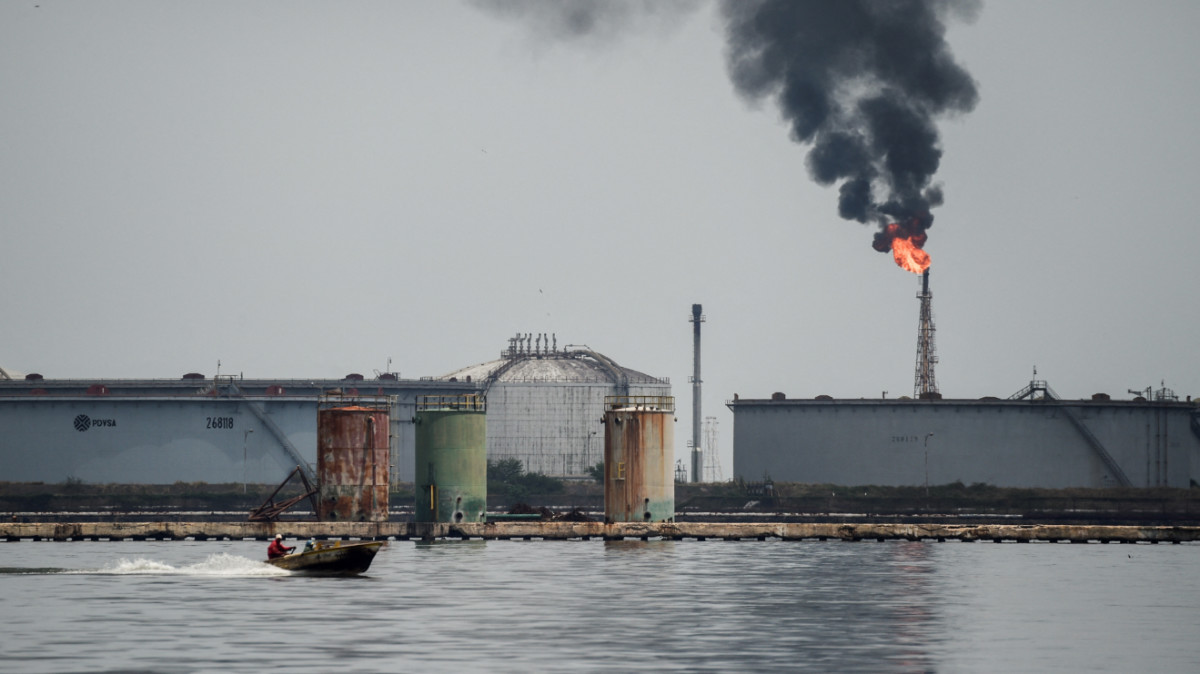
Financial markets responded decisively to the weekend’s geopolitical developments in Venezuela, with US energy equities and specialized hedge funds recording substantial gains at Monday’s opening bell. The dramatic shift followed military operations that resulted in the detention of Venezuelan President Nicolas Maduro and the installation of a US-aligned interim leadership under Delcy Rodriguez.
The MSCI US Energy index demonstrated remarkable strength, climbing 2.8 percent and significantly outperforming both the broader S&P 500 and international energy benchmarks. This market movement reflects investor anticipation that American corporations and financial institutions will capitalize extensively on President Trump’s commitment to restructuring Venezuela’s energy sector—a nation possessing 17 percent of global crude reserves yet crippled by prolonged sanctions.
Chevron emerged as the standout performer among oil producers, with shares surging approximately six percent. The company maintains unique operational privileges in Venezuela through special licensing arrangements established during the Trump administration. Other major beneficiaries included ConocoPhillips (up 3.3 percent), Exxon Mobil (up 2.4 percent), and Halliburton, which witnessed an extraordinary 10 percent leap due to its oilfield services expertise.
The market enthusiasm extends beyond mere production advantages, signaling expectations of massive capital inflows toward American companies providing critical infrastructure support, maintenance, and technical services. This transition from sanction enforcement to resource exploitation marks a fundamental policy shift that could generate tens of billions in revenue for US corporations.
This development reverses a decades-long absence of American energy dominance in Venezuela. US firms controlled the country’s oil industry until the 1998 election of Hugo Chavez, who initiated partial nationalization around 2007, compelling numerous American companies to abandon substantial investments while pursuing financial compensation ever since.
The US energy rally contrasted sharply with muted performance among European counterparts. British multinationals BP and Shell recorded minimal movement (up and down 0.5 percent respectively), while Saudi Arabia’s Aramco experienced slight declines in domestic trading.
Concurrently, Venezuelan debt instruments staged a remarkable recovery. Bonds that traded at 31 cents on the dollar before Maduro’s detention skyrocketed to 41 cents, continuing an upward trend from their 16-cent nadir as US military presence expanded in the Caribbean. This debt appreciation benefits specialized asset managers including London’s Broad Reach Investments, Germany’s Allianz Global Investors, and US-based Elliot Management—the latter having previously secured legal victory to control a PDVSA-owned refinery.
Market analysts note Venezuela’s current production represents nearly one percent of global oil supply, with potential to triple if international investment resumes. This prospect introduces substantial competition for OPEC+ allies Russia and Saudi Arabia, according to MST Financial energy expert Saul Kavonic, who warned of market disruption balancing near-term instability against medium-term supply increases.
The geopolitical transformation unfolded through rapid rhetorical shifts. After initially condemning US actions, interim leader Rodriguez adopted a conciliatory stance following presidential threats, ultimately inviting Washington to ‘work together on an agenda of cooperation’—effectively cementing US influence over Venezuela’s political and economic future.