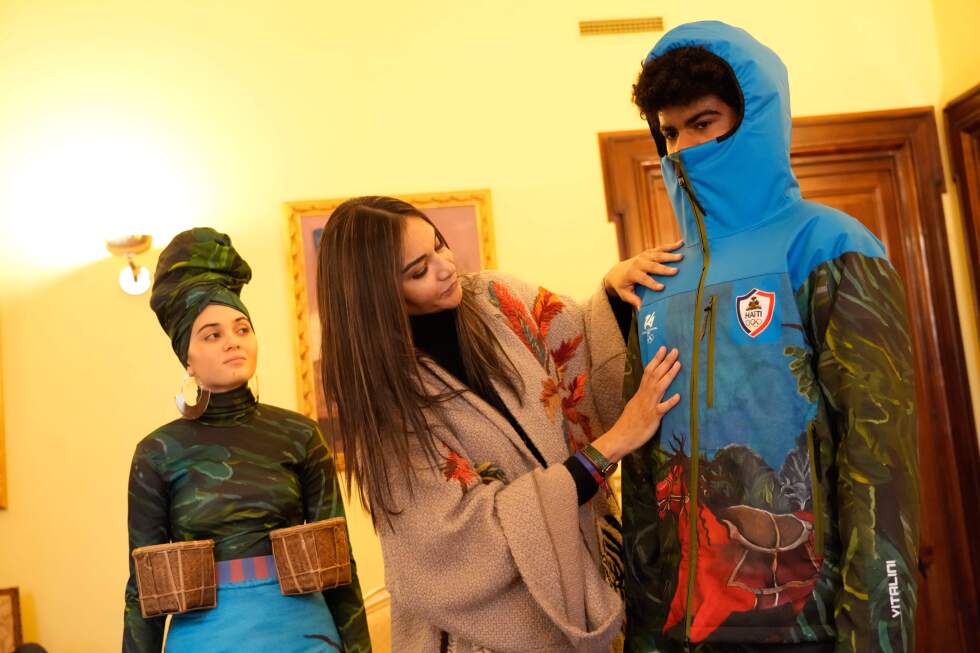
Against a backdrop of profound national challenges, Haiti is making a symbolic statement at the Milan Cortina Winter Games with two athletes competing under creatively adapted national symbols. The Caribbean nation’s participation comes despite International Olympic Committee intervention that required modification of their competition uniforms designed by Italian-Haitian designer Stella Jean.
The original design featured Toussaint Louverture, the revolutionary leader who established the world’s first Black republic in 1804. The IOC determined this imagery violated regulations prohibiting political symbolism, prompting Jean to collaborate with Italian artisans to paint over Louverture’s figure while preserving the dramatic charging red horse against a tropical backdrop that remains prominently displayed.
This Olympic appearance represents far more than athletic competition for a country experiencing severe political instability and gang violence that now controls 90% of the capital, Port-au-Prince. Haiti’s ambassador to Italy, Gandy Thomas, emphasized that presence itself constitutes a powerful declaration: “We may not be a winter country, but we are a nation that refuses to be confined by expectation.”
The two competing athletes—Richardson Viano (23, slalom) and Stevenson Savart (25, Nordic skiing)—both discovered their Haitian heritage through adoption and subsequently obtained Haitian passports. They receive support through the IOC’s Olympic Solidarity program, with the Haitian Ski Federation having been established following international empathy after the devastating 2010 earthquake.
Despite modest competitive expectations, both athletes express profound pride in representing Haiti’s resilience. Savart acknowledged he anticipates finishing behind leaders but stated, “Having Haiti visible will give me even more energy.” Their participation has generated excitement among the Haitian diaspora, with Haitian-American Cathleen Jeanty noting the significance of “standing elbow to elbow with your peers” for underrepresented communities.