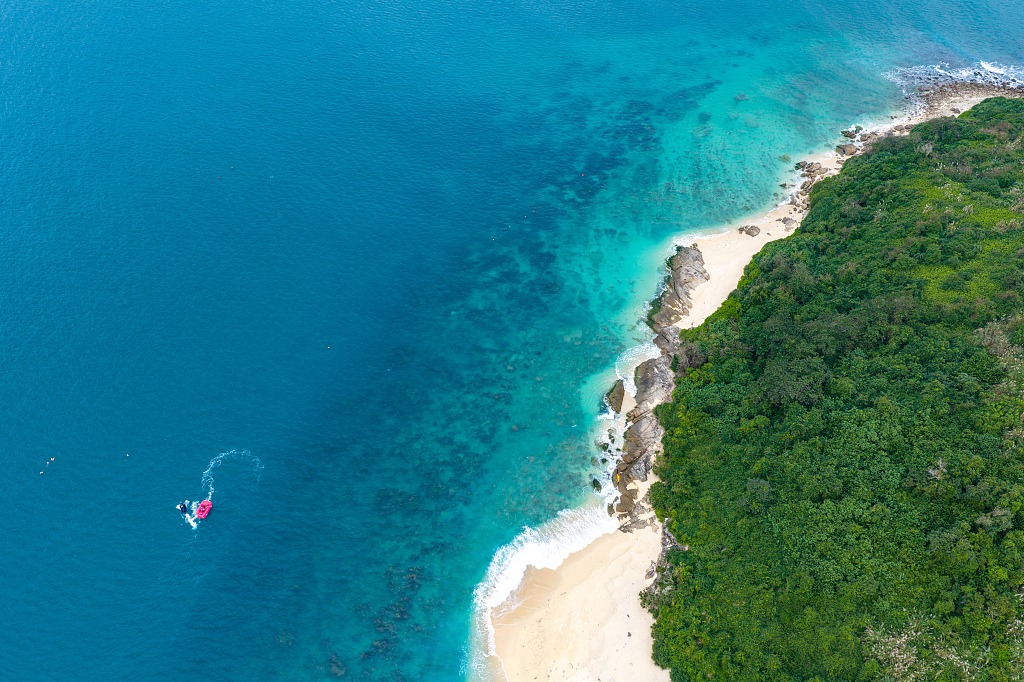
China is redefining its national park system by extending conservation efforts from terrestrial landscapes to marine ecosystems with the establishment of a tropical marine national park in Hainan province. This groundbreaking initiative represents a significant shift toward integrated land-sea conservation management that could establish global benchmarks for ocean stewardship.
The development follows the implementation of China’s National Park Law on January 1, 2026, which legally enables the designation of marine areas within the national park framework based on natural ecological distribution patterns. For Hainan—bordered by approximately 2 million square kilometers of ocean and hosting biodiverse coral reefs, mangroves, seagrass beds, and rare marine species—this legislation provides a clear regulatory pathway to enhance marine protection.
According to Wang Aimin, chief scientist at the Hainan International Blue Carbon Research Center, “A marine national park transcends mere geographical demarcation. It represents a comprehensive commitment to preserving the authenticity and integrity of marine ecosystems with the same rigor applied to terrestrial conservation.”
The park initiative forms part of Hainan’s broader strategy to position itself as a center for deep-sea technology innovation, modern marine industries, and international marine cooperation. This conservation effort coincides with robust growth in Hainan’s ocean economy, which recorded a 7.9 percent year-on-year increase in gross ocean product last year.
Emerging sectors are driving this expansion, particularly deep-sea oil and gas exploration. The independently developed Deep Sea No 1 gas field—China’s inaugural ultra-deepwater project—recently completed its 100th crude oil shipment since commissioning, with total oil and gas output exceeding 4.5 million metric tons of oil equivalent in the previous year. New fields including Dongfang 29-1, Dongfang 13-3, and Wenchang 16-2 have also commenced production.
Hainan’s offshore energy sector demonstrated remarkable growth with crude output reaching approximately 611,100 tons (a 125 percent increase from 2024) and natural gas output hitting about 5.6 billion cubic meters (a 62 percent rise). The renewable energy sector similarly expanded as major offshore wind power projects in Danzhou and Lingao county connected to the grid, driving the marine power industry’s added value to 1.3 billion yuan—a 306 percent year-on-year surge.
Traditional marine industries are simultaneously evolving toward more sustainable practices. Marine fisheries are transitioning to shore-based operations, deeper water exploration, and international collaboration. Sanya Yazhou Bay Agriculture and Aquaculture Development Company exemplifies this transformation through its adoption of intensive, intelligent production systems. The company recently imported African clawed frogs for scientific research applications in green pest control and pesticide resistance studies.
Future plans include introducing foreign fish breeding stock, particularly groupers, to enhance genetic diversity and address inbreeding complications such as stunted growth and disease susceptibility, according to Bai Zemin, the company’s deputy general manager.