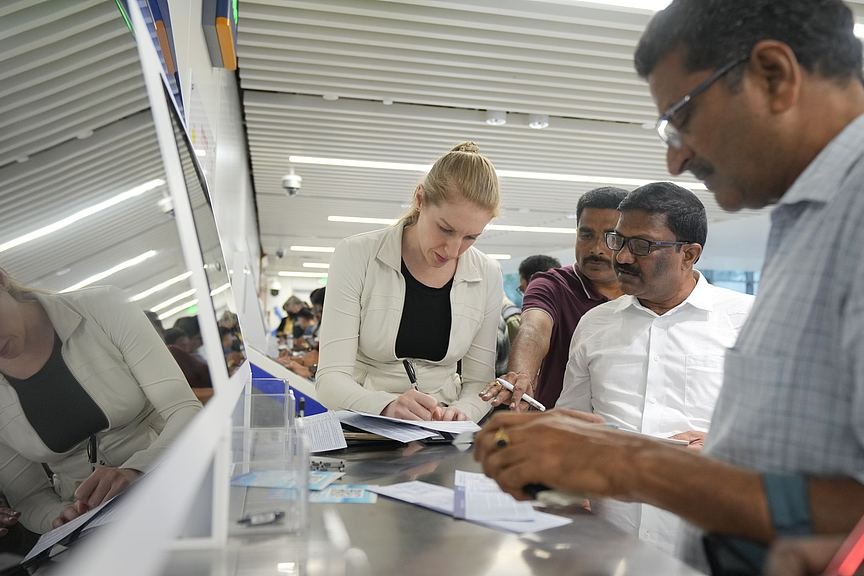
Hainan Province has achieved a remarkable milestone in international tourism, recording over 1.46 million foreign arrivals and departures as of December 2025. This represents a significant 16% increase compared to the previous record set in 2019, according to official immigration data released Tuesday.
The unprecedented growth is largely attributed to Hainan’s expansive visa-free policies, which have become a cornerstone of the Hainan Free Trade Port’s strategy for enhanced global connectivity. Wang Haixing, Director of the Haikou General Station of Exit and Entry Frontier Inspection, emphasized that these liberalized entry regulations have positioned Hainan as a leader in China’s international tourism recovery.
Visa-free entries now constitute 90% of all foreign arrivals to the tropical island, with foreign nationals accounting for 54% of total inbound and outbound traffic through Hainan’s ports. The province currently extends visa-free access to citizens from 86 countries for various purposes including tourism, business activities, family visits, medical services, exhibitions, and sporting events.
Complementary policies have further streamlined entry procedures, including a 144-hour visa waiver for foreign tour groups originating from Hong Kong and Macao, a 15-day exemption for cruise passengers, and a 240-hour transit visa waiver program.
To accommodate the surging passenger volume, Hainan has undertaken substantial infrastructure enhancements. The province has expanded its immigration inspection lanes to 98 channels while establishing 92 international air routes connecting to more than 30 countries and regions. These routes now facilitate approximately 80 daily international flights, supporting a dramatic recovery from 780,000 passengers in 2023 to 2.7 million in 2025—an average annual growth rate exceeding 85%.
Concurrently, Hainan has implemented efficiency measures that have reduced visa processing times at ports by nearly 30 minutes and accelerated overall passenger clearance by 30%. For maritime and aviation transport, optimized procedures including pre-clearance and onboard inspection have decreased wait times, boosting transport efficiency by 20%.
These operational improvements have yielded substantial economic benefits, saving businesses an estimated 12,000 hours in clearance time and approximately 250 million yuan ($35 million) in operational costs, according to immigration authorities.