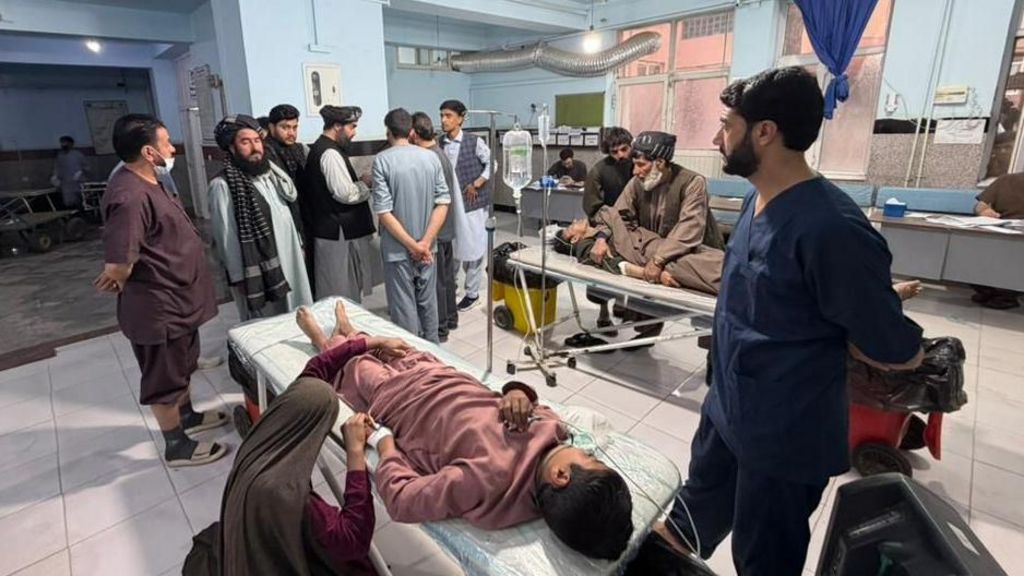
A deadly attack targeting civilians gathered for a recreational picnic near a popular Shia Muslim shrine in western Afghanistan has left multiple people dead and dozens injured, with conflicting casualty accounts emerging from local and national Taliban officials, according to multiple on-the-source reports.
The violence unfolded at approximately 15:00 local time on Friday near Deh Mehri village in Afghanistan’s Herat province Enjil district, a recreational area that regularly draws large crowds of weekend visitors. According to Taliban officials, two unidentified gunmen riding motorcycles opened fire on the gathered civilians before fleeing the scene.
Discrepancies have emerged in official casualty tallies from different levels of the Taliban-led administration. Ahmadullah Muttaqi, Herat’s provincial head of information and culture, confirmed to the BBC that four bodies and 15 wounded people — including two women — had been transported to Herat’s main regional hospital. Meanwhile, national Taliban interior ministry spokesperson Abdul Mateen Qani shared differing figures in an official post on X, stating preliminary investigations recorded seven fatalities and 13 injured people, several of whom remain in critical condition.
A local physician at the receiving hospital also spoke to the BBC, providing an even higher casualty count of 12 killed and 12 injured. The doctor added that all confirmed victims were Hazara Shia Muslims, a minority ethnic and religious community that has faced repeated targeted violence across Afghanistan for decades.
Deh Mehri village is a predominantly Shia settlement centered around a well-known shrine that draws daily pilgrims and weekend picnickers, Muttaqi confirmed. Local security forces have already taken one suspect into custody in connection with the attack, he added. As of Saturday morning, no armed or insurgent group has released a statement claiming responsibility for the shooting.
The attack marks the latest in a long pattern of targeted violence against Afghanistan’s Hazara Shia community. The group, which makes up roughly 10 to 20 percent of Afghanistan’s population, has frequently been targeted by extremist groups including ISIS-K, the regional affiliate of the Islamic State, in attacks across the country in recent years.