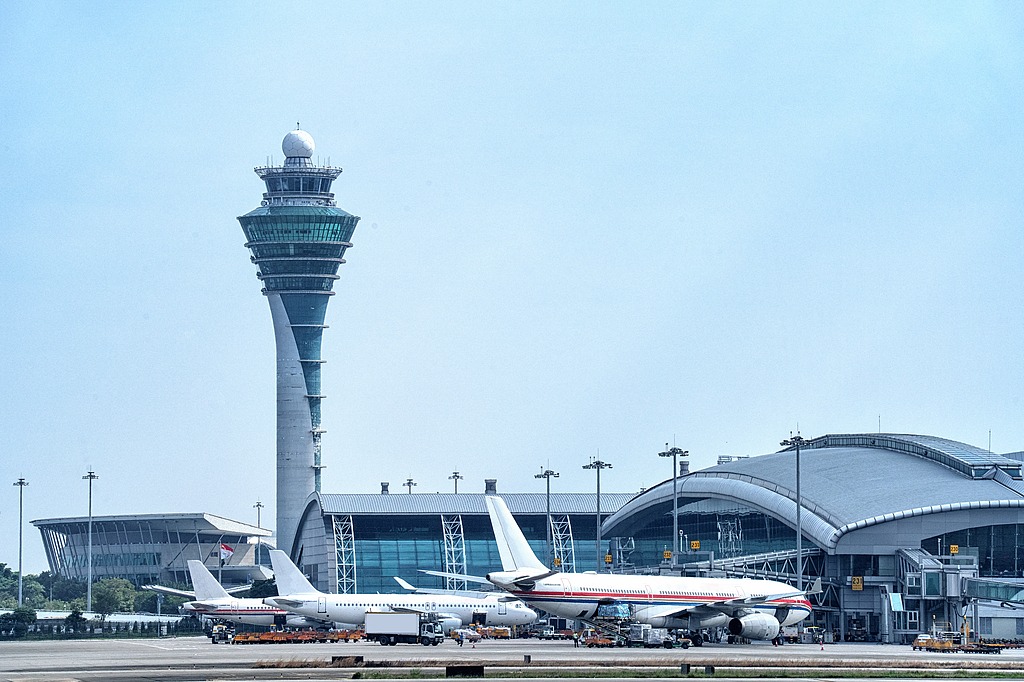
Guangzhou Baiyun International Airport has achieved a significant milestone by handling 76.52 million passenger trips as of Tuesday, December 3rd, 2025, already exceeding its entire 2024 total of 76.37 million passengers. This remarkable growth demonstrates the airport’s accelerating recovery and expansion in the post-pandemic aviation market.
The airport’s international segment has been particularly robust, recording 15.84 million passenger journeys—representing approximately one-fifth of total traffic and a substantial 19.01% year-over-year increase. Airport authorities attribute this international growth primarily to China’s 144-hour visa-free transit policy, which has made the airport an increasingly attractive hub for global travelers.
A key driver in this growth has been the operational launch of Terminal 3 on October 30th, which has significantly expanded the airport’s capacity. The terminal’s impact was immediately felt, with November alone witnessing 7.32 million passenger trips—a 12.56% increase compared to the same period last year. The new facility has already accommodated twenty-one domestic flights operated by six major Chinese carriers including China Eastern Airlines, Shanghai Airlines, and Juneyao Airlines.
Route expansion has been another critical factor in the airport’s success. Since January, Baiyun Airport has launched, resumed, or increased frequency on more than 30 international routes. New destinations include Surabaya (Indonesia), Almaty (Kazakhstan), Algiers (Algeria), Madrid (Spain), and Darwin (Australia). Additionally, services to Vancouver (Canada), Kolkata, and Delhi (India) have been reinstated.
The airport now connects to over 100 international and regional destinations, with several new international carriers commencing operations, including Air Astana, Vietjet Air, Eastar Jet, Nepal Airlines, Air Algerie, and IndiGo.
Leveraging its massive ‘five runways and three terminals’ infrastructure, Baiyun Airport has achieved transformative improvements in international route density and intercontinental connectivity. This strategic expansion has further solidified its position as Southern China’s primary aviation gateway to Africa and the Middle East.
Looking ahead, airport officials announced plans to further expand their network across Southeast Asia, South Asia, the Middle East, Australia-New Zealand, and African markets. The airport will prioritize new routes and increased frequencies to countries participating in the Belt and Road Initiative and RCEP member nations, while simultaneously extending coverage to destinations throughout Europe, North America, and South America.