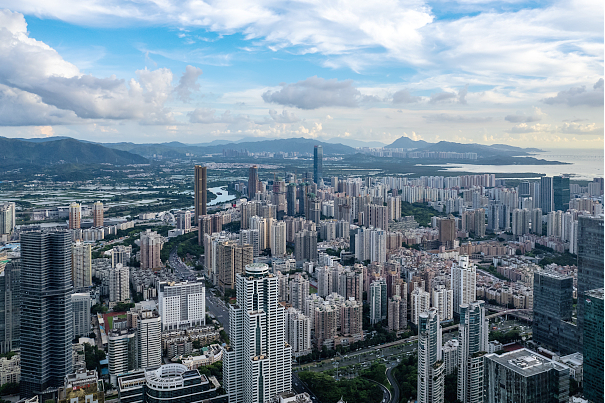
Guangdong Province, China’s economic powerhouse, has unveiled an ambitious strategy to establish itself as a globally influential hub for industrial and technological innovation. Governor Meng Fanli announced the plan during the provincial legislative meeting in Guangzhou, outlining a comprehensive approach to strengthening the region’s innovation ecosystem throughout 2026.
The strategy centers on accelerating development of the Guangdong-Hong Kong-Macao Greater Bay Area as an international science and technology innovation center, complemented by the establishment of a comprehensive national science center. The provincial government plans to attract additional national key laboratories while simultaneously expanding innovation platforms that provide public and semi-public services through collaborative efforts between universities, research institutions, and private enterprises.
A fundamental component of Guangdong’s innovation push involves reinforcing enterprises as primary drivers of technological advancement. The province will align innovation resources—including platforms, projects, talent, and funding—with business needs, empowering companies to lead decision-making processes, research investments, and result transformation initiatives.
Strategic focus will target breakthrough technologies across entire industrial chains, with particular emphasis on quantum technology, brain science and brain-computer interfaces, artificial intelligence, intelligent robotics, integrated circuits, advanced materials, and biomanufacturing.
The innovation drive builds upon impressive economic foundations. Guangdong’s regional GDP grew by 3.9% in 2025, maintaining its position as China’s top-performing province for the 37th consecutive year. Recent developments include the establishment of cutting-edge research facilities: a new materials science institute in Dongguan, a neutrino experiment station in Jiangmen, and a high-intensity heavy ion accelerator in Huizhou.
Notably, the Shenzhen-Hong Kong-Guangzhou innovation cluster has ascended to global leadership status. Eleven Guangdong-based companies now rank among the world’s top 100 publicly listed humanoid robot firms, while the province’s low-altitude economy has achieved substantial scale with 20.61 million recorded flights.
During the 14th Five-Year Plan period (2021-2025), Guangdong established six national manufacturing innovation centers and three national industrial innovation centers. The province dominates numerous industrial sectors, accounting for over 10% of national output in 44 of 104 published industrial product categories.
The innovation platform model has demonstrated remarkable success in regional transformation. The Chemistry and Chemical Engineering Guangdong Laboratory in Shantou has cultivated nine scientist-entrepreneurs and incubated ten high-tech enterprises. Researcher Dong Zhengya, who launched his own venture in 2022, exemplifies this transformation. His company developed pioneering microfluidics and ultrasonic microfluidic technology platforms, delivering comprehensive solutions for cosmetics, pharmaceuticals, semiconductors, and fine chemicals industries. The enterprise has achieved exceptional growth exceeding 120% annually over three years and anticipates public listing within five years.
Furthermore, the laboratory has collaborated with Shantou’s textile and apparel association to establish an innovation center addressing technological challenges in traditional industries. Breakthroughs in nano-antibacterial materials for nylon melt spinning have significantly enhanced the competitiveness of local textile products. Similar partnerships with the toy industry provide technical support for material research, product modification, and intelligent production—critical advancements for sectors where Shantou produces nearly half of China’s underwear/loungewear and 70% of plastic toys.