COPENHAGEN, Denmark — Innovative mobile applications employing artificial intelligence to identify and boycott American products have experienced remarkable growth following recent diplomatic strains between Denmark and the United States over Greenland’s sovereignty.
The pioneering ‘Made O’Meter’ application, developed by Copenhagen-based digital marketing specialist Ian Rosenfeldt, recorded approximately 30,000 downloads during the three-day peak of the diplomatic crisis in late January. Since its March launch, the application has surpassed 100,000 total downloads, demonstrating significant public engagement.
Rosenfeldt, 53, conceived the application after participating in a Facebook group where Danish citizens expressed frustration about practically implementing boycott measures against American goods. ‘Consumers struggled to determine product origins through conventional barcode scanning,’ Rosenfeldt explained. ‘Without accurate origin information, making conscious purchasing decisions proved virtually impossible.’
The application’s advanced AI technology enables simultaneous analysis of multiple products, providing users with European-made alternatives while offering customization options including ‘No USA-owned brands’ and ‘Only EU-based brands.’ The developer claims the application achieves over 95% accuracy in product identification.
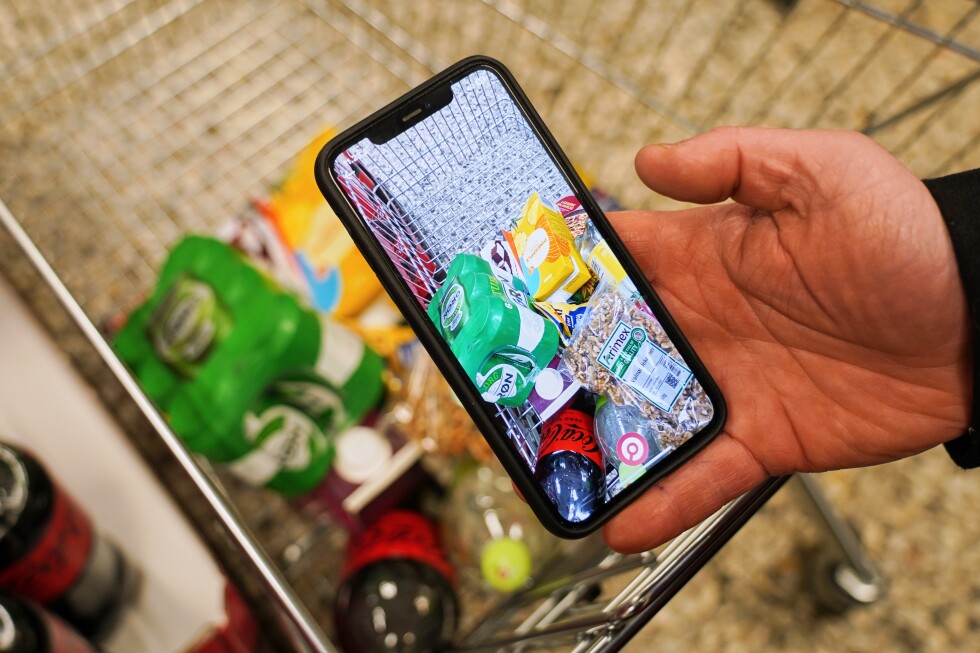
During a Copenhagen supermarket demonstration, Rosenfeldt detailed the technology’s capabilities: ‘By utilizing artificial intelligence, consumers can capture product images that trigger comprehensive data analysis across multiple levels, delivering actionable information for informed decision-making.’
Application usage peaked on January 23rd with nearly 40,000 daily product scans, dramatically exceeding the summer average of approximately 500 scans daily. While current usage has moderated to about 5,000 daily scans, the application maintains substantial usership across Denmark, Germany, Spain, Italy, and Venezuela.
The diplomatic controversy emerged when President Trump proposed acquiring mineral-rich Greenland, a semi-autonomous Danish territory, subsequently threatening tariffs against Denmark and seven other European nations before abruptly withdrawing these threats following discussions with NATO leadership. Technical negotiations regarding Arctic security arrangements continue between the United States, Denmark, and Greenland, with all parties maintaining that sovereignty remains non-negotiable.
A complementary application, ‘NonUSA,’ similarly surpassed 100,000 downloads by early February, with creators reporting 25,000 downloads on January 21st alone. Developer Jonas Pipper, 21, noted users reported ‘feeling empowered’ and experiencing ‘pressure relief’ through application usage.
University of Copenhagen economics associate professor Christina Gravert provided context, noting American products constitute merely 1-3% of Danish supermarket inventory, primarily nuts, wines, and confectionery items. Gravert emphasized that meaningful impact would require addressing widespread American technology adoption, including Apple and Microsoft products that ironically facilitate the boycott applications themselves.
Gravert’s behavioral economics analysis suggests boycott campaigns typically demonstrate limited duration, with substantive change requiring organized efforts rather than individual consumer actions. ‘Supermarket brands might reconsider product offerings if consumers demonstrate consistent preferences,’ she observed.
Copenhagen consumers expressed mixed perspectives, with retired naval officer Morten Nielsen, 68, acknowledging symbolic participation while recognizing limited practical impact. Conversely, retiree Charlotte Fuglsang, 63, opposed the boycott movement, stating, ‘I love America and American travel—this protest approach seems inappropriate.’
Despite acknowledged economic limitations, developers hope these technological solutions will encourage greater European production reliance and communicate consumer preferences to retail establishments.