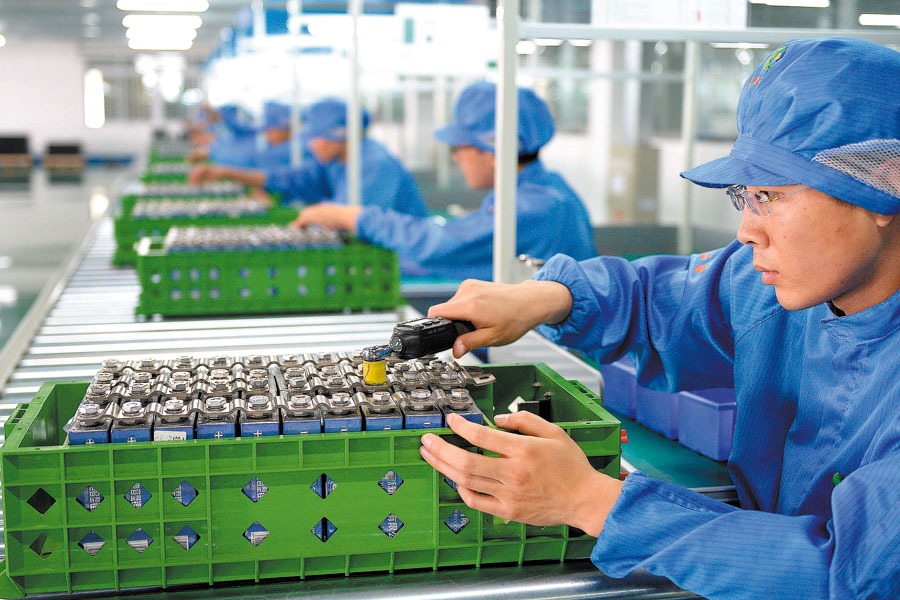
A groundbreaking green recycling technology developed by Chinese scientists promises to transform how the world handles end-of-life lithium-ion batteries. With electric vehicles and energy storage systems generating massive volumes of retired batteries, this innovation arrives as a critical solution to a growing environmental challenge.
Research published in Nature Communications reveals a novel approach that leverages carbon dioxide and water to extract lithium with exceptional efficiency. The method achieves over 95% lithium recovery under mild conditions while simultaneously converting other battery metals into valuable catalysts and capturing carbon dioxide in the process.
Professor Sun Zhi from the Chinese Academy of Sciences’ Institute of Process Engineering, the study’s corresponding author, explained the urgency: “Lithium-ion batteries typically degrade after five to eight years, making recycling essential for conserving strategic metals like lithium, cobalt and nickel, while preventing pollution and managing safety risks.”
The technology addresses significant shortcomings of conventional recycling methods. Traditional pyrometallurgical processes require energy-intensive melting at temperatures exceeding 1,000°C, while hydrometallurgical approaches involve multiple chemical steps that generate wastewater and hazardous byproducts.
The innovative process begins by mechanically grinding cathode material from spent batteries to disrupt its crystalline structure. This causes lithium atoms to migrate to the particle surface while nickel and cobalt remain in the crystal framework. Scientists then introduce carbon dioxide into water containing the prepared material, creating a reaction similar to carbonating beverages.
Trace hydrogen ions from dissolved carbon dioxide react specifically with lithium, dissolving it into a lithium bicarbonate solution while leaving other metals intact. Through simple heating, researchers obtain battery-grade lithium carbonate with purity exceeding 99.5%. Remarkably, the solid residue transforms into a high-performance catalyst that maintains stability for over 200 hours of operation.
“This process, which operates at low chemical consumption, offers an innovative green solution for recycling spent lithium-ion batteries,” Sun stated, emphasizing its alignment with China’s dual carbon goals of peaking emissions by 2030 and achieving carbon neutrality by 2060.
The research team plans to explore using industrial flue gas containing low-concentration carbon dioxide in future applications, potentially enhancing both environmental and economic benefits of this circular approach to battery recycling.