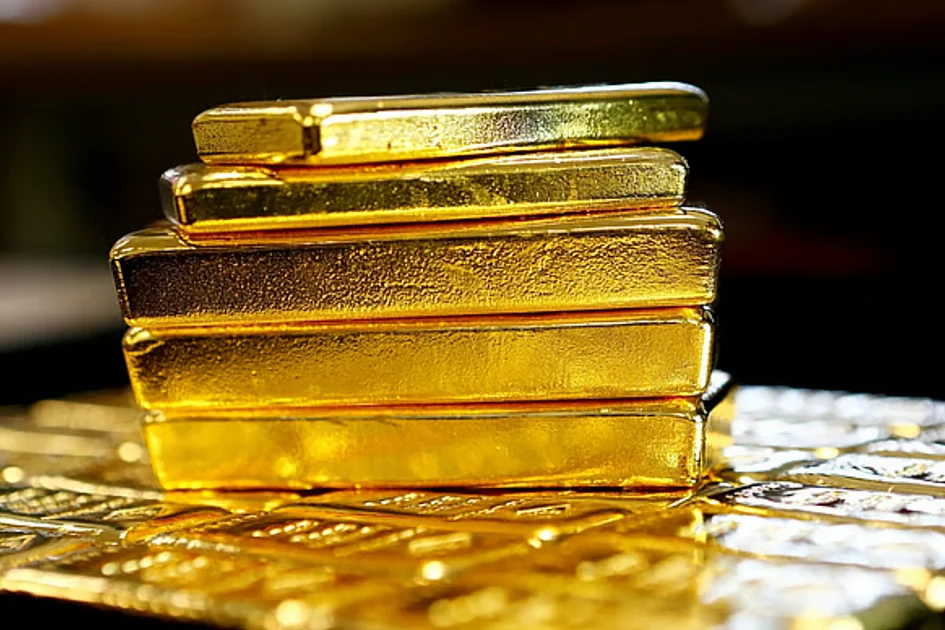
Gold markets witnessed an unprecedented milestone as prices catapulted beyond the $5,000 per ounce threshold for the first time in history, reaching an intraday peak of $5,085. This remarkable surge represents the continuation of a powerful rally that has captivated global investors seeking sanctuary from mounting geopolitical tensions and fiscal instability.
The precious metal’s spectacular ascent—registering a 17% gain year-to-date and more than doubling its value over the past 24 months—reflects what market specialists term the ‘debasement trade.’ This phenomenon describes the massive capital flight from sovereign bonds and traditional currencies toward hard assets perceived as more stable stores of value.
In the United Arab Emirates, retail markets immediately reflected the global trend with 24K gold trading at approximately Dh612 per gram and 22K at Dh566.75 per gram. These local prices underscore how international macroeconomic developments directly influence regional jewelry and investment markets.
The rally stems from multiple convergent factors: a substantial sell-off in Japanese government bonds, escalating public debt burdens across developed economies, and renewed policy uncertainty surrounding the U.S. Federal Reserve’s independence. Additionally, geopolitical flashpoints from Greenland to Venezuela and ongoing Middle Eastern tensions have further eroded investor confidence in conventional financial instruments.
Max Belmont, portfolio manager at First Eagle Investment Management, contextualized the movement: ‘Gold fundamentally represents the inverse of confidence. It serves as a critical hedge against unanticipated inflation spikes, unexpected market corrections, and sudden escalations in geopolitical risk.’
The precious metals rally extends beyond gold. Silver breached the $100 per ounce barrier and advanced over 4% in Monday trading, while platinum achieved record highs and palladium maintained elevated levels. This broad-based strength indicates robust demand across both industrial applications and wealth preservation strategies.
Ipek Ozkardeskaya, senior analyst at Swissquote, observed that the flight to safety continues despite the absence of major new geopolitical headlines. ‘The surge past $5,000 clearly signals that risk appetite has not returned to markets,’ she noted, highlighting that recent U.S. tariff threats against Canada demonstrate how trade tensions persist beneath the surface.
Institutional participation has been particularly vigorous. Western exchange-traded funds have accumulated approximately 500 tonnes of gold since early 2025, while ultra-wealthy investors and family offices have emerged as significant players focused on generational wealth preservation.
Central banks, particularly in emerging markets, continue aggressive accumulation with Goldman Sachs estimating monthly official purchases averaging 60 tonnes—substantially above pre-2022 levels—as monetary authorities diversify away from paper currencies.
Financial institutions are revising forecasts upward. Union Bancaire Privée projects year-end targets near $5,200 per ounce, while Goldman Sachs recently elevated its December 2026 prediction to $5,400, citing persistent macro-policy risks and sustained demand for inflation hedges.
With market expectations building around potential Federal Reserve rate cuts under new leadership, gold’s appeal as a non-yielding diversifier remains potent. As one Dubai bullion trader summarized: ‘Many current geopolitical and fiscal uncertainties aren’t dissipating soon. Gold will likely remain relevant for months, if not years, despite periodic corrections following substantial gains.’